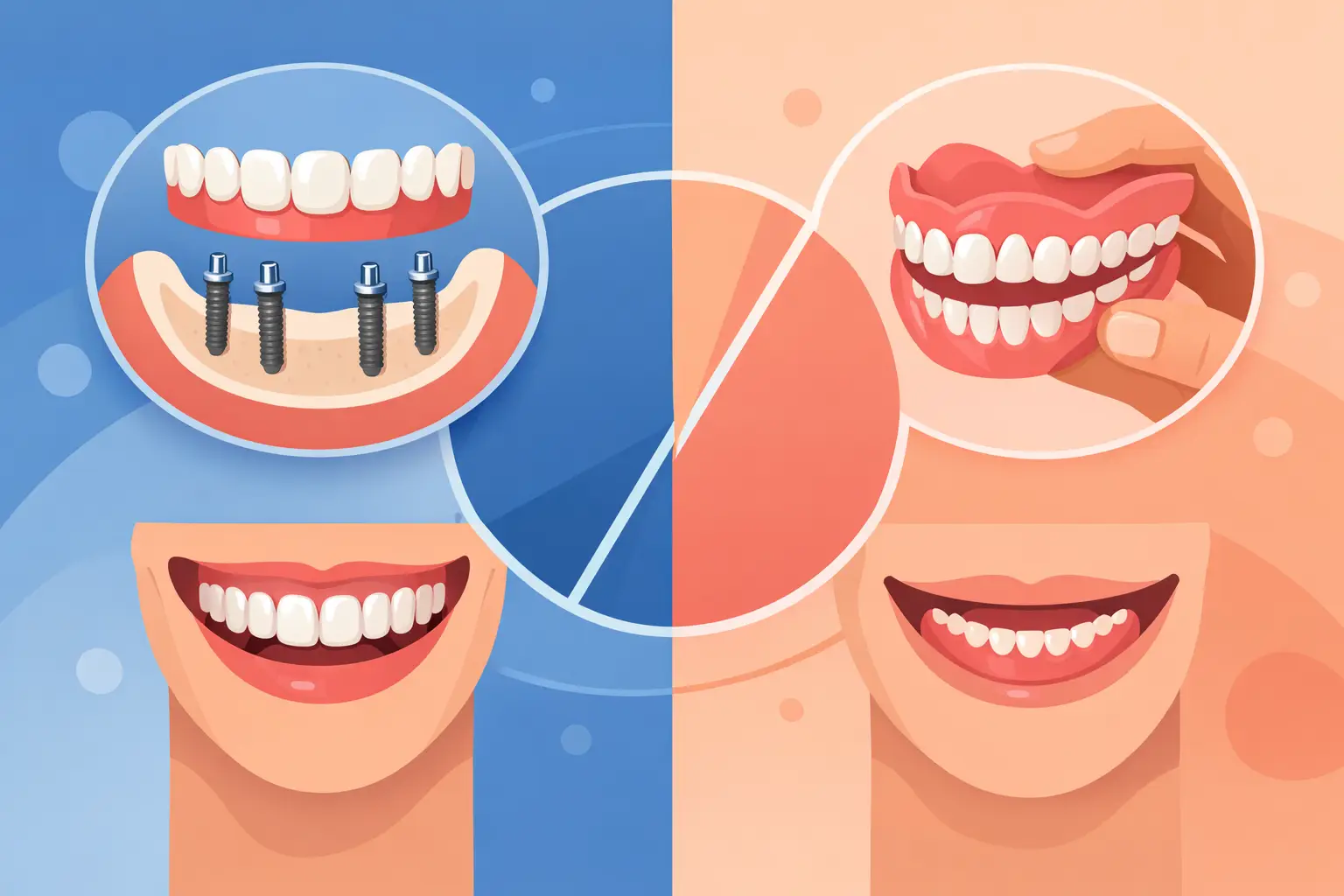
If you are weighing all on x vs dentures, you are probably not looking for a cosmetic upgrade alone. You are trying to solve daily problems - loose teeth, difficulty chewing, embarrassment when speaking, or a smile that no longer feels like your own. This decision affects comfort, confidence, diet, and long-term oral health, so the right answer depends on more than price.
For many adults, the real question is not which option is cheaper today. It is which option will let them eat comfortably, speak clearly, feel secure in social settings, and avoid a cycle of ongoing dental problems. That is where the difference between traditional dentures and implant-supported full-arch treatment becomes very clear.
All-on-X vs dentures: the core difference
Traditional dentures are removable prosthetic teeth that sit on top of the gums. They replace missing teeth, but they do not replace tooth roots. Because they rest on soft tissue, they can shift, rub, and gradually become less stable as the jawbone changes over time.
All-on-X is a full-arch implant solution that supports a fixed set of teeth on a strategic number of dental implants. The "X" refers to the number of implants used, which varies based on bone availability, anatomy, and treatment goals. Instead of sitting loosely on the gums, the restoration is anchored to the jaw.
That one difference - removable versus implant-supported and fixed - changes nearly everything about how the teeth feel and function.
How each option feels in everyday life
Dentures can restore appearance and basic function, and for some patients they remain a reasonable option. But they often come with compromises. Many denture wearers notice movement while eating, clicking while talking, sore spots along the gums, and reduced bite force. Even well-made dentures can feel bulky because they rely on acrylic flanges and, in the upper arch, often cover part of the palate.
All-on-X typically feels more natural because the teeth are secured in place. Patients often describe a stronger bite, better stability, and less awareness that they are wearing a prosthesis. Because the restoration is fixed, there is no need to remove it at night, and there is no adhesive involved.
That said, All-on-X is still a prosthetic restoration, not a return to natural teeth. It requires planning, surgery, healing, and maintenance. It often delivers a more secure and life-like result, but it is a more involved treatment from the start.
Chewing and food choices
This is one of the biggest quality-of-life differences.
With dentures, chewing efficiency is typically lower. Foods like steak, apples, crusty bread, nuts, and raw vegetables may become difficult or frustrating. Many denture patients unconsciously favor softer foods, which can affect nutrition and enjoyment.
With All-on-X, chewing function is usually much closer to that of natural teeth. Because the arch is anchored by implants, force is distributed more effectively, and patients can often return to a broader, healthier diet. There are still guidelines during healing and some long-term habits to avoid, but overall function is significantly stronger.
Speech and confidence
Loose or bulky dentures can affect pronunciation, especially during the adjustment period. Some patients feel self-conscious laughing, speaking in meetings, or dining out because they worry the denture may move.
A fixed implant-supported arch tends to create more confidence in conversation and social situations. That emotional difference matters more than many people expect. When patients stop thinking about their teeth all day, they often feel a real shift in quality of life.
Bone loss is where the long-term difference shows up
When natural teeth are lost, the jawbone no longer receives stimulation from the roots. Over time, the bone begins to shrink. Traditional dentures do not stop that process. In fact, as the ridge changes shape, dentures often become looser and require relines, remakes, or ongoing adjustments.
This is one reason some long-term denture wearers develop a more sunken facial appearance around the mouth and lower face. The prosthetic may still replace teeth visually, but it cannot preserve bone on its own.
All-on-X uses implants that integrate with the jawbone and help maintain stimulation in the areas where they are placed. That can support better long-term stability of the bite and facial structure. It does not make bone loss impossible in every area, but it can dramatically improve the foundation compared with a removable denture.
For patients who have already experienced bone loss, additional treatment such as bone grafting may be considered. This is where working with an experienced implant dentist matters. Dr. Xhoana Gjelaj's advanced implant training and full-mouth restoration experience are especially valuable when the case is complex, the bone is limited, or previous dental work has failed.
Cost matters, but so does what you are paying for
Dentures almost always have a lower upfront cost. For patients on a tight budget or those who are not candidates for implant surgery, that can make them a practical starting point.
But lower initial cost is not the same as lower lifetime cost. Dentures may need adhesives, adjustments, relines, repairs, and replacement over the years. They can also contribute to functional limitations and ongoing frustration that are hard to measure financially.
All-on-X usually requires a larger upfront investment because it includes surgical planning, implant placement, temporary teeth, healing, and a custom final restoration. The fee reflects a more advanced level of care and a more stable long-term solution.
This does not mean All-on-X is automatically the right choice for everyone. It means the comparison should be honest. You are not simply comparing two versions of false teeth. You are comparing a removable appliance with a fixed implant-supported reconstruction.
Who may be a good fit for dentures
Dentures may be appropriate if you want a non-surgical option, need to keep treatment costs lower, have significant health concerns that limit surgery, or want a temporary solution before a more advanced treatment later.
They can also be useful for patients who have lost many teeth and need to restore appearance quickly. When designed properly, dentures can improve facial support and smile esthetics compared with having no teeth at all.
The trade-off is that they often require greater adaptation and ongoing maintenance. Some patients tolerate that well. Others find it exhausting.
Who may be a better fit for All-on-X
All-on-X may be the better option if you want a fixed solution, are tired of failing teeth or loose dentures, want stronger chewing ability, and are looking for a long-term answer rather than a removable appliance.
It is often an excellent option for patients with multiple missing teeth, severe breakdown, or full arches of failing dental work that can no longer be predictably saved. It can also help patients who are frustrated with the instability of lower dentures, which tend to be especially difficult because they have less surface area for retention.
A full evaluation is essential. Not every patient needs the same number of implants, the same prosthetic design, or the same preparatory procedures. A personalized plan based on bone quality, health history, esthetic goals, and bite function is what makes the result durable.
All-on-X vs dentures: what about recovery and maintenance?
Dentures are usually simpler to begin. Once the teeth are removed and the appliance is made, the adjustment period is mostly about fit and comfort. There is no implant healing process unless the denture is combined with implants.
All-on-X involves surgery, so recovery is part of the equation. Most patients can return to many normal activities quickly, but healing still takes time, and there are temporary diet restrictions while implants integrate. That short-term inconvenience is often worth it for the long-term stability, but patients should go into treatment with realistic expectations.
Maintenance is different too. Dentures must be removed and cleaned daily. All-on-X restorations stay in place, but they still need excellent hygiene and regular professional maintenance. Fixed does not mean maintenance-free. It means a different, often more convenient type of care.
The best choice depends on your goals
If your top priority is the lowest initial cost and avoiding surgery, dentures may serve you well. If your top priority is stability, stronger function, and a more permanent full-arch solution, All-on-X is often the stronger option.
The most important step is not choosing based on advertising or assumptions. It is getting a thorough exam with imaging, bite evaluation, and a clear conversation about what will hold up in your mouth over time. For patients in Trinity and the surrounding Tampa Bay area, that level of planning can make the difference between replacing teeth and truly rebuilding function.
A good treatment plan should make your next decade easier, not just get you through the next few months.