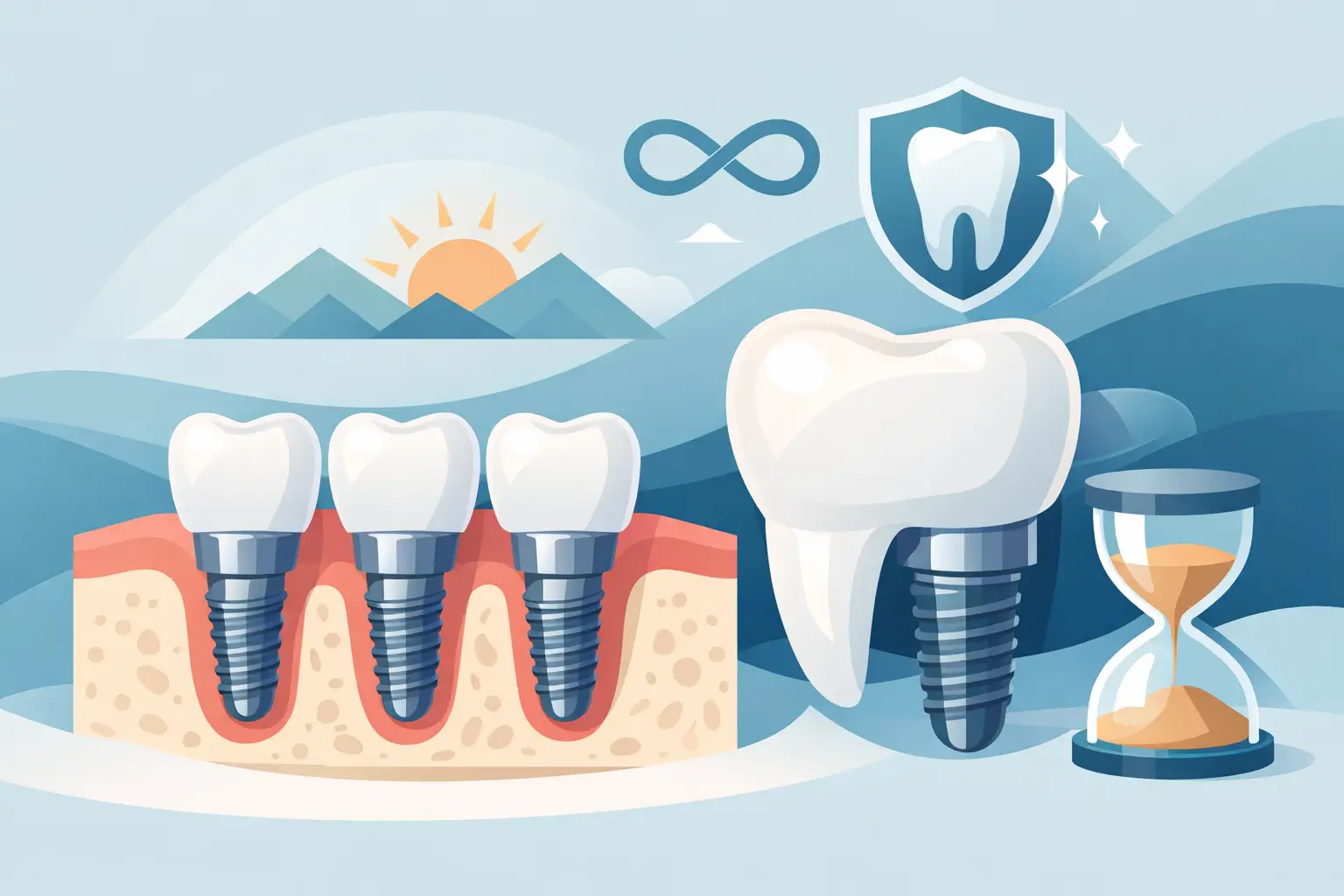
A fixed implant restoration can feel remarkably close to having natural teeth again: it stays in place, supports confident chewing, and does not come out for cleaning. But are implant supported teeth permanent? The most accurate answer is that the implant itself is designed to be a long-term, often lifelong foundation, while the visible tooth or bridge attached to it may need maintenance or replacement over time.
That distinction matters when you are making a major decision about your smile. A well-planned implant treatment is not simply about replacing what is missing. It is about creating a stable, healthy foundation that can protect your bite, facial appearance, and quality of life for many years.
What “permanent” means with implant supported teeth
Dental implants are small posts placed in the jawbone to replace missing tooth roots. During healing, the bone forms a direct connection with the implant through a process called osseointegration. Once that connection is stable, the implant can support a custom crown, bridge, or fixed full-arch restoration.
Unlike removable tooth replacement options, implant supported teeth are fixed in place by a dental professional. They are intended to remain in your mouth full time, so you brush and care for them much like natural teeth. For many patients, this is what “permanent” means: a secure solution that does not shift during meals, conversations, or everyday life.
Clinically, however, permanent does not mean maintenance-free or guaranteed to last forever without change. Your gums, bone, bite forces, overall health, and daily habits all influence longevity. The implant post and the restoration above it are also separate components with different life expectancies.
How long do the implant and restoration last?
The implant post
A healthy, integrated implant can last decades and may last for life. Modern implants are made from highly biocompatible materials and are designed to withstand normal chewing forces. Long-term success depends on careful diagnosis, precise placement, adequate bone support, and consistent follow-up care.
The implant’s location also matters. Back teeth experience more force than front teeth, and patients who clench or grind may place added stress on their implants. When necessary, a custom night guard can help protect both natural teeth and implant restorations from excessive pressure.
The crown, bridge, or fixed full-arch teeth
The visible teeth attached to implants are durable, but they are subject to wear. A single implant crown may last 10 to 15 years or longer, depending on the material, bite, and care. A fixed bridge or full-arch restoration can also provide many years of dependable function, although it may eventually require repair, refinishing, or replacement.
This is not a sign that the implant has failed. Think of the implant as the foundation and the custom restoration as the part that handles daily chewing and cosmetic demands. Replacing a worn restoration can often be far more straightforward than starting over with a new implant, provided the implant and surrounding bone remain healthy.
Why implant supported teeth can fail prematurely
Implant complications are not inevitable, but understanding the risk factors helps patients protect their investment. The most common concern is inflammation and infection around the implant, often called peri-implant disease. It can begin with bleeding or swollen gums and, if ignored, may lead to bone loss around the implant.
Smoking or tobacco use, untreated gum disease, poorly controlled diabetes, inconsistent hygiene, and missed professional cleanings can increase risk. Grinding, an unstable bite, or placing a restoration before the implant has healed properly can also compromise long-term results.
Treatment planning is equally important. Some patients need bone grafting or a sinus graft before implants can be placed in the ideal position. Skipping these steps when they are clinically necessary may limit the stability and appearance of the final result. A comprehensive evaluation should assess bone volume, gum health, bite alignment, medical history, and aesthetic goals before treatment begins.
The role of planning in a lasting result
Dental implants are highly successful when they are planned with the final restoration in mind. This means considering more than where an implant can fit in the jaw. The dentist must determine where it should be positioned to support a natural-looking, comfortable, and easy-to-clean tooth.
At Trinity Dental Arts, Dr. Xhoana Gjelaj approaches implant treatment as both a surgical and restorative process. That comprehensive perspective is especially valuable for patients with multiple missing teeth, failing dental work, limited bone, or complex cosmetic concerns. Advanced imaging, detailed planning, and high-quality restorative materials all support a more predictable outcome.
For full-mouth restoration, the goal is not merely to place implants. It is to establish a stable bite, appropriate tooth proportions, functional chewing ability, and a smile that looks like it belongs to you. The more thoughtfully those details are addressed from the start, the better the restoration can perform over time.
How to care for implant supported teeth
Implant supported teeth cannot develop cavities, but the gums and bone around them can still become infected. Daily care is therefore essential. Brush thoroughly twice a day with a soft toothbrush, clean between teeth or beneath bridgework as instructed, and attend routine professional visits.
Your dental team may recommend specialized floss, interdental brushes, or a water flosser based on the design of your restoration. The goal is to remove plaque from the areas where the restoration meets the gums and from around implant connections. These spaces can be difficult to reach without the right technique.
Do not ignore changes such as bleeding, tenderness, persistent bad breath, a loose feeling, chipped porcelain, or a change in your bite. Implants should feel stable. Addressing a small concern early may prevent a more involved repair later.
Are implant supported teeth right for every patient?
Many adults are candidates for implant treatment, including those who have lived with missing teeth for years. Still, candidacy is individual. Adequate bone and healthy gums are ideal, but grafting procedures can often rebuild support where it is needed. Medical conditions do not automatically rule out treatment, though they may affect timing, healing protocols, or the need for coordination with your physician.
Patients considering implants should also be realistic about the commitment. Implant treatment can involve several phases, including healing time, follow-up appointments, and ongoing maintenance. The result is designed for long-term value, but it is not a one-time purchase that can be forgotten after placement.
The bottom line on permanence
Implant supported teeth are among the most durable and stable solutions available for replacing missing teeth. The implant post may serve as a lifelong foundation when it is properly planned, placed, and maintained. The attached crown, bridge, or full-arch restoration is built for long-term performance but may eventually need professional attention because it experiences everyday wear.
The best question is not only whether implant supported teeth are permanent. It is whether your treatment plan gives you the strongest possible foundation for the years ahead. With precise care, consistent hygiene, and an experienced implant team, that foundation can support a healthy, confident smile for a very long time.