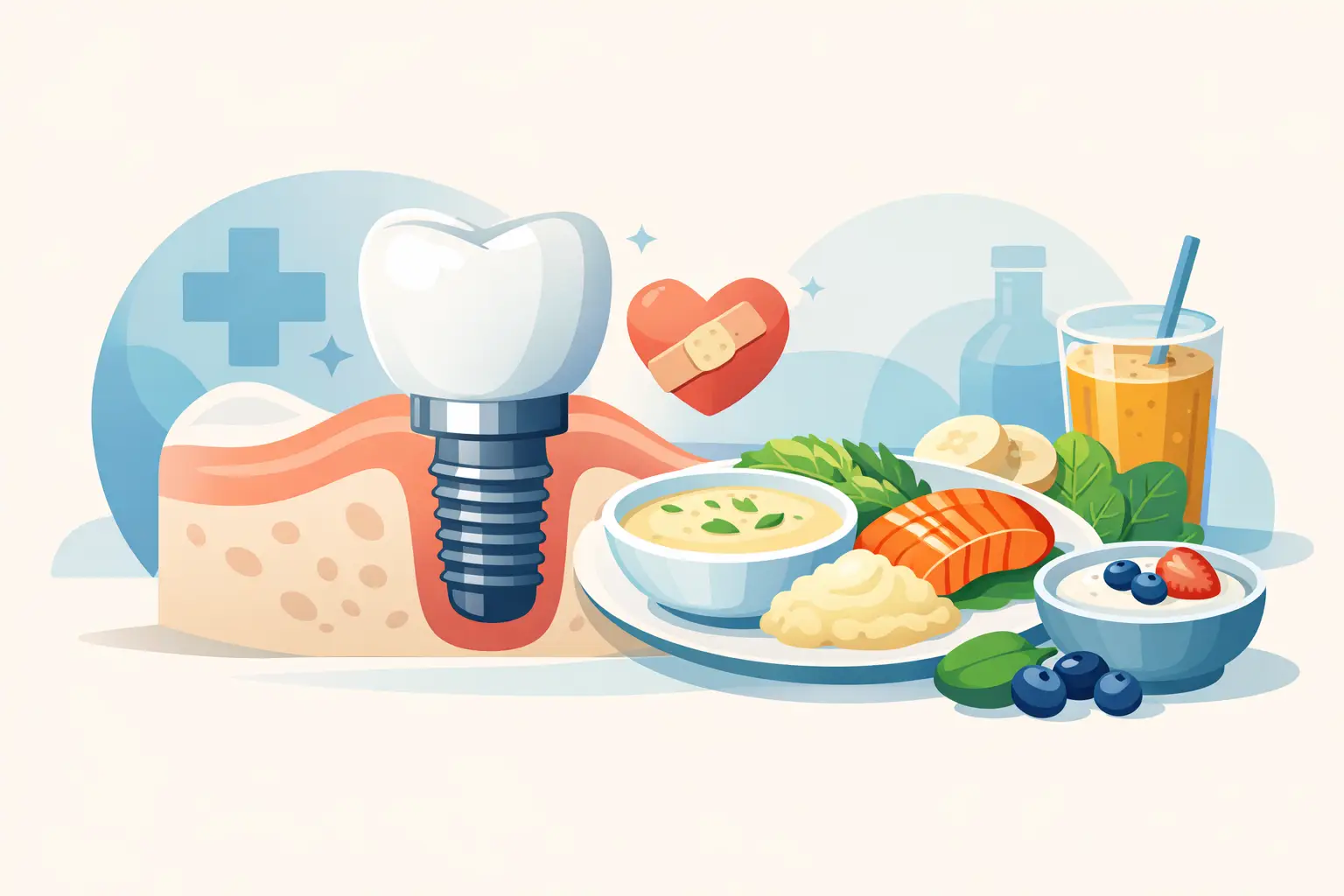
The first meals after dental implant surgery should protect the surgical site, keep you nourished, and make recovery more comfortable. The best foods after implant surgery are soft, nutrient-dense choices that require little to no chewing, especially during the first several days when the area is most sensitive.
Dental implant healing is a biologic process, not simply a matter of waiting for soreness to fade. Your body needs adequate protein, calories, hydration, vitamins, and minerals to repair tissue and support the bone as it integrates with the implant. At the same time, pressure from chewing, food particles, excessive heat, and certain textures can irritate the area or interfere with your comfort.
Your personal instructions always come first. The right timeline can vary based on whether you received a single implant, multiple implants, bone grafting, sinus grafting, or a full-mouth restoration. Follow the guidance provided by your implant dentist regarding medications, rinsing, chewing, and follow-up visits.
Best Foods After Implant Surgery: Your First Few Days
For the first 24 to 72 hours, prioritize cool or room-temperature foods with a smooth, soft texture. You should not need to bite or chew near the surgical area. If you had treatment on one side of the mouth, chewing on the opposite side may be appropriate later in recovery, but only when your dentist confirms it is safe.
Excellent early options include plain Greek yogurt, applesauce, pudding, gelatin, mashed avocado, cottage cheese, and smooth oatmeal that has cooled to a comfortable temperature. Scrambled eggs are another practical choice because they provide protein without requiring significant chewing. Blended soups can work well once they are no longer hot and contain no chunks, seeds, or fibrous ingredients.
Protein matters because it supports tissue repair. In addition to eggs and Greek yogurt, consider a smooth protein shake taken from a cup with a spoon. Do not use a straw unless your surgical team specifically says you may. The suction created by straw use can disturb the blood clot that protects the surgical area, increasing discomfort and delaying healing.
Hydration is equally valuable. Sip water regularly throughout the day. If your appetite is limited, a low-sugar electrolyte drink may be useful, particularly if you are taking medication that leaves you feeling dry or nauseated. Avoid carbonated beverages during the early recovery period, since fizzing can be uncomfortable and may contribute to bloating when you are already managing post-surgical swelling.
Soft Foods That Support Implant Healing
As tenderness improves, you can gradually add foods that are soft but more substantial. The goal is not to rush back to your normal diet. Instead, build meals that are easy to manage while giving your body the nutrients it needs.
Soft, flaky fish can be a strong choice because it offers protein and healthy fats. Well-cooked pasta, soft rice, mashed potatoes, polenta, and creamy grits can add satisfying carbohydrates. Cooked vegetables are suitable when they are tender enough to mash easily with a fork. Try steamed zucchini, squash, carrots, or spinach blended into eggs, soup, or a soft grain dish.
Fruit can be part of recovery nutrition, but texture makes a difference. Ripe bananas, applesauce, fruit puree, and blended berries without seeds are often easier than crisp apples, citrus segments, or fruits with small seeds. A smoothie can be helpful, but keep it simple: use a spoon rather than a straw, avoid seeds, and do not add crunchy toppings such as granola, nuts, or cacao nibs.
A balanced soft-food meal could be scrambled eggs with mashed avocado, flaky fish with mashed sweet potato, or Greek yogurt with smooth fruit puree. These combinations provide more nutritional value than relying on ice cream or pudding alone. A cold treat may feel soothing in moderation, but it should not become your primary source of nourishment.
Focus on Protein, Not Just Softness
Many soft foods are easy to eat but low in protein. After implant surgery, that trade-off matters. A diet of only mashed potatoes, pudding, and applesauce may be comfortable, yet it does not provide the same support for healing as meals that include eggs, yogurt, fish, tofu, beans blended into soup, or a carefully selected protein shake.
If you have diabetes, prediabetes, or another medical condition affected by diet, choose lower-sugar options and follow your physician's recommendations. Consistent blood sugar management can play a meaningful role in surgical healing. Patients with dietary restrictions can still follow a soft-food plan, but they may need more intentional protein sources, such as silken tofu, dairy-free yogurt, or pureed lentil soup without coarse skins or pieces.
Foods and Drinks to Avoid After Implant Surgery
Hard, sharp, sticky, spicy, and very hot foods can create unnecessary problems during early healing. The concern is not only pain. Small particles can lodge around the surgical site, while forceful chewing can place pressure on tissue that needs time to stabilize.
Avoid these foods and habits until your implant dentist clears you to resume them:
- Chips, crackers, popcorn, nuts, seeds, crusty bread, and raw vegetables
- Chewy meats, jerky, bagels, caramel, gum, and other sticky foods
- Spicy foods, acidic sauces, and foods served very hot
- Alcohol, smoking, vaping, and tobacco products
- Straws, forceful spitting, and vigorous swishing during the initial recovery period
Smoking and vaping deserve special attention. Nicotine restricts blood flow and can compromise the body's ability to heal around a dental implant. This raises the risk of complications and may affect the long-term outcome of treatment. If quitting feels difficult, discuss practical support options with your medical and dental providers before surgery whenever possible.
Alcohol should also be avoided while you are taking prescription pain medication or antibiotics, and for as long as your surgical instructions specify. It can interact with medications, contribute to dehydration, and irritate healing tissue.
When Can You Return to Regular Foods?
There is no single calendar date that fits every implant patient. Some people can progress from pureed foods to soft chewing foods within several days, while others need more time after bone grafting, multiple implants, or a full-mouth procedure. Swelling, tenderness, and the location of the implant all influence the pace.
A good rule is to advance textures gradually. If a food causes pressure, throbbing, pulling, or requires you to chew directly over the implant site, step back to softer choices. Do not test the implant by biting into firm food. Dental implants are designed for long-term function, but the early healing phase is when protecting the surgical site has the greatest value.
Dr. Xhoana Gjelaj and the Trinity Dental Arts team provide individualized post-operative guidance because implant treatment is never one-size-fits-all. A patient healing after a straightforward implant placement may have different dietary limits than someone recovering from a bone graft or a more comprehensive full-mouth restoration.
A Practical Recovery Menu for the First Week
Planning meals before surgery can remove stress when you are tired, sore, or taking medication. Stock your kitchen with a few easy options that do not require preparation or aggressive chewing. Keep water nearby, and eat small meals more frequently if a full meal feels difficult.
For breakfast, try cooled oatmeal with a smooth protein powder mixed in, or soft scrambled eggs with avocado. Lunch could be pureed vegetable soup with blended beans or a soft pasta dish with finely shredded fish. For dinner, mashed sweet potatoes with tender flaky salmon can provide a more complete meal without taxing the surgical site.
Pay attention to food temperature. Cool foods may help soothe swelling during the first day, but extreme cold can be unpleasant for some patients. Hot food and beverages should be avoided until they are comfortably warm, especially while numbness is present. You do not want to accidentally burn your mouth or irritate the healing tissue.
Call Your Dentist if Eating Becomes More Painful
Mild soreness, swelling, and a temporary change in appetite are common after surgery. Pain that worsens after initially improving, persistent bleeding, fever, a bad taste or odor, significant swelling, or difficulty swallowing should prompt a call to your dental office. Do not try to manage a concerning symptom by changing foods alone.
The right recovery diet is simple: choose soft, nourishing foods, keep the surgical site protected, and progress only as your comfort and post-operative instructions allow. Every careful meal is a small, practical way to support the strong, healthy foundation your new implant needs.