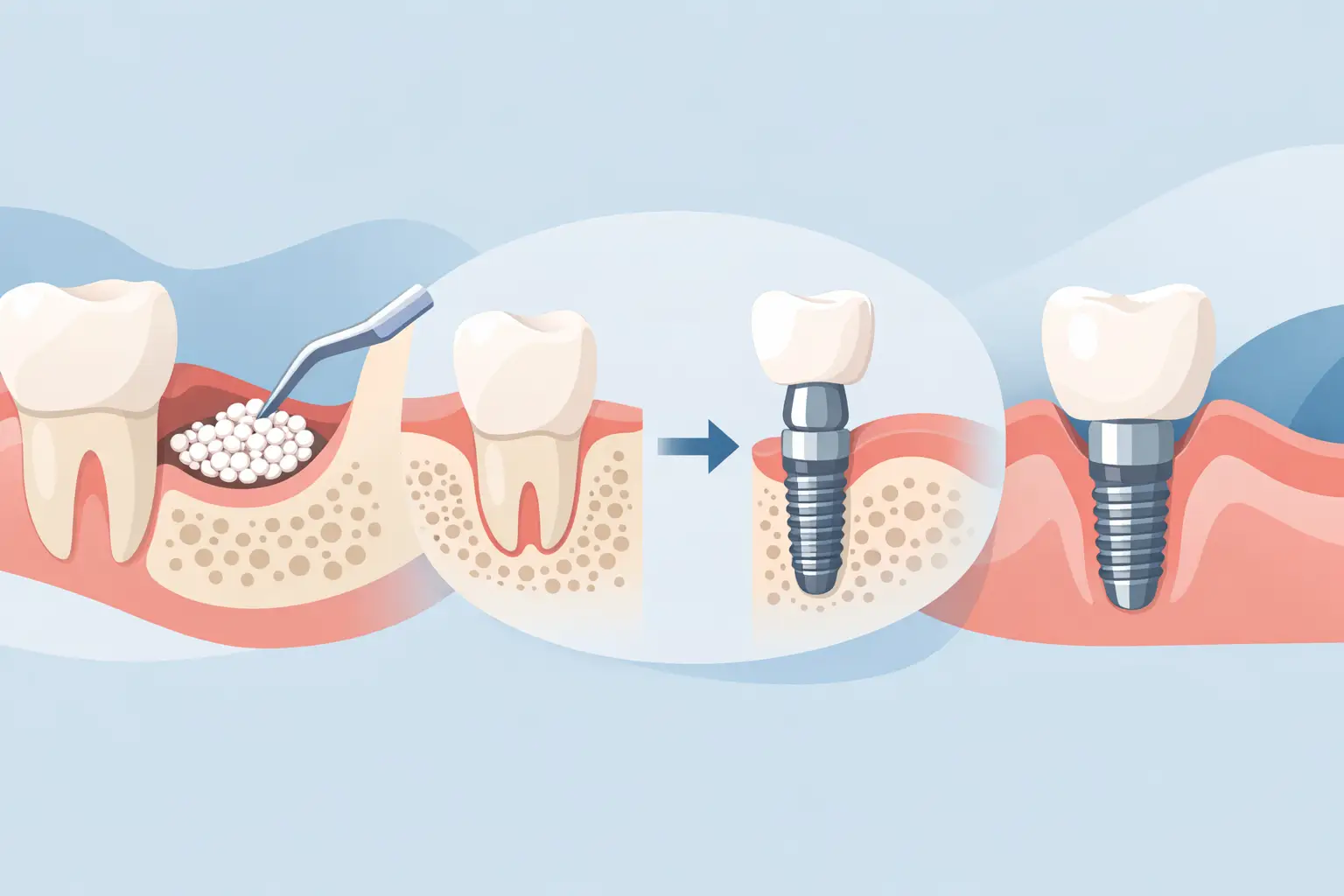
If you have been told you need bone grafting before dental implants, the first question is usually not about the science. It is much simpler: Do I really need this extra step? For many patients, the answer comes down to one thing - whether there is enough healthy jawbone to support an implant securely for the long term.
Dental implants are designed to function like artificial tooth roots. That only works when the surrounding bone is strong enough to hold the implant in place and integrate with it during healing. When bone volume has been lost because of missing teeth, gum disease, trauma, infection, or years of wearing a denture, placing an implant immediately may not be the best option. In those cases, bone grafting can create a more stable foundation and improve the odds of a successful result.
Why bone matters so much for implant success
An implant is not just inserted into the gums. It is placed into the jawbone, where it needs to fuse with the bone through a process called osseointegration. That bond is what gives an implant its stability and allows it to function much like a natural tooth root.
If the bone is too thin, too soft, or too short, the implant may not have enough support. Sometimes that means the implant cannot be placed safely at all. In other situations, the implant could technically be placed, but doing so would raise the risk of poor positioning, instability, gum recession, or long-term failure. This is where careful planning matters. A highly trained implant dentist does not simply ask whether an implant can be placed. The better question is whether it can be placed in the right position, with the right support, for a result that lasts.
When bone grafting before dental implants is recommended
Not everyone needs a graft. Many patients have enough existing bone and can move directly into implant placement. Others need grafting because the jaw has changed over time.
After a tooth is lost or extracted, the bone in that area naturally begins to shrink. This process can start quickly, especially in the first several months. Gum disease can also destroy bone around teeth before those teeth are even removed. In the upper back jaw, bone loss may be compounded by the sinus sitting low in the area where implants are needed. That is one reason some patients require a sinus graft before upper implants are placed.
A graft may also be recommended if a previous extraction left a defect, if an infection damaged the socket, or if a patient has worn removable dentures for years and experienced significant ridge shrinkage. Full-mouth implant patients often need more advanced planning because the goal is not only to place implants, but to support a full, functional bite and a natural-looking smile.
What a bone graft actually does
Bone grafting does not simply fill space. Its purpose is to rebuild or preserve the jawbone so the site can support an implant properly. The grafting material acts as a scaffold that helps new bone form over time. Depending on the case, that material may come from your own bone, a donor source, or a highly biocompatible synthetic material.
The right approach depends on the location, the size of the defect, your overall health, and the treatment goal. A small graft placed at the time of an extraction is different from rebuilding a more significant area for a future implant or restoring bone for full-arch treatment.
This is why advanced imaging and diagnosis matter. A 3D scan allows the doctor to evaluate bone width, height, density, and nearby structures before recommending treatment. It also helps determine whether grafting can be done at the same time as implant placement or whether healing should happen first.
Types of grafting used before implants
There is no one-size-fits-all version of bone grafting before dental implants. In a straightforward case, a socket preservation graft may be placed immediately after a tooth extraction to help reduce bone loss and keep the site suitable for a future implant. This is often a smart move when the tooth cannot be saved but implant replacement is planned.
In other cases, ridge augmentation is needed to rebuild a narrow or deficient area of bone. If the upper back jaw does not have enough vertical height because of the sinus, a sinus graft may be recommended to create room for a secure implant. Some patients need only a minor graft, while others need a more involved reconstruction.
The trade-off is simple: adding grafting can increase treatment time, but it often improves implant positioning, esthetics, and long-term predictability. Skipping it when it is clearly needed may save time up front and create bigger problems later.
Can the implant and graft be done at the same time?
Sometimes, yes. Sometimes, no.
If there is enough native bone to stabilize the implant at the time of surgery, a graft and implant may be placed during the same appointment. This can reduce the number of procedures and shorten the overall timeline. But when bone loss is more advanced, placing the implant too soon may compromise the result. In that situation, grafting first and allowing the area to heal is usually the better choice.
This is one of those areas where experience matters. The decision is not based on convenience alone. It should be based on whether the implant can be placed with proper initial stability and in an ideal restorative position.
Healing time and what to expect
Healing after a bone graft depends on the size of the graft, the material used, the location in the mouth, and your body's healing response. Some small grafts may mature in a few months, while larger or more complex grafts can take longer.
Most patients are surprised that recovery is often more manageable than expected. Mild swelling, tenderness, and temporary soreness are common for the first several days. Detailed aftercare instructions, medication when needed, and a soft diet during early healing can help keep you comfortable. If sedation is part of the treatment plan, that can also make the surgical experience easier for patients who feel anxious about dental procedures.
Smoking, uncontrolled diabetes, poor oral hygiene, and certain medical conditions can slow healing or reduce graft success. That does not always rule treatment out, but it does mean the plan should be customized carefully.
Is bone grafting before dental implants worth it?
For the right patient, yes - because the goal is not merely to place an implant, but to place it in a way that is healthy, stable, and built to last.
A graft can improve support for the implant, make better positioning possible, and help maintain the shape of the gums and jawline. That last point is often overlooked. In visible areas of the smile, bone support affects not just function but appearance. If the bone and soft tissue collapse too much, even a well-made implant crown may not look as natural as it should.
There are also cases where alternatives may be considered. Some patients are candidates for different implant designs, full-arch solutions such as All-on-4 or All-on-X, or treatment strategies that reduce the need for grafting in specific areas. The best option depends on the anatomy, the number of missing teeth, esthetic goals, budget, and timeline.
Choosing the right provider for grafting and implants
Bone grafting is not a standalone service. It is part of a larger implant plan, and it should be approached that way. The quality of the diagnosis, surgical technique, and restorative planning all influence the final result.
Patients benefit from working with a provider who understands both the surgical and restorative sides of implant treatment. That is especially true in more complex cases involving bone loss, full-mouth restoration, or previous dental failures. At a specialty-focused practice such as Trinity Dental Arts, treatment planning is centered on the end result from the start - stable implants, healthy tissue, and a smile that looks and feels right.
If you have been told you need a graft, it does not automatically mean your case is unusually difficult. It often means your doctor is planning carefully rather than cutting corners. A stronger foundation can add time to the process, but it also gives your future implant the support it needs to perform well for years. The most reassuring next step is a thorough evaluation that shows exactly what your bone looks like now and what it will take to rebuild with confidence.