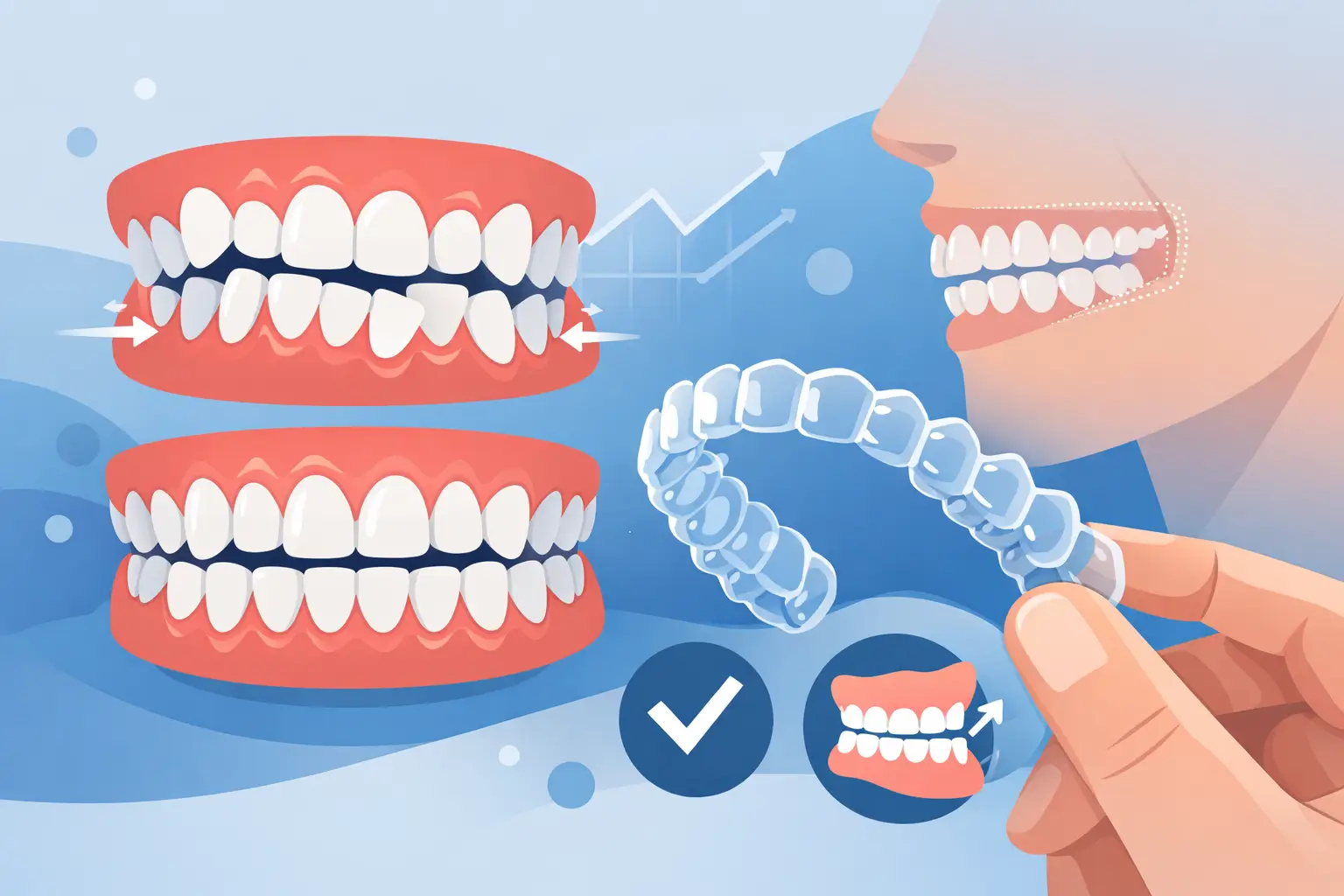
A bite that feels off can affect far more than the appearance of your smile. You may notice uneven wear on certain teeth, difficulty chewing, tension in your jaw, or a front tooth that keeps chipping. So, can Invisalign fix bite issues? In many cases, yes. Clear aligners can move teeth into a healthier relationship and correct several common bite concerns. The right answer, however, depends on whether the problem is primarily tooth position, jaw position, missing teeth, gum health, or a combination of factors.
For adults considering cosmetic or restorative dentistry, that distinction matters. Aligning teeth may be an excellent first step toward a more balanced smile, but it is not a one-size-fits-all solution for every bite.
Can Invisalign Fix Bite Issues Caused by Crooked Teeth?
Invisalign uses a planned series of clear, removable aligners to apply gentle pressure to specific teeth. As each set is worn, teeth move in small, controlled increments. This can improve how the upper and lower teeth meet, not simply make the smile look straighter.
Clear aligners are often effective for mild to moderate cases of crowding, spacing, and tooth-position-related bite problems. Treatment can also include attachments, which are small tooth-colored shapes placed on selected teeth to give the aligners more control. In some cases, small elastic bands are used to guide how the upper and lower arches fit together.
The goal is a stable, functional bite that distributes chewing forces more evenly. That can help protect teeth from excessive stress while improving comfort and smile aesthetics. Treatment planning should account for the roots, gums, existing restorations, and how your jaw functions, not just what is visible in photos.
Bite Problems Invisalign May Treat
Overbite
An overbite occurs when the upper front teeth overlap the lower front teeth more than expected. A mild or moderate overbite caused by tooth position may respond well to Invisalign, particularly when paired with elastics. Aligners can retract or reposition teeth and improve the way the arches come together.
A deep overbite deserves careful evaluation. When lower teeth bite into the gum tissue behind the upper teeth or the upper teeth experience repeated trauma, treatment needs to prioritize function and long-term protection, not appearance alone.
Underbite
With an underbite, the lower teeth sit in front of the upper teeth. Some mild cases are dental in nature, meaning the tooth positions create the problem, and aligners may help correct it.
A more pronounced underbite may be caused by the size or position of the jaws. Invisalign can sometimes improve the tooth alignment and bite contact, but it cannot reposition an adult jawbone. In significant skeletal cases, a more comprehensive treatment plan may be needed to achieve the healthiest result.
Crossbite
A crossbite means one or more upper teeth sit inside the lower teeth when you close your mouth. It can affect front teeth, back teeth, or both. Left unaddressed, a crossbite may contribute to uneven wear, gum recession around overloaded teeth, or difficulty chewing.
Clear aligners can be a strong option for many dental crossbites because they can move individual teeth with precision. The treatment plan may create space, widen an arch within appropriate limits, or shift teeth into a more balanced relationship.
Open Bite
An open bite leaves space between the upper and lower front teeth when the back teeth are together. Patients may find it difficult to bite into foods or may notice speech changes. Invisalign can often help close an open bite when tooth position is the main cause.
Habit patterns and jaw structure also matter. Tongue posture, clenching, and certain skeletal relationships can affect whether the correction remains stable. A responsible plan addresses the factors behind the bite, not only the visible gap.
When Clear Aligners May Not Be Enough
Invisalign is highly capable, but it has clinical limits. If your bite issue is driven primarily by significant jaw discrepancy, active periodontal disease, severe tooth wear, unstable jaw joints, or missing teeth that have allowed neighboring teeth to drift, aligners alone may not be the complete solution.
That does not mean clear aligner treatment has no role. It may be used before restorative dentistry to create the correct space for a dental implant, improve the position of teeth before a crown or veneer, or establish a more favorable bite before a full-mouth restoration. Sequencing is critical. Restoring teeth without addressing an unstable bite can place new dental work under forces it was not designed to handle.
At Trinity Dental Arts, Dr. Xhoana Gjelaj evaluates cosmetic goals alongside bite function, tooth condition, and the stability of existing dental work. That comprehensive perspective is especially valuable for adults whose bite concerns developed alongside worn, broken, or previously restored teeth.
What a Bite Evaluation Should Include
A clear aligner consultation should begin with more than a quick look at whether teeth are crooked. A detailed evaluation typically includes digital scans, photographs, bite analysis, and X-rays when clinically appropriate. These records help identify whether teeth can be moved predictably and whether the bone and gums can support the planned changes.
Your dentist should also review any history of jaw discomfort, headaches, grinding, cracked teeth, or repeated restoration failure. These concerns do not automatically rule out Invisalign, but they may change the treatment plan. For example, a patient who clenches heavily may need a protective appliance after treatment to protect both natural teeth and cosmetic restorations.
You should expect a discussion of what aligners can realistically improve, the estimated treatment timeline, and any additional treatment that would provide a more complete result. Straight teeth are desirable, but a comfortable, stable bite is the standard that matters most.
The Commitment That Makes Invisalign Work
Invisalign is removable, which is convenient for eating, brushing, and flossing. It also makes patient consistency essential. Aligners generally need to be worn about 20 to 22 hours each day to keep treatment progressing as planned. Removing them frequently or forgetting to change aligners on schedule can delay results and affect tracking.
Most patients also need refinement aligners near the end of treatment. Refinements are not necessarily a problem or a sign that treatment failed. They are often part of achieving the final bite contacts and tooth positions envisioned in the plan.
After active treatment, retainers are necessary. Teeth naturally tend to shift over time, particularly if they were crowded or rotated before treatment. Wearing retainers as instructed protects the investment in a healthier bite and a more confident smile.
Is Invisalign Better Than Braces for Bite Correction?
Neither option is automatically better for every patient. Invisalign offers discretion, removability, and excellent control for many mild to complex tooth movements. It is especially appealing to adults who want to improve their smile without noticeable brackets and wires.
Traditional braces may be recommended when tooth movements are especially difficult, compliance is a concern, or the bite requires mechanics that are more predictable with fixed appliances. The best choice follows diagnosis, not preference alone. A clinician should recommend the treatment that can deliver the most stable outcome for your specific bite.
Questions Patients Commonly Ask
Can Invisalign fix my bite and improve my smile at the same time?
Often, yes. Aligners can improve bite relationships while also addressing crowding, gaps, rotations, and the appearance of the front teeth. If veneers, crowns, or implants are planned, alignment may be completed first so restorative treatment can be designed more conservatively and precisely.
How long does Invisalign take for bite issues?
Many adult cases take roughly 12 to 18 months, although simpler concerns may take less time and complex bite corrections may take longer. The timeline depends on the type of movement needed, your wear habits, and whether refinements are required.
Will Invisalign change my face shape?
For most adults, Invisalign changes tooth position and smile support rather than dramatically changing facial structure. Patients may notice a more balanced smile and improved lip support in certain cases, but clear aligners do not create the jaw changes associated with surgical treatment.
A bite problem deserves a diagnosis that looks beyond the mirror. When your treatment is planned around function, health, and aesthetics together, every movement has a purpose: protecting your teeth while helping your smile feel as good as it looks.