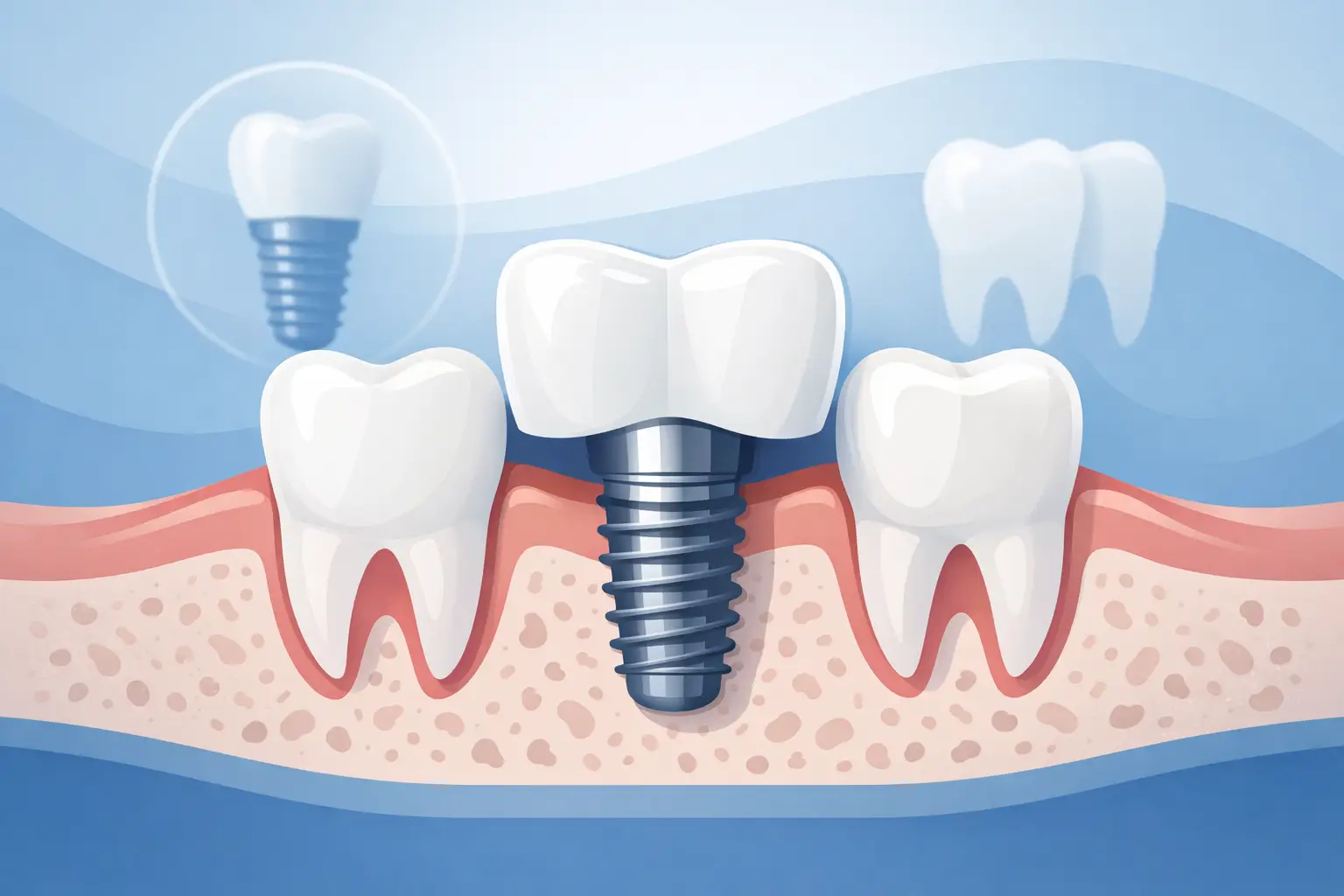
If you are missing two teeth side by side, one of the first questions you may ask is simple: can one implant replace two teeth? In some cases, yes - but the right answer depends on where the teeth are missing, how much bone is available, how your bite functions, and whether the final restoration can handle pressure over time.
This is one of those dental questions where the internet often makes things sound easier than they are. A single implant can sometimes support a two-tooth restoration, but it is not a shortcut that works for everyone. The goal is not just to fill a gap. The goal is to create a replacement that looks natural, feels stable, and holds up well under daily chewing forces.
Can one implant replace two teeth in every case?
No. One implant cannot replace two teeth in every situation.
When two teeth are missing next to each other, there are generally two implant-based options. One option is placing two separate implants, one for each tooth. The other is placing one implant and attaching a restoration that spans both missing teeth. Whether that second option is appropriate depends on biomechanics, spacing, bone support, and the location in the mouth.
In many cases, a single implant may be considered for two smaller teeth in an area with lower bite force. In other cases, especially where chewing pressure is heavier, placing two implants is the more predictable long-term solution. This is why a personalized exam matters more than a one-size-fits-all answer.
When one implant for two teeth may work
A single implant can sometimes support two teeth when the missing teeth are adjacent and the forces on that part of the mouth are manageable. This is more likely when there is excellent bone quality, healthy surrounding gums, and enough room to design a strong, well-supported restoration.
For example, if the missing teeth are in a lower-stress area and the patient does not grind or clench heavily, one implant with a two-unit bridge may be a reasonable option. The design must still be carefully planned. The implant position, the shape of the replacement teeth, and the load placed on the restoration all matter.
Experienced implant dentists evaluate much more than the empty space. They assess bone volume, smile line, gum architecture, opposing teeth, and bite patterns. These details influence whether one implant can provide enough support without increasing the risk of loosening, fracture, or bone loss.
When two implants are usually better
If the missing teeth are molars or located in an area that absorbs significant chewing force, two implants are often the stronger choice. Back teeth do more work. They handle repeated pressure from chewing and can be exposed to higher stress if a patient clenches, grinds, or has an uneven bite.
Using one implant to support two back teeth may place too much force on a single fixture. Over time, that can affect the implant, the restoration, or the surrounding bone. In those situations, two implants often provide better load distribution and greater long-term stability.
This is also true when spacing allows for ideal implant placement. If there is enough room and enough bone to place two implants properly, that approach may offer a more conservative mechanical design even if it involves more treatment upfront.
The location of the missing teeth matters most
Not all missing teeth behave the same way. Front teeth, premolars, and molars each have different shapes and different jobs. That is why the answer to can one implant replace two teeth often changes depending on the part of the mouth being treated.
In the front of the mouth, appearance is critical. Implant position must support both function and esthetics, including the gumline and the way light reflects off the teeth. In some front-tooth cases, the challenge is not just support but achieving a natural emergence profile and symmetry.
In the back of the mouth, function usually drives the decision. Chewing forces increase, and a single implant may be asked to absorb more pressure than is ideal for a two-tooth span. Even when one implant is technically possible, it may not be the most durable choice.
Bone support and implant size also affect the answer
An implant needs sufficient bone around it to remain stable and healthy. If the jawbone is thin, soft, or has shrunk after tooth loss, one larger treatment concept may not automatically be better than two smaller ones. In fact, compromised bone can limit the options entirely until the site is properly prepared.
Bone grafting may be recommended if the area has lost volume. That can improve the foundation for implant placement and expand the range of restorations that are possible. Advanced practices that handle both the surgical and restorative phases in one location are often able to coordinate this planning more precisely.
Dr. Xhoana Gjelaj and the team at Trinity Dental Arts place strong emphasis on detailed diagnostics because implant success depends on exact planning, not guesswork. Three-dimensional imaging, bite analysis, and restorative design all help determine whether a single implant spanning two teeth is appropriate or whether a different approach will deliver a stronger result.
One implant replacing two teeth has trade-offs
There can be advantages to using one implant instead of two. In the right case, it may reduce the number of implants needed, simplify surgery, and lower overall treatment cost. It may also be helpful when anatomical limitations make ideal placement of two implants more difficult.
That said, fewer implants do not automatically mean better treatment. One implant supporting two teeth creates a shared support system. If too much force is placed on that system, the restoration may be more vulnerable to complications. Hygiene access, crown design, and maintenance also need careful attention.
Patients sometimes assume the simplest option is the smartest one. With implants, durability matters more than doing the least. A well-planned treatment should balance efficiency, esthetics, comfort, and long-term predictability.
What your dentist evaluates before recommending this option
A comprehensive implant consultation should answer more than whether the space can be filled. It should answer whether that plan is built to last.
Your dentist will usually examine the condition of nearby teeth, the health of the gums, available bone, and the amount of pressure the area receives during function. They may also evaluate habits such as clenching or grinding, which can significantly change the recommendation. If the bite is unstable or forces are excessive, one implant supporting two teeth may not be ideal.
The design of the final restoration matters as much as the implant itself. A restoration that is too long, too wide, or poorly balanced can create leverage that increases stress. Precision in planning is what separates a temporary fix from a reliable one.
Is one implant replacing two teeth safe?
It can be safe when it is selected for the right patient and designed correctly. The question is not just safety on the day it is placed. The better question is whether it will remain healthy and functional years from now.
Implant dentistry is highly successful when the case selection is sound. Problems are more likely when treatment is chosen based only on reducing cost or avoiding additional surgery instead of matching the solution to the clinical realities. Safe and successful care depends on proper diagnosis, surgical precision, and a restoration designed for the way your mouth actually functions.
What patients should ask at a consultation
If you are considering implants for two missing teeth, ask whether one implant is being recommended because it is clinically ideal or simply because it seems more convenient. Ask how the bite forces in that area affect the plan, whether the bone is strong enough, and what the long-term maintenance looks like.
It is also reasonable to ask about alternatives within implant treatment, including how one implant compares with two implants in terms of longevity, cleaning, esthetics, and future repair. The best consultations are clear and specific. You should understand not just what is possible, but what is most predictable for your mouth.
A thoughtful treatment plan should leave you feeling informed, not pressured. When replacing missing teeth, the best result is the one that respects both biology and engineering. If one implant can replace two teeth in your case, it should be because it truly supports a stable, lasting outcome - not because it is the fastest answer.