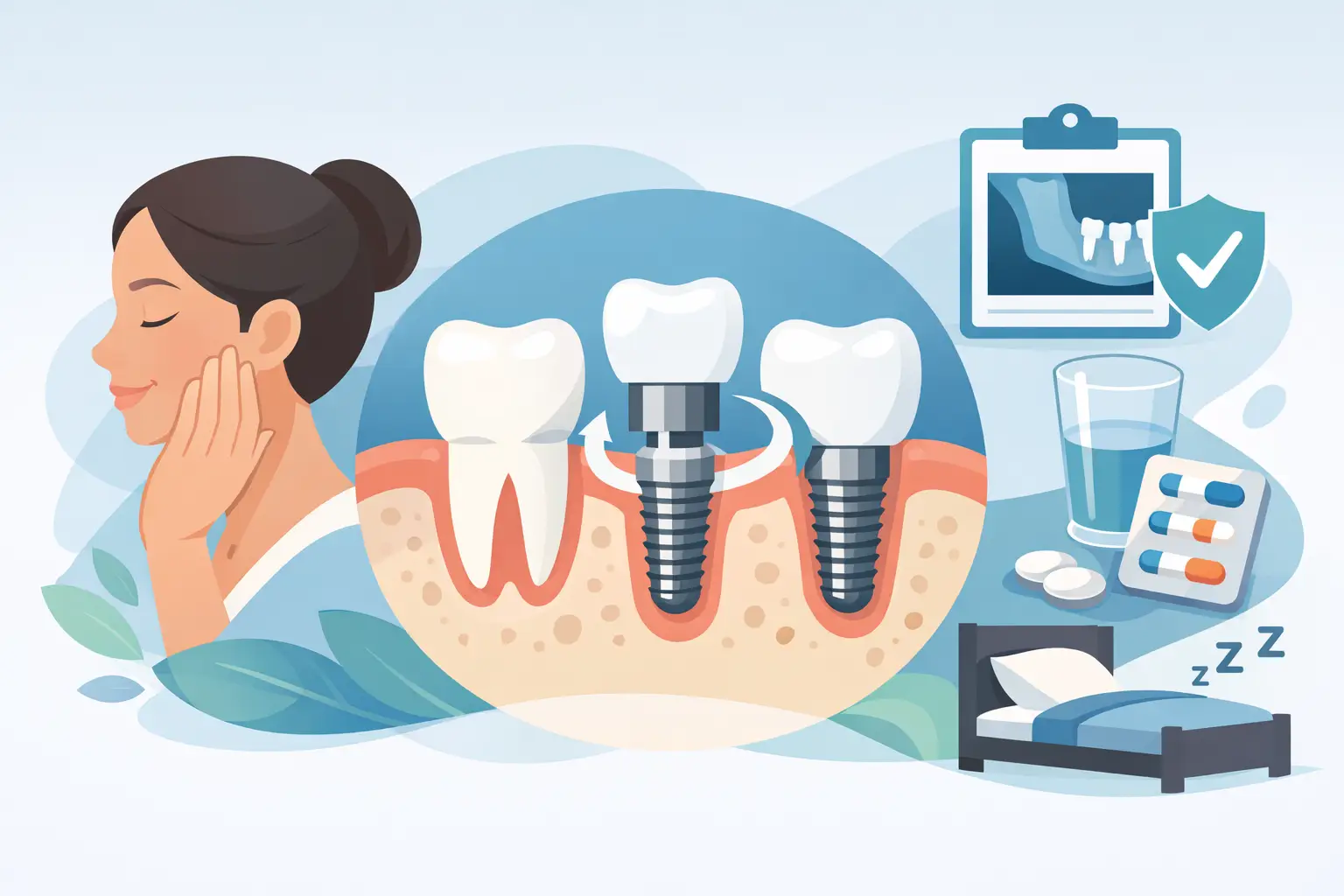
The first night after dental implant surgery is usually when questions get real. How much swelling is normal? When can you eat normally again? Is that soreness expected, or is something wrong? A good dental implant recovery guide should answer those concerns clearly, because recovery is a major part of getting a strong, long-lasting result.
Dental implant healing is not one-size-fits-all. A single implant placed in healthy bone often feels very different from a full-mouth restoration, an extraction with immediate implant placement, or a case that also involves bone grafting or a sinus lift. Your exact timeline depends on your health, the complexity of the procedure, and how closely you follow your post-op instructions.
Dental implant recovery guide: the first 24 hours
The earliest phase of recovery is focused on protecting the surgical site and controlling bleeding, swelling, and discomfort. Mild bleeding or oozing is common during the first several hours. Most patients are also aware of tenderness, pressure, and some fatigue, especially if sedation was used.
Ice packs usually help during this period. Short intervals on and off the outside of the face can reduce swelling and make you more comfortable. Rest matters too. Strenuous activity too soon can increase bleeding and throbbing, so this is the time to take it easy.
Food choices are also important right away. Soft, cool, easy-to-chew foods are usually best. Think yogurt, applesauce, smoothies eaten carefully with a spoon, mashed potatoes, eggs, or soup that has cooled down. Very hot foods, crunchy foods, spicy foods, and anything that can get lodged near the implant site are better avoided at first.
You should also avoid smoking, vaping, and alcohol during early healing. These can interfere with blood flow, irritate tissues, and increase the risk of complications. For implant patients, especially those with grafting or more advanced treatment, that trade-off is not minor. It can affect the quality of healing itself.
What days 2 through 7 usually feel like
For many patients, swelling peaks around day two or three, then gradually improves. Bruising can happen too, especially after more involved surgery. It may look dramatic, but it is often normal. Discomfort is typically manageable with the medications recommended by your dentist, whether that means prescription medication, over-the-counter pain relief, or both.
During this stage, keeping the area clean becomes increasingly important. You may be instructed to rinse gently with a prescribed rinse or warm salt water after the first day. The goal is to keep bacteria under control without disturbing the healing tissues. Vigorous spitting, aggressive rinsing, or poking the area with your tongue can slow healing.
A lot of patients worry if they are not "back to normal" within a few days. That concern is understandable, but implant recovery is often more gradual than a routine filling or simple cleaning. If you had an extraction, graft, or multiple implants placed, a full week of noticeable soreness is not unusual.
That said, worsening pain after initial improvement is worth attention. So is increasing swelling, pus, fever, or a bad taste that does not go away. Those signs do not always mean something serious is wrong, but they do justify a call to your dental office.
Eating during implant recovery
Most patients do best when they think in phases rather than searching for a single day when all food restrictions end. Early on, the priority is not chewing directly on the surgical area. Even if you feel hungry and otherwise well, too much pressure too soon can irritate the site.
Soft foods are safest for the first several days, and sometimes longer depending on the procedure. As comfort improves, many people can move into foods that are still gentle but more filling, such as pasta, soft fish, rice, oatmeal, pancakes, steamed vegetables, or tender chicken cut into small pieces. Hard crusts, chips, nuts, popcorn, steak, and sticky foods usually need to wait.
If you are wearing a temporary restoration, the diet instructions may be even more specific. Temporary teeth can be highly esthetic and functional, but they are not meant to absorb unlimited chewing force during the healing phase. This is especially important in full-arch cases like All-on-4 or All-on-X treatment, where the implant positions and temporary prosthetic must be protected while integration occurs.
The real healing timeline
Here is where expectations matter. The gum tissue may start to look better within a couple of weeks, but that is not the same as complete healing. The deeper process is called osseointegration, which is when the implant fuses with the jawbone. That phase takes time.
In many cases, osseointegration takes several months. Some patients move faster, and some need longer. Bone quality, medical history, whether grafting was needed, and whether the implant was placed immediately after extraction all influence timing. This is one reason experienced treatment planning matters. A rushed timeline is not always the best timeline.
If you are having a front tooth restored, healing may also include managing the appearance of the gumline while the area matures. If you are having full-mouth treatment, recovery may involve adapting to a temporary fixed bridge before your final restoration is delivered. Functional healing and esthetic healing often happen together, but not always at the same pace.
Dental implant recovery guide for pain, swelling, and daily care
Most implant patients want to know the difference between normal post-op symptoms and red flags. Normal usually includes soreness, mild bleeding early on, swelling, tenderness when chewing, and limited jaw opening for a short time. Some people also notice a sore throat or muscle stiffness, especially after longer procedures.
What is not considered routine is heavy bleeding that does not slow down, severe pain that is not controlled with medication, new swelling that gets worse after several days, or the feeling that the implant or temporary teeth are moving. Numbness that does not improve as expected should also be reported.
Daily care should be gentle but consistent. You still need a clean mouth for healthy healing. That may mean using a soft toothbrush away from the surgical site at first, then carefully cleaning closer to the area when instructed. If your case includes a temporary bridge or multiple implants, your dentist may recommend special hygiene tools once the tissues are ready.
This is also the stage when many patients benefit from clear communication with their implant provider. At a practice like Trinity Dental Arts, where advanced implant treatment and full-mouth restoration are a major focus, follow-up care is not an afterthought. It is part of how strong results are maintained.
Factors that can slow recovery
Some healing variables are within your control, and some are not. Smoking is one of the most significant risk factors because it reduces blood supply and can interfere with tissue repair and implant integration. Uncontrolled diabetes can also delay healing and increase complication risk. Teeth grinding is another issue, particularly if excessive force is placed on a healing implant or temporary restoration.
Procedure complexity matters too. A patient receiving one implant in an area with excellent bone support may recover relatively quickly. A patient having multiple extractions, grafting, and same-day fixed teeth should expect a more involved healing period. Neither situation is necessarily a problem. They are just different clinical realities.
Anxiety can also affect recovery more than people expect. When patients are tense, they may clench more, sleep poorly, or struggle to follow eating restrictions. Good pre-op planning, sedation when appropriate, and detailed post-op guidance can make recovery feel much more manageable.
When you can return to work, exercise, and normal life
Many patients return to desk work within a day or two after straightforward implant placement. Others need longer, especially after full-mouth surgery, multiple implants, or sedation. If your job is physically demanding, lifting and exertion may need to be postponed for several days.
Exercise should usually wait at least briefly. Even if you feel fine, intense activity can increase swelling, bleeding, and pressure at the surgical site. A short pause in your fitness routine is often worth it if it helps protect the healing process.
Socially, people often feel comfortable being out and about sooner than they expected, especially once early swelling starts to subside. If you have a temporary tooth or temporary bridge, you may be able to smile confidently during healing, but comfort and function still require caution.
Follow-up visits matter more than most patients think
A successful implant is not judged only by how you feel the week after surgery. It is judged by how well the implant integrates, how the tissues respond, how the bite functions, and how the final restoration fits over time. Follow-up visits allow your dentist to evaluate all of that before small concerns become larger ones.
These visits are especially important in complex cases. Bone graft maturation, implant stability, gum contour, temporary prosthetic wear, and oral hygiene all need to be monitored. Patients sometimes assume that if pain is minimal, everything must be perfect. Often that is true, but not always. Healing can look stable from your perspective while still benefiting from professional adjustment or monitoring.
If you are preparing for implant treatment, the smartest approach is not to look for the fastest recovery story online. It is to understand your own case, your own risk factors, and the specific plan your doctor recommends. Recovery is not just about getting through a few sore days. It is about giving your implant the best possible environment to become the strong, lasting foundation it was designed to be.