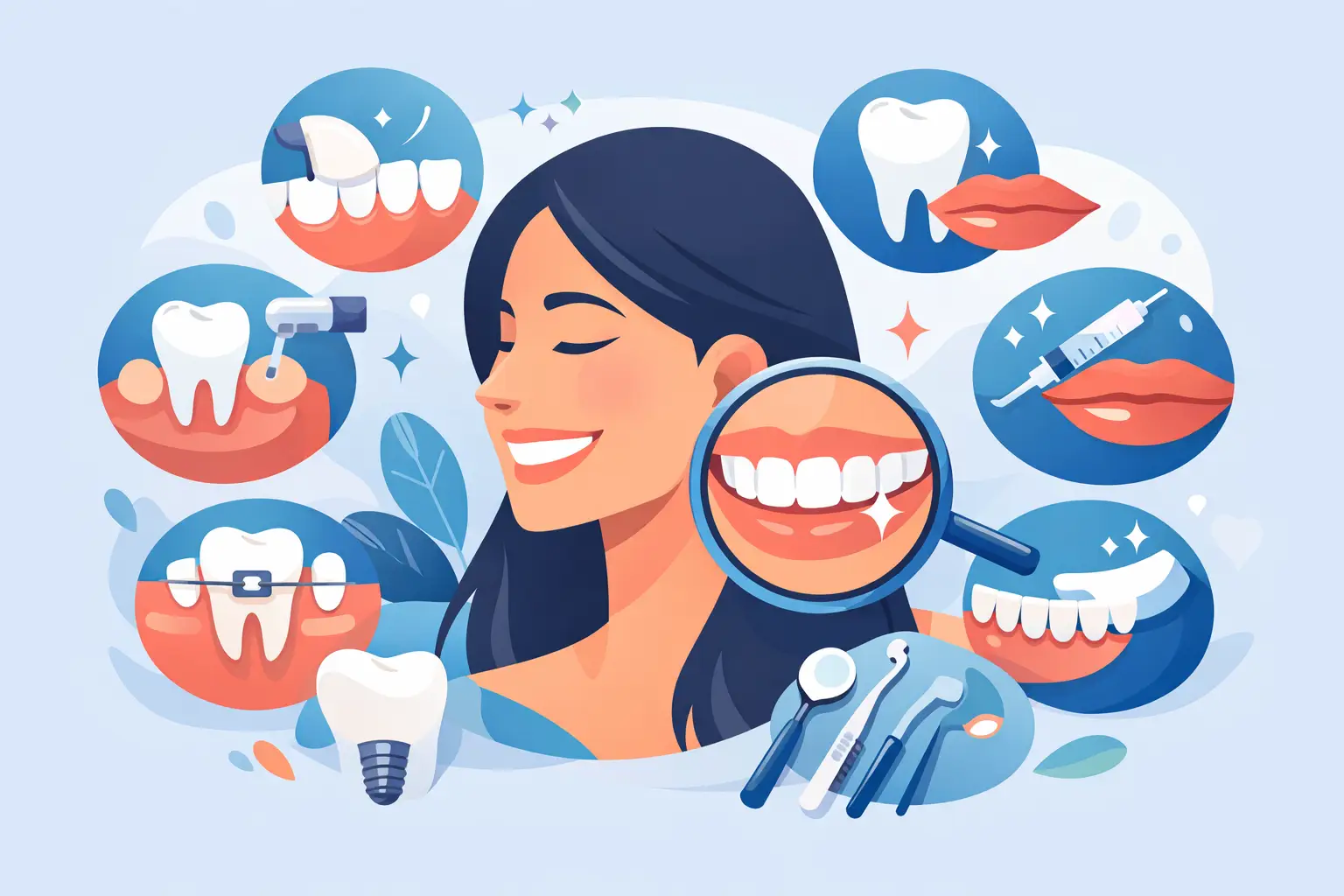
A single dark tooth, worn edges, spaces between front teeth, or a smile that seems to have changed with age can affect more than photographs. These are common reasons patients research examples of cosmetic dentistry. The right solution is not always the most dramatic one. It is the treatment that improves appearance while respecting your bite, tooth structure, gum health, and long-term goals.
Cosmetic dentistry can be as conservative as professional whitening or as comprehensive as rebuilding a smile with veneers, implant-supported crowns, and bite-focused restorations. At Trinity Dental Arts, treatment planning starts with a close look at the reason behind the concern, not simply the visible flaw. That distinction matters when you want results that look natural and continue to feel comfortable years later.
8 Examples of Cosmetic Dentistry Treatments
1. Professional teeth whitening
Professional whitening is often the most straightforward way to refresh a healthy smile. It uses dentist-supervised whitening agents to lift many surface and internal stains caused by coffee, tea, red wine, tobacco, and normal aging. For patients whose teeth are evenly shaped but look dull or yellowed, whitening can make a meaningful difference without changing the teeth themselves.
Whitening works best on natural tooth enamel. Existing crowns, veneers, and bonded restorations will not lighten with the surrounding teeth, so their color should be considered before treatment begins. Sensitivity can occur, particularly in patients with exposed root surfaces or a history of sensitivity, but a customized plan can help manage it.
2. Porcelain veneers
Porcelain veneers are thin, custom-made shells bonded to the front surfaces of teeth. They can improve the appearance of teeth that are discolored, unevenly shaped, chipped, slightly misaligned, or separated by small gaps. Because each veneer is designed individually, a skilled cosmetic dentist can adjust brightness, translucency, length, and contour to suit the patient’s facial features and smile line.
Veneers are a strong option when several front teeth need coordinated changes. They are not a shortcut for untreated decay, gum disease, or major bite issues. In many cases, a small amount of enamel preparation is required, making veneer treatment a long-term commitment. Dr. Xhoana Gjelaj evaluates function as carefully as appearance so the final result is designed for both beauty and durability.
3. Cosmetic dental bonding
Dental bonding uses tooth-colored composite resin to repair small chips, reshape edges, close modest spaces, or cover localized discoloration. It is generally more conservative than veneers because it often requires little to no removal of natural enamel. Bonding can also be completed efficiently when a patient wants a targeted improvement rather than a full smile makeover.
The trade-off is maintenance. Composite resin can stain, chip, or wear sooner than porcelain, especially for people who grind their teeth or frequently consume staining foods and drinks. It is an excellent choice for the right situation, but it may not provide the same longevity or color stability as veneers.
4. Invisalign clear aligner treatment
Crowding, spacing, and minor bite discrepancies can make teeth look uneven even when they are healthy and bright. Invisalign uses clear, removable aligners to gradually move teeth into better positions. For many adults, it provides a discreet way to improve alignment before whitening, bonding, or veneers.
Orthodontic treatment is especially valuable when the cosmetic issue is really a tooth-position issue. Moving teeth first can reduce the amount of reshaping or restorative work needed later. Clear aligners require consistent wear and regular monitoring, however. They may not be the right approach for every complex bite or movement pattern, which is why an in-person evaluation is essential.
5. Same-day ceramic crowns
A crown can be cosmetic and restorative at the same time. Modern ceramic crowns are used when a tooth has significant damage, a large failing filling, fracture lines, severe discoloration, or wear that cannot be predictably addressed with a more conservative treatment. They cover the entire visible portion of the tooth and are designed to restore shape, strength, and color.
Same-day crown technology can allow eligible patients to receive a custom restoration in one visit. That convenience is valuable, but the real priority is precise planning. A crown should fit comfortably within the bite and blend with adjacent teeth. When only a small cosmetic change is needed, a crown may be more treatment than necessary. When the tooth is structurally compromised, it can be the more protective choice.
6. Dental implants with natural-looking crowns
A missing tooth changes the appearance of a smile, but it can also affect chewing, speech, and the stability of nearby teeth. A dental implant replaces the tooth root with a biocompatible post placed in the jawbone, then supports a custom crown above the gumline. The crown is shaped and shaded to complement the surrounding teeth, allowing the replacement to look integrated rather than obvious.
Implant treatment requires careful planning of bone volume, gum contours, bite forces, and the final crown position. Some patients need bone grafting or other preparatory care to create a stable foundation. The process takes more time than a cosmetic surface treatment, but it offers a fixed, long-term solution for qualified candidates. For a patient with one missing front tooth, meticulous implant planning can be as much about pink gum aesthetics as the crown itself.
7. Gum contouring and laser dentistry
Sometimes teeth appear short not because the enamel is too small, but because extra gum tissue covers more of the tooth than expected. Gum contouring reshapes the gumline to create more balanced tooth proportions and a more even smile frame. It can also help correct a single uneven gum margin that draws attention away from otherwise attractive teeth.
Laser dentistry may be used for select soft-tissue procedures, offering precise tissue management and, in appropriate cases, a more comfortable recovery experience. Gum contouring is not simply a cosmetic trim. The dentist must account for the underlying bone and the biologic space around each tooth to protect periodontal health and create a result that remains stable.
8. Full-mouth cosmetic restoration
When teeth are extensively worn, broken, missing, discolored, or affected by older failing dental work, isolated treatment may not address the larger problem. Full-mouth restoration coordinates multiple procedures to rebuild the function and appearance of the smile. Depending on the diagnosis, the plan may include dental implants, crowns, veneers, bite adjustment, gum treatment, or clear aligner therapy.
This is not a one-size-fits-all makeover. The goal is to establish a comfortable bite first, then design restorations that support clear speech, confident chewing, and a natural-looking smile. Patients with jaw discomfort, frequent fractures, or severely worn teeth often benefit from this broader diagnostic approach rather than repeatedly repairing one tooth at a time.
How to Choose Among Cosmetic Dentistry Options
The best cosmetic treatment depends on what is causing the concern. Whitening addresses color. Aligners address position. Bonding and veneers change visible shape. Crowns repair teeth that need more structural support. Implants replace missing teeth. A complete examination helps distinguish between a cosmetic preference and an underlying condition that should be treated first.
Your timeline, budget, maintenance preferences, and comfort with irreversible changes also matter. Professional whitening and bonding can be relatively conservative starting points. Veneers and crowns offer more comprehensive changes but involve a greater commitment. Implant and full-mouth treatment may require phased care, yet they can solve functional problems that a surface-level cosmetic treatment cannot.
A detailed consultation should include photographs, digital imaging when indicated, an assessment of gum health and bite function, and a conversation about what you want to change. Bring examples of smiles you like, but expect the plan to be individualized. A smile that looks excellent on another person may not suit your tooth proportions, facial features, or functional needs.
When Cosmetic Concerns Need Restorative Care First
Cosmetic treatment should never cover an active problem. Tooth pain, bleeding gums, loose teeth, infection, cracked teeth, or significant jaw discomfort call for diagnosis before aesthetic work begins. Treating the foundation first protects the investment you make in the visible result.
This is particularly relevant for patients who have delayed care because they feel embarrassed about their smile. Advanced restorative and cosmetic dentistry can often address complex concerns in a coordinated plan, and sedation options may help eligible patients feel more at ease during treatment. The first appointment is simply the place to get clear answers and a realistic path forward.
A well-designed smile should still look like you - only healthier, more balanced, and easier to show. If you are considering cosmetic dentistry in Trinity or the Tampa Bay area, a personalized evaluation can identify the smallest effective treatment or the comprehensive plan that truly supports your long-term goals.