Losing most or all of your teeth changes more than your smile. It affects how you eat, how clearly you speak, how your face is supported, and how confident you feel in everyday conversations. For patients researching full mouth dental implants Clearwater options, the real question is not simply whether implants can replace teeth. It is whether the treatment is planned with enough precision to restore comfort, function, and long-term stability.
That distinction matters. Full-mouth implant treatment is one of the most advanced procedures in dentistry, and the quality of the outcome depends heavily on diagnosis, surgical judgment, restorative design, and the experience of the doctor leading the case. When patients are dealing with extensive tooth loss, failing teeth, severe wear, infection, or years of patchwork dental work, they need more than a quick fix. They need a comprehensive treatment plan.
What full mouth dental implants in Clearwater actually mean
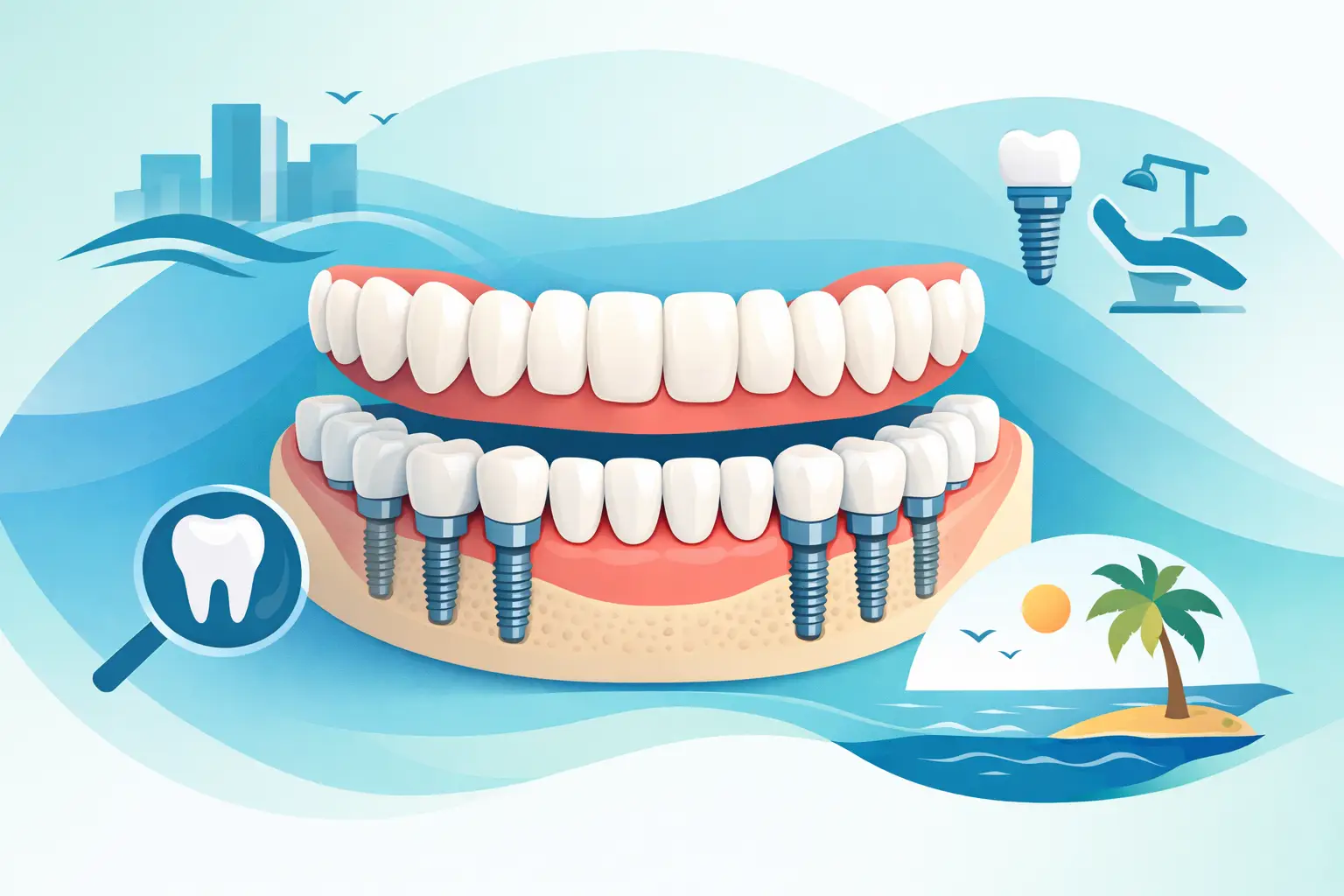
Full-mouth dental implants replace an entire upper arch, lower arch, or both using a strategic number of implants that support a fixed set of teeth. Rather than replacing each tooth with a separate implant in every case, the doctor evaluates your bone levels, bite forces, smile design, and health history to determine the most predictable solution.
Many patients have heard terms like All-on-4 or All-on-X. Those names describe a full-arch implant concept, but they are not all identical. Some patients do well with four implants per arch, while others need more support because of bone loss, anatomy, bite pressure, or aesthetic goals. That is why a one-size-fits-all pitch can be misleading.
When planned correctly, full-mouth implants are designed to feel secure and function much more like natural teeth than removable options. They are fixed in place, customized to the patient, and built around both surgical stability and final smile appearance.
Why patients choose full mouth dental implants Clearwater providers offer
Most people who start looking into full-mouth restoration are not doing it for cosmetic reasons alone. They are often trying to solve several problems at once. Teeth may be broken down, missing, infected, loose, or causing pain. Chewing may be limited to softer foods. Photos may feel uncomfortable. In many cases, people have been managing a declining situation for years.
Full-mouth implants can address those issues in a more complete way because they restore the full bite system, not just isolated teeth. The goal is to rebuild support, improve function, and create a smile that looks natural on the face.
There are also health reasons patients pursue treatment. Long-term tooth loss can contribute to jawbone deterioration. Worn or collapsing bites can place stress on the jaw joints and remaining teeth. Chronic infection from failing teeth can continue to affect overall oral health. A well-executed implant plan can help stabilize these problems, but only after a careful clinical evaluation.
Who is a good candidate for full-mouth implants?
Many adults are candidates, including patients who assume they have been told no in the past. The key is not whether the case is simple. The key is whether the provider has the surgical and restorative experience to evaluate it properly.
Good candidates often include adults with multiple missing teeth, failing crowns or bridges, advanced breakdown, severe wear, or teeth that are no longer predictable to save. Bone loss does not automatically rule out treatment. In some cases, additional procedures such as bone grafting or sinus grafting may be recommended to create a stronger foundation.
It also depends on general health, gum condition, habits such as smoking, and how committed the patient is to healing and maintenance. Implant treatment is highly successful, but it is not passive. Patients need to follow instructions, attend follow-up visits, and maintain excellent home care.
A skilled implant doctor will also assess expectations. Some patients are focused primarily on speed. Others care most about long-term durability or smile aesthetics. The right plan balances all three, but trade-offs do exist. A faster path is not always the best path if the foundation is compromised.
The planning stage matters more than most people realize
The most successful full-mouth cases begin long before surgery. Diagnostic imaging, digital treatment planning, a bite analysis, and a review of the patient’s smile line all shape the final result.
This is where expertise becomes visible. Implant treatment is not just about placing titanium fixtures in bone. It is about placing them in the correct position for a functional and beautiful restoration. If implants are poorly positioned, the final teeth may look bulky, feel awkward, or place unhealthy stress on the system.
Dr. Xhoana Gjelaj’s advanced implant-focused approach reflects why patients seek out practices that can manage both the surgical and restorative sides of treatment under one roof. In complex full-mouth cases, that level of oversight can improve communication, efficiency, and consistency from planning through the final result.
What the treatment process usually looks like
The process begins with a comprehensive consultation. This includes imaging, an oral exam, medical review, and a discussion about goals. Some patients need extractions and immediate implant placement. Others are better served by phased treatment that first addresses infection, bone support, or healing needs.
If the patient is a candidate for immediate fixed teeth, implants may be placed and connected to a provisional set of teeth on the same day or within a short window. This can be life-changing for patients who want to avoid a long period without fixed function. Still, immediate loading is not appropriate in every case. The decision depends on implant stability, bone quality, bite risk, and overall predictability.
After surgery, the implants need time to integrate with the bone. During this healing phase, the provisional restoration allows the doctor to evaluate bite, speech, smile appearance, and comfort. Once the tissues have stabilized, the final restoration is fabricated with greater precision.
That final phase is where many of the details come together - tooth shape, color, gum contours, bite refinement, and long-term material selection. Patients are often surprised by how much artistry is involved. The best results do not look generic or overly white. They look balanced, healthy, and believable.
Cost, value, and what patients should ask
Full-mouth implants are a significant investment, and patients should expect that. The overall fee reflects diagnostics, surgical care, implant components, temporary teeth, final restorations, technology, follow-up care, and the experience of the team delivering treatment.
That said, cost should never be viewed in isolation. Lower pricing can sometimes reflect shortcuts in planning, materials, lab quality, or post-operative support. On the other hand, the highest quote is not automatically the best choice either. Patients should ask what is included, who is performing the surgery, what type of final restoration is planned, whether sedation is available, and how complications are handled if they arise.
Financing can make treatment more accessible for patients who want to move forward without delaying care. A reputable practice will explain costs clearly and walk through the options without pressure.
Recovery and life after treatment
Recovery is usually more manageable than many patients expect, especially when sedation and careful surgical protocols are used. Some swelling, soreness, and dietary restrictions are normal in the early phase. Most patients can return to routine activities within a few days, although healing timelines vary.
Long-term success depends on more than the surgery itself. Patients need regular maintenance visits, consistent home care, and periodic evaluation of the prosthesis and implant health. Full-mouth implants are designed for durability, but they still require professional oversight.
The payoff is substantial. Patients often describe being able to eat more comfortably, smile without hesitation, and stop thinking about their teeth all day. That mental relief is a major part of the transformation.
Choosing the right provider for full-mouth implant care
When comparing providers, patients should look past marketing language and focus on qualifications, case experience, technology, and whether the practice can manage complex treatment in a coordinated way. Full-mouth implant care requires clinical judgment at every stage, and small decisions can have long-term consequences.
Ask to see real case examples. Ask how candidacy is determined. Ask what happens if bone loss or infection is found. Ask who designs and delivers the final restoration. The answers will tell you a great deal about the depth of the practice.
For adults considering full mouth dental implants Clearwater treatment options can feel overwhelming at first. But the right consultation should make the path clearer, not more confusing. When the planning is thorough and the care is expert-led, full-mouth restoration becomes more than a replacement for missing teeth. It becomes a way to regain stability, confidence, and quality of life with a solution built to last.
If you are at the point where eating, smiling, or living with failing teeth has become a daily burden, the best next step is not to keep adapting around the problem. It is to get a precise diagnosis and a treatment plan that is worthy of the result you want.