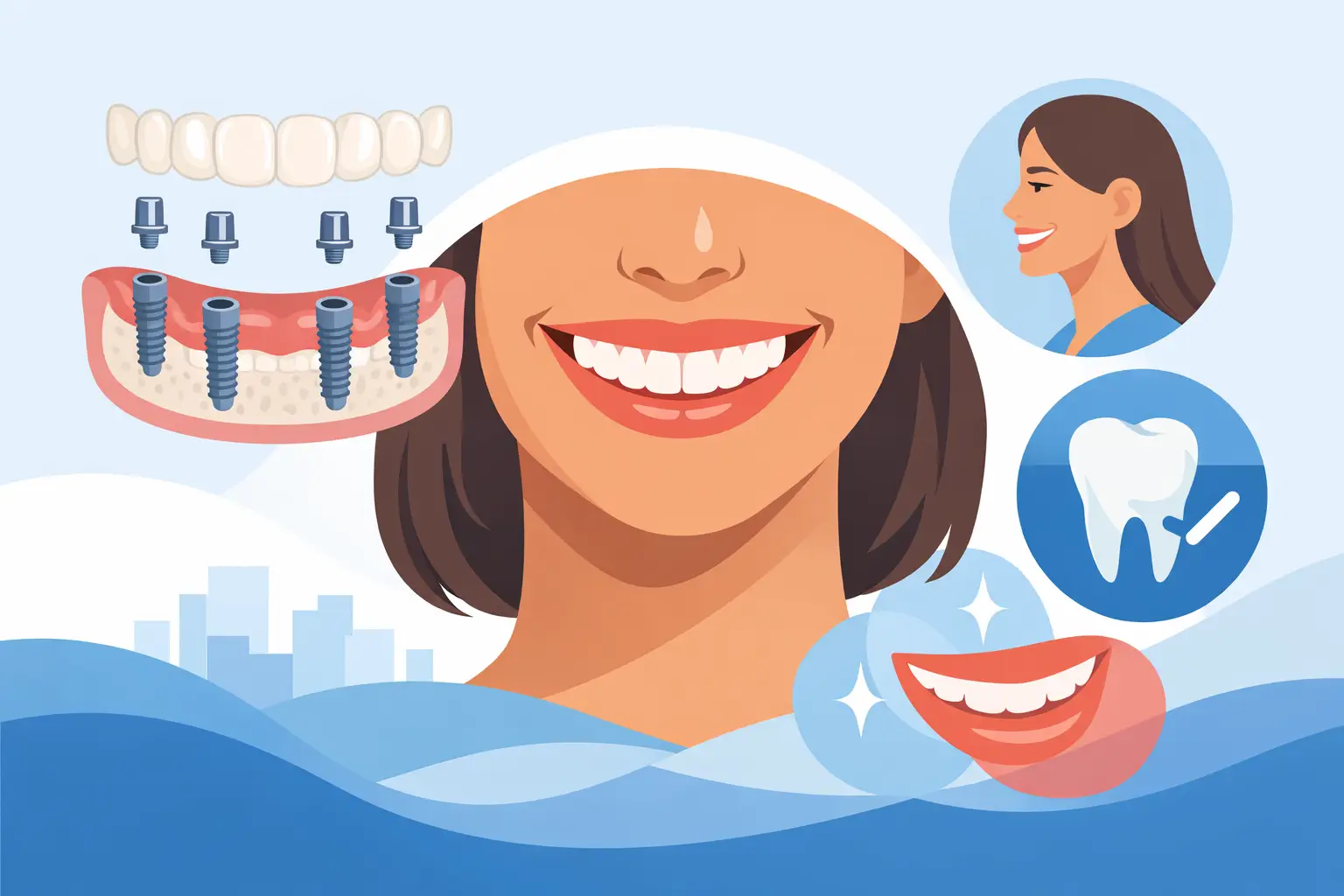
When multiple teeth are missing, painful, loose, or beyond predictable repair, the concern is rarely limited to appearance. Eating comfortably, speaking clearly, and feeling confident in social and professional settings can all become more difficult. Understanding how all on 4 works can help you decide whether this fixed full-mouth restoration approach is an appropriate path forward.
All-on-4 uses a strategically planned set of dental implants to support a full arch of fixed new teeth. Rather than replacing every missing tooth with an individual implant, this approach creates a stable foundation for an entire upper or lower smile. It is a highly personalized procedure, and the quality of planning, surgical placement, and final restoration matters just as much as the number of implants used.
How All-on-4 Works From Planning to Fixed Teeth
All-on-4 treatment begins with a comprehensive evaluation, not a one-size-fits-all recommendation. Your dentist evaluates the health of your gums, remaining teeth, bite, jawbone, medical history, and cosmetic goals. Advanced imaging, often including 3D scans, provides a detailed view of bone volume and important anatomical structures so implant placement can be planned with precision.
If teeth remain in the treatment area but cannot be predictably restored, they may be removed as part of the procedure. The goal is to create a healthy, stable foundation for the new smile rather than continuing to invest in teeth with a poor long-term outlook.
Next, dental implants are placed into the jawbone. These small titanium posts function as artificial tooth roots. In a classic All-on-4 design, two implants are positioned toward the front of the jaw and two are angled in the back. Angling the posterior implants can make better use of available bone, often reducing the need for additional grafting in appropriate cases.
Once the implants are secure, they support a fixed full-arch restoration. Many qualified patients can receive a temporary fixed set of teeth on the day of surgery or soon afterward. This provisional restoration allows you to leave with teeth in place while your implants integrate with the bone and your gums heal.
The temporary teeth are not simply a cosmetic placeholder. They allow your dental team to assess your bite, smile appearance, speech, and comfort before the final bridge is created. After healing, a custom final restoration is designed for greater strength, refined esthetics, and long-term function.
Why Implant Position Matters
The name All-on-4 describes a treatment concept, but it does not mean every patient should receive exactly the same solution. Bone density, jaw shape, bite forces, history of gum disease, and the condition of the opposing arch all affect the treatment plan.
Implants must be placed where they can achieve strong initial stability and support the restoration evenly. The final teeth must also be designed to distribute chewing forces appropriately. A bridge that looks attractive but does not fit the bite correctly can place unnecessary strain on the implants, porcelain, or supporting components.
For some patients, an All-on-X approach may be more appropriate. This means the final full arch may be supported by more than four implants when anatomy, bone quality, or functional needs call for additional support. The right number is not a marketing decision. It is a clinical decision based on what will provide the most predictable outcome for your mouth.
The Healing Process After Implant Placement
Dental implants do not simply sit in the jaw. Over time, the surrounding bone bonds with their surface in a process called osseointegration. This biological connection is what allows implants to support fixed teeth with stability.
Healing timelines vary. Some patients heal efficiently, while others need additional time because of bone quality, medical factors, smoking, or the complexity of the procedure. During this period, patients are typically instructed to follow a carefully managed diet and avoid placing excessive force on the temporary teeth.
Mild swelling, tenderness, and bruising are common after surgery and usually improve over the first several days. Your dental team will provide individualized instructions for medications, oral hygiene, food choices, and follow-up visits. Sedation options can also help patients who feel anxious about surgical treatment.
A successful recovery depends on more than making it through surgery. Keeping follow-up appointments, maintaining excellent hygiene, and following dietary instructions protect the healing implants during the period when stability is still developing.
What the Final All-on-4 Restoration Is Like
Once healing is complete, the temporary bridge is replaced with a custom final restoration. This phase is where function and appearance come together. The final teeth are designed to complement your facial features, support a natural smile line, and create a bite that feels comfortable when you speak and eat.
Materials vary based on the treatment plan and patient priorities. High-strength ceramic materials can offer lifelike color and excellent durability, while other materials may be selected when flexibility, repairability, or bite force considerations are a priority. There is no universally best material for every person. The right choice depends on your bite, esthetic expectations, hygiene needs, and long-term goals.
A well-designed full-arch restoration should feel secure and look proportional, not overly bulky or artificial. It should also allow for proper cleaning around the bridge. A beautiful result is important, but a restoration that cannot be maintained is not a long-term solution.
Who May Be a Candidate for All-on-4?
All-on-4 may be considered for adults with widespread tooth loss, severely damaged teeth, advanced tooth mobility, or a failing full arch that would require extensive and repeated treatment to maintain. It may also be appropriate for patients who want a fixed alternative that provides greater stability than removable tooth replacement options.
Candidacy is based on health, not age alone. Many adults in Trinity and the greater Tampa Bay area are surprised to learn that they may qualify even if they have been told they have bone loss. Strategic implant placement can sometimes make grafting unnecessary, although bone grafting remains valuable in cases where it will improve support and long-term predictability.
Certain factors require careful discussion. Uncontrolled diabetes, active gum infection, smoking, teeth grinding, and some medications can affect healing and implant success. These do not automatically rule out treatment, but they may change the timing, design, or preparation needed before surgery.
Daily Care Protects Your Investment
Fixed implant-supported teeth do not decay like natural enamel, but the tissues around implants still require consistent care. Plaque and bacteria can cause inflammation around implants, which can threaten their long-term health if left untreated.
Daily brushing, cleaning beneath the bridge with the tools recommended by your dentist, and regular professional maintenance are essential. Your hygienist may recommend specialized brushes, water flossing, or other aids based on the shape of your restoration and your dexterity. Routine visits also allow your team to monitor the bite, restoration, gum tissue, and implant health before small concerns become larger problems.
For patients who clench or grind, a protective nightguard may be recommended. Full-arch restorations are strong, but they are not indestructible. Protecting them from repeated excessive force can reduce the risk of chipping, loosening, or mechanical wear.
Choosing an Experienced Full-Mouth Restoration Team
All-on-4 treatment combines surgery, restorative dentistry, bite planning, and esthetic design. A successful result requires these elements to work together from the first scan through the final bridge. Treatment should not be rushed because the goal is not merely to place implants. It is to create a healthy, functional smile built for the long term.
At Trinity Dental Arts, Dr. Xhoana Gjelaj takes a comprehensive approach to implant treatment, evaluating both the surgical foundation and the final smile design. A personal consultation can clarify whether All-on-4, All-on-X, or another implant-supported plan best fits your needs.
The most helpful next step is a detailed evaluation that replaces uncertainty with a clear plan. With the right diagnosis, careful planning, and committed long-term care, fixed new teeth can offer a meaningful return to comfort, confidence, and everyday function.