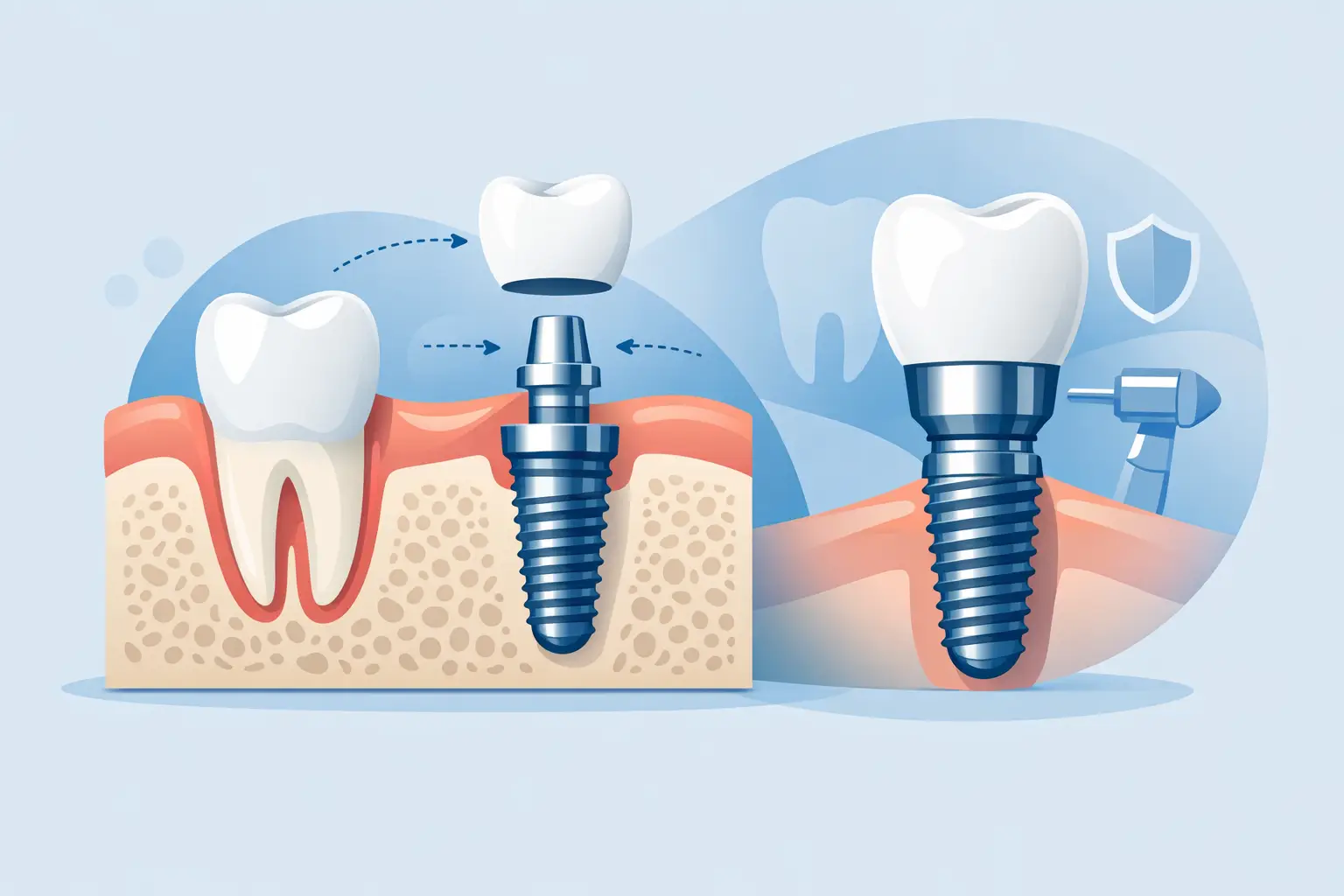
A missing tooth changes more than a photograph. It can make chewing less comfortable, affect the way neighboring teeth meet, and gradually alter the bone that once supported the tooth root. Understanding how dental implants work can make a significant treatment decision feel far more straightforward: an implant replaces the root below the gumline, then supports a custom restoration designed to look, feel, and function like a natural tooth.
Dental implants are not a one-size-fits-all procedure. The best outcome depends on the health of your gums and bone, the location of the missing tooth, your bite, your overall health, and the planning behind every stage. For patients seeking permanent tooth replacement, the goal is not simply to fill a space. It is to create a stable, healthy result that supports long-term function and confidence.
How Dental Implants Work Inside the Jawbone
A dental implant is a small, biocompatible titanium post placed carefully into the jawbone where a tooth root once was. Titanium has a valuable property: the body can form a direct bond with its surface. This healing process is called osseointegration.
After placement, the surrounding bone gradually heals around the implant. Rather than resting on the gums, as some tooth-replacement options do, an implant becomes anchored within the jaw. That anchoring is why a properly planned and healed implant can provide exceptional stability for biting and chewing.
Once the implant has integrated, it can support an abutment, which is a small connector placed above the gumline. A custom crown is then attached to the abutment. The completed restoration has three main parts:
- The implant post replaces the tooth root.
- The abutment connects the implant to the visible restoration.
- The crown replaces the portion of the tooth seen above the gumline.
For several missing teeth or a full arch of teeth, strategically placed implants can support a fixed bridge or a full-mouth restoration. The number and position of implants are determined by bone availability, bite forces, facial structure, and the type of final restoration planned.
The Dental Implant Process, Step by Step
The implant process begins well before surgery. Thorough diagnosis is one of the most important reasons implant treatment succeeds over time. At Trinity Dental Arts, implant treatment is planned with the same attention to precision as the final smile itself.
1. Comprehensive examination and digital planning
Your dentist evaluates your teeth, gums, bite, medical history, and smile goals. Advanced 3D imaging allows the treatment team to see the jawbone in detail, including its height, width, density, and relationship to important structures such as nerves and sinus spaces.
This planning helps determine whether an implant can be placed immediately, whether the site needs healing first, and whether bone grafting or a sinus graft may be beneficial. It also allows the final crown or fixed restoration to guide implant placement. In other words, the implant should be positioned for the tooth you need, not merely placed wherever bone happens to be available.
2. Preparing the foundation when needed
Not every patient needs additional treatment before implant placement. However, bone can shrink after a tooth is lost, particularly when the space has been present for some time. Infection, gum disease, trauma, and prior tooth loss can also affect the available foundation.
Bone grafting may rebuild or preserve bone in an area that needs greater support. For upper back teeth, a sinus graft may create adequate space and bone volume below the sinus cavity. These procedures can add time to treatment, but they may improve the long-term predictability of implant placement.
The right approach depends on your anatomy. A consultation should clarify whether grafting is needed, why it is recommended, and how it affects your timeline.
3. Precise implant placement
During the surgical visit, the implant post is placed into the jawbone through a carefully planned opening in the gum tissue. Local anesthesia is used, and sedation options may be available for patients who feel anxious or are undergoing more extensive treatment.
Many patients are surprised by how manageable recovery can be. Mild swelling, tenderness, or bruising is common in the first few days, especially when grafting or multiple implants are involved. Your dentist will provide specific instructions for eating, cleaning the area, taking prescribed medications if needed, and protecting the surgical site during early healing.
In select cases, a temporary tooth can be provided on the day of treatment. That decision depends on implant stability, bite forces, and the location of the implant. Immediate teeth can be an excellent option for the right patient, but they are not automatically the safest choice in every situation.
4. Healing and osseointegration
The healing period gives the implant and jawbone time to unite. Depending on the quality of the bone, the location of the implant, whether grafting was performed, and your individual healing response, this phase may take several months.
This period is active, even though it may not feel dramatic day to day. The bone is establishing the support that will allow the implant to manage normal chewing forces. Follow-up appointments allow the dentist to monitor tissue health, healing progress, and implant stability before moving forward with the final restoration.
5. Creating the final crown or fixed restoration
After the implant has healed appropriately, the final restoration is designed. Digital scans, shade selection, bite records, and smile evaluation all play a role. A single crown should blend with nearby teeth in shape, color, and proportion while also contacting the opposing teeth properly.
For full-mouth restoration, the process is even more detailed. The final teeth must restore chewing function, support facial proportions, provide a natural smile, and fit the bite in a way that protects the implants and jaw joints. This is where surgical experience and restorative expertise must work together.
What Makes an Implant Successful?
Dental implants have a high long-term success rate, but success is not guaranteed by the implant itself. It is influenced by diagnosis, surgical precision, restoration design, gum health, bone support, home care, and regular professional maintenance.
Healthy gums matter because gum inflammation around implants can progress silently. Unlike natural teeth, implants do not have the same protective ligament around the root. Consistent brushing, cleaning between teeth as instructed, and professional hygiene visits are essential to protect the tissues around the implant.
Your bite also matters. Teeth experience substantial force, particularly in the back of the mouth. If you clench or grind, a night guard may be recommended to help protect the crown, implant components, and other teeth. Smoking, uncontrolled diabetes, active periodontal disease, and poor oral hygiene can raise the risk of complications and should be addressed honestly during treatment planning.
Who Is a Candidate for Dental Implants?
Many adults with one or more missing teeth can be candidates for dental implants, including patients who have been told they have bone loss or a complex dental history. Candidacy is determined by more than age. A healthy 70-year-old may be an excellent candidate, while a younger patient with untreated gum disease may need preparatory care first.
The strongest candidates are committed to their long-term oral health and understand that implants require maintenance. If you have a failing tooth, it is often wise to schedule an evaluation sooner rather than later. Preserving bone and treating infection early can broaden your treatment options.
Dental Implants Are Designed for the Long Term
An implant crown may eventually need repair or replacement due to normal wear, just as natural teeth and restorations can. The implant post itself, however, is intended to be a long-term foundation when it is well planned and properly maintained.
Dr. Xhoana Gjelaj brings advanced implant-focused experience to the planning and restoration process, helping patients understand both the clinical details and the practical decisions behind their care. For patients in Trinity and the greater Tampa Bay area, the value of comprehensive implant treatment is having surgical planning, restorative design, and ongoing care coordinated around one clear goal: a result that feels secure, looks natural, and supports the life you want to live.
The next useful step is not guessing whether implants are right for you. It is a personalized evaluation that identifies what your bone, gums, bite, and smile need to create a lasting foundation.