A lot of adults ask the same question before they commit to clear aligners: how does Invisalign work if there are no brackets or wires pushing on the teeth all day? It is a fair question, especially if you want straighter teeth but do not want the look or feel of traditional braces.
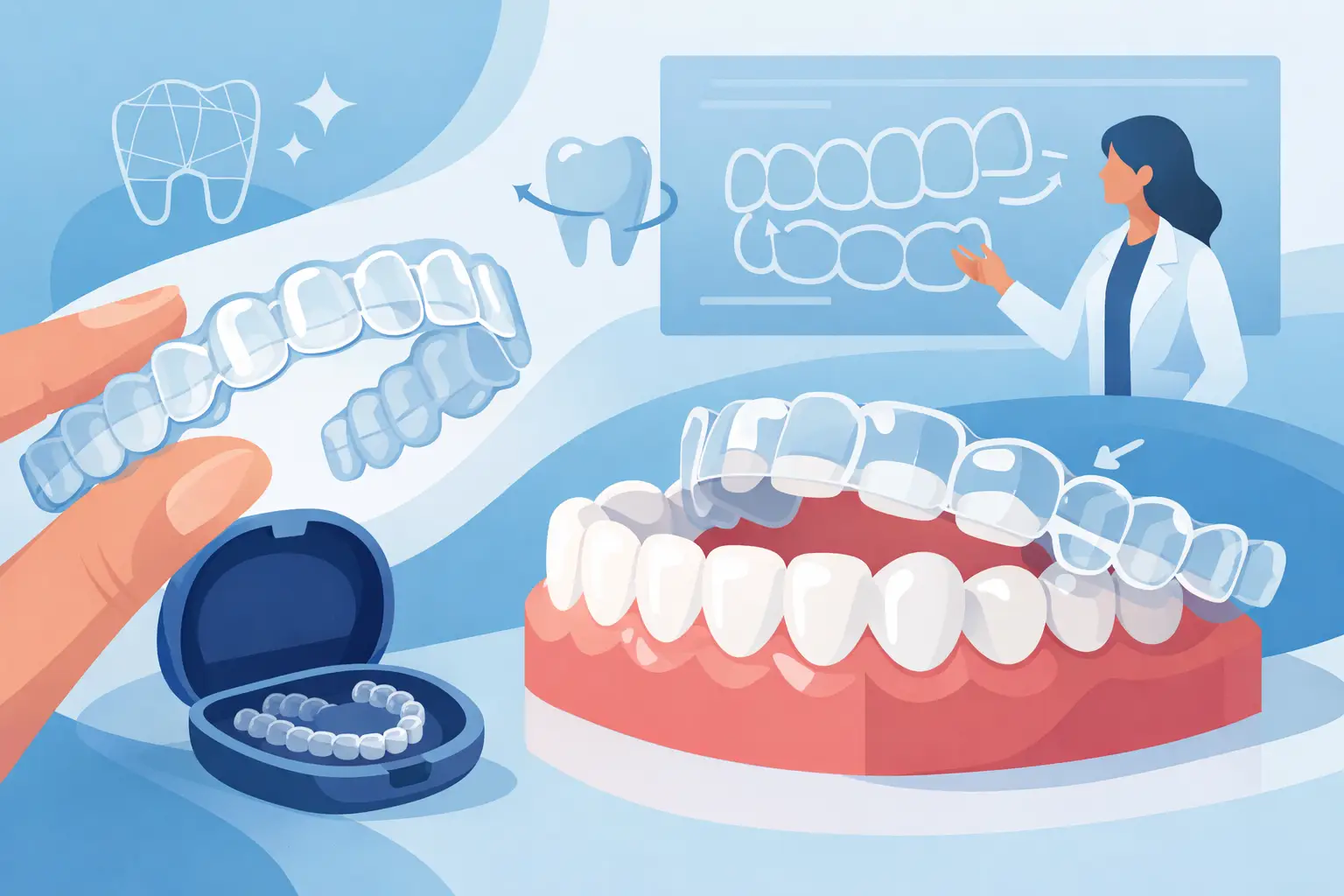
Invisalign works by using a series of custom-made clear aligners that apply controlled pressure to specific teeth over time. Each set is designed to make small, planned movements, and when you switch to the next aligner in the series, the process continues until your teeth reach their intended position. The system looks simple from the outside, but the treatment planning behind it is precise.
How does Invisalign work step by step?
The process starts with a consultation and a digital evaluation of your teeth, bite, and smile goals. Instead of relying on messy impressions alone, many practices use advanced digital scanning to create a detailed 3D model of your mouth. That model helps your dentist map out how each tooth needs to move.
Once the treatment plan is approved, a series of aligners is created specifically for you. Each aligner is slightly different from the one before it. You wear each set for about one to two weeks, depending on your case, and the aligners gradually guide your teeth into better alignment.
This movement happens because teeth are not fused rigidly into the jawbone. They sit in bone and are supported by ligaments. When steady pressure is applied in a controlled way, the bone around the tooth responds. On one side, bone is remodeled to allow movement, and on the other side, new bone forms to support the tooth in its new position. That is the biological basis behind both braces and clear aligners.
What the aligners are actually doing
Invisalign aligners are made from smooth, medical-grade plastic, but they are not just passive trays. They are engineered to move teeth in very specific increments. That might mean rotating a tooth, closing a gap, correcting crowding, or improving how the upper and lower teeth come together.
In many cases, small tooth-colored attachments are bonded to certain teeth to help the aligners grip and direct force more effectively. These attachments are subtle, but they play an important role in more complex movements. Some patients also need interproximal reduction, which is a conservative reshaping between selected teeth to create a small amount of space. If that sounds technical, the key point is simple: successful Invisalign treatment is not about wearing plastic trays alone. It depends on detailed diagnosis, planning, and monitoring.
That is one reason provider experience matters. A straightforward case with mild crowding is very different from a bite problem, relapse after braces, or spacing caused by shifting teeth. A skilled cosmetic and restorative dentist can evaluate whether Invisalign will give you a predictable result or whether another approach would serve you better.
How long does Invisalign take to work?
It depends on the complexity of the case and how consistently you wear the aligners. Many patients are told to wear them 20 to 22 hours per day. If you take them out too often or forget to switch aligners on schedule, treatment can slow down and results can become less predictable.
Some minor alignment cases may improve in a matter of months. More comprehensive cases often take 12 to 18 months, and some take longer. The timeline is not just about making teeth look straighter in photos. In many patients, the bite also needs to be corrected so the teeth function properly and wear evenly.
That distinction matters. Cosmetic improvement is important, but long-term stability and oral health matter too. Teeth that look better but still meet improperly can create problems with chipping, uneven wear, or jaw strain later.
What does Invisalign feel like?
Most patients do not describe Invisalign as painful, but they do notice pressure, especially when starting a new set of aligners. That pressure is a sign that the trays are working. It usually fades after a few days.
Compared with traditional braces, clear aligners often feel more comfortable because there are no metal brackets or wires rubbing against the cheeks and lips. The trays are removable, which also means you can eat normally and brush and floss more easily. For busy adults, that convenience is a major reason Invisalign is so appealing.
There are still trade-offs. Because the aligners are removable, success depends heavily on patient compliance. Braces keep working whether you remember them or not. Invisalign works best when you are disciplined enough to wear it as directed.
Who is a good candidate for Invisalign?
Invisalign can treat many common orthodontic concerns, including mild to moderate crowding, gaps, some bite issues, and teeth that have shifted after previous orthodontic treatment. It is often a strong option for adults who want a more discreet way to improve their smile.
That said, not every case is ideal for clear aligners. Patients with severe bite discrepancies, significant tooth movement needs, active gum disease, or certain restorative issues may need another treatment plan first or instead. If you have crowns, veneers, missing teeth, or a history of complex dental work, your dentist needs to account for that carefully.
This is where a comprehensive dental practice can offer a real advantage. If alignment is only one part of the bigger picture, your treatment should be planned with your overall dental health, function, and cosmetic goals in mind. At Trinity Dental Arts, that kind of full-picture planning is central to care, particularly for patients who want a smile that not only looks better but also functions well long term.
How does Invisalign work with attachments and refinements?
Many patients are surprised when they learn that the first set of aligners is not always the final step. After you complete the initial series, your dentist may recommend refinements. These are additional aligners used to fine-tune the result.
Refinements are not a sign that treatment failed. They are often a normal part of achieving a more precise outcome. Teeth do not always move exactly the way software predicts, because biology is not perfectly mechanical. Some teeth respond quickly, while others are more stubborn.
Attachments help improve that control. These small bonded shapes give the aligners leverage, making complex movements more achievable. If your case involves rotation, vertical movement, or bite correction, attachments may be especially useful. They are usually much less noticeable than people expect.
Invisalign vs. braces
For many adults, Invisalign offers clear advantages. It is discreet, removable, and generally easier to keep clean. It can fit well into professional and social settings where patients prefer a lower-profile treatment option.
Braces still have strengths of their own. They may be a better fit for cases that require more significant tooth movement or for patients who are unlikely to wear aligners consistently. Invisalign can produce excellent results, but it is not automatically the best choice for everyone.
The right question is not which option is more popular. It is which option is more predictable for your specific teeth, bite, and goals.
What happens after Invisalign?
Once your teeth are in their new position, retention becomes the next priority. Teeth have a natural tendency to drift over time, even after excellent orthodontic treatment. That is why retainers matter.
Most patients need to wear retainers consistently at first and then transition to a maintenance schedule recommended by their dentist. If you skip this phase, your teeth can gradually shift back, which can undo much of the progress you made.
This part of treatment is easy to underestimate, but it is essential. Straightening teeth is one phase. Keeping them straight is the long-term commitment.
Is Invisalign worth it?
For the right patient, it can be an excellent investment in both appearance and oral health. Straighter teeth are often easier to clean, which may reduce plaque buildup and improve gum health. Better alignment can also improve bite function and reduce uneven wear.
Still, worth depends on your priorities. If you want a discreet treatment and are willing to wear aligners faithfully, Invisalign can be a very attractive option. If you want something you do not have to remember to put back in after meals, braces may be more practical.
A well-planned consultation should answer more than whether you qualify. It should explain what your case involves, what limitations exist, how long treatment may take, and what kind of result is realistic. The best Invisalign outcomes come from a combination of advanced planning, clinical experience, and patient consistency.
If you have been thinking about straightening your teeth but want an option that fits adult life more comfortably, Invisalign is worth a closer look. The real value is not just that the aligners are clear. It is that, when designed and monitored properly, they can move your smile in a very intentional direction.