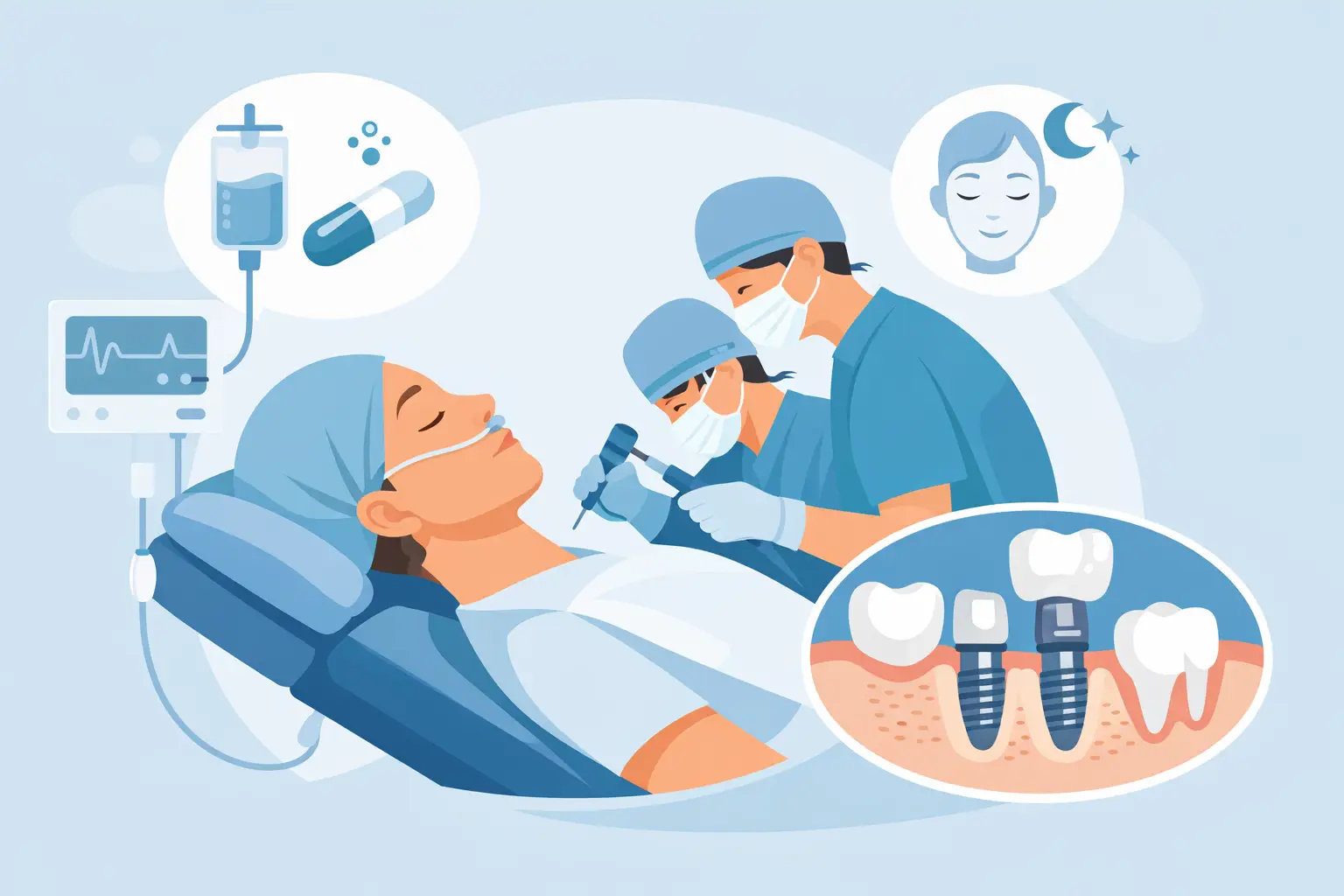
A dental implant procedure is a meaningful investment in your health, comfort, and confidence. For patients who feel anxious about treatment or need more extensive care, understanding how implant sedation works can replace uncertainty with a clear plan. Sedation is not a substitute for precise surgical care or local anesthetic. It is a carefully selected tool that helps you stay calm, comfortable, and able to receive the implant treatment you need.
At Trinity Dental Arts, implant care is planned around the individual - from the condition of the bone and gums to the number of implants being placed, medical history, and personal comfort level. Dr. Xhoana Gjelaj combines advanced implant experience with a patient-centered approach, so sedation decisions support both safety and predictable surgical results.
What Sedation Does During Dental Implant Treatment
Sedation reduces anxiety and promotes relaxation before and during an implant procedure. Depending on the method selected, you may feel lightly calm, deeply relaxed, drowsy, or have limited memory of the appointment afterward. Sedation does not necessarily mean you are fully asleep. Many patients remain responsive enough to follow simple directions, even though they feel very removed from the sights, sounds, and sensations of treatment.
Local anesthetic is still used to numb the surgical area. This is the medication that blocks pain signals where the implant is placed. Sedation and local anesthetic work together: one addresses emotional comfort and awareness, while the other controls discomfort in the mouth.
This distinction matters. A patient can be calm with sedation but still require thorough local anesthesia. Conversely, a numb patient may not feel pain but could still feel nervous without sedation. The right plan addresses both needs.
How Implant Sedation Works Step by Step
The process begins before your appointment. Your dental team reviews your health history, current medications, allergies, prior experiences with anesthesia, and any conditions that may affect breathing, blood pressure, or recovery. This discussion is essential because sedation is never a one-size-fits-all decision.
Your implant treatment plan also affects the recommendation. A single implant placed in favorable bone may require a different approach than a procedure involving several implants, bone grafting, sinus grafting, or a full-mouth restoration. The length and complexity of surgery, along with your level of dental anxiety, guide the conversation.
On the day of treatment, the team confirms that you followed your preoperative instructions. These may include guidance about food, beverages, and routine medications. Do not assume standard instructions apply to you. Fasting and medication directions vary based on the type of sedation and your medical needs.
Once you are settled, sedation is administered according to the agreed plan. Your vital signs are monitored throughout treatment, including blood pressure, pulse, oxygen level, and breathing. After you are relaxed, local anesthetic is placed before surgery begins. The implant is then positioned with careful attention to the available bone, surrounding anatomy, and the long-term restorative plan for your new tooth or teeth.
Following the procedure, you rest in a recovery area until the team determines that you are ready to leave with your designated adult escort. You will receive personalized postoperative instructions for protecting the surgical site, managing normal swelling, and taking prescribed or recommended medication correctly.
Common Sedation Options for Implant Patients
The appropriate sedation option depends on the procedure, your medical profile, and how much support you need to feel comfortable. Your dentist will explain which options are available and appropriate for your treatment.
Nitrous Oxide
Nitrous oxide, often called laughing gas, is inhaled through a small mask placed over the nose. It usually creates a light, calm feeling within minutes and can be adjusted during the appointment. Patients typically remain awake and responsive. Its effects wear off relatively quickly after the gas is stopped, though your provider will still advise you based on your individual situation.
Nitrous oxide may be useful for mild anxiety or shorter procedures. It may not provide enough relaxation for patients with significant anxiety or more involved implant surgery.
Oral Sedation
Oral sedation uses a prescribed medication taken before the appointment. It can make you feel very relaxed and sleepy, and many patients remember little about the procedure. Because the effects can last well beyond the appointment, a responsible adult must drive you home and remain available as instructed.
The trade-off is less moment-to-moment adjustability than with intravenous sedation. Oral medication can be an appropriate choice for some patients, but timing, medical history, and the planned level of sedation must be carefully considered.
IV Sedation
Intravenous, or IV, sedation is delivered through a vein and allows the clinical team to closely control and adjust medication during surgery. It is often considered for patients with pronounced dental anxiety or for more extensive implant procedures. Patients generally enter a deeply relaxed state and may have little to no memory of treatment afterward, while still maintaining protective reflexes and the ability to respond when needed.
IV sedation requires close monitoring, dedicated recovery protocols, and an escort home. It is not simply a convenience option. It is a clinical service selected when its benefits are appropriate for the patient and procedure.
What You May Feel During and After Sedation
Every person responds differently, but most implant patients describe sedation as a sense that time passed quickly. You may feel warm, relaxed, sleepy, or less focused on the procedure. With deeper sedation, you may not remember much of the appointment. Pressure or vibration can sometimes be perceived during treatment, even when pain is effectively controlled with local anesthetic.
Afterward, it is normal to feel tired, groggy, or less coordinated for several hours, particularly after oral or IV sedation. Plan to rest at home. Do not drive, operate machinery, make major financial decisions, drink alcohol, or return to work requiring sharp concentration until your dental team says it is safe.
Nausea, dizziness, or prolonged drowsiness are less common but possible. Follow your postoperative instructions and contact the office promptly if something does not seem right, especially if you have trouble breathing, persistent vomiting, or symptoms that feel severe or unexpected.
Is Sedation Safe for Dental Implants?
Sedation is safest when it is supported by a complete health assessment, appropriate medication selection, trained professionals, and continuous monitoring. That is why your consultation should include an honest conversation about all medications, supplements, alcohol use, sleep apnea, respiratory conditions, heart conditions, and prior reactions to anesthesia. Even details that seem unrelated can influence a safe plan.
Some patients may need medical clearance before sedation. Others may be better served with a lighter method, additional treatment modifications, or surgery scheduled after a health issue is stabilized. The goal is never to push every patient toward the deepest level of sedation. The goal is to select the level that provides meaningful comfort without adding unnecessary risk.
It is also essential to arrange a reliable escort if your plan includes oral or IV sedation. A rideshare or taxi may not meet the practice's discharge requirements, since you may need a responsible adult to help you get settled safely at home.
Choosing the Right Comfort Plan
The best time to discuss sedation is during your implant consultation, not on the morning of surgery. Be specific about your concerns. Perhaps previous treatment was difficult, the thought of surgery raises your anxiety, or you have a strong gag reflex. Perhaps your main concern is staying comfortable during a longer procedure. Those details help shape a plan that fits your needs.
Ask how long the appointment is expected to take, what level of awareness you can expect, what preparation is required, and what recovery support you will need at home. Clear answers make it easier to prepare with confidence and avoid last-minute surprises.
A well-designed implant experience is not about getting through surgery as quickly as possible. It is about pairing precise treatment with the level of comfort that lets you move forward calmly toward a secure, healthy, natural-looking smile.