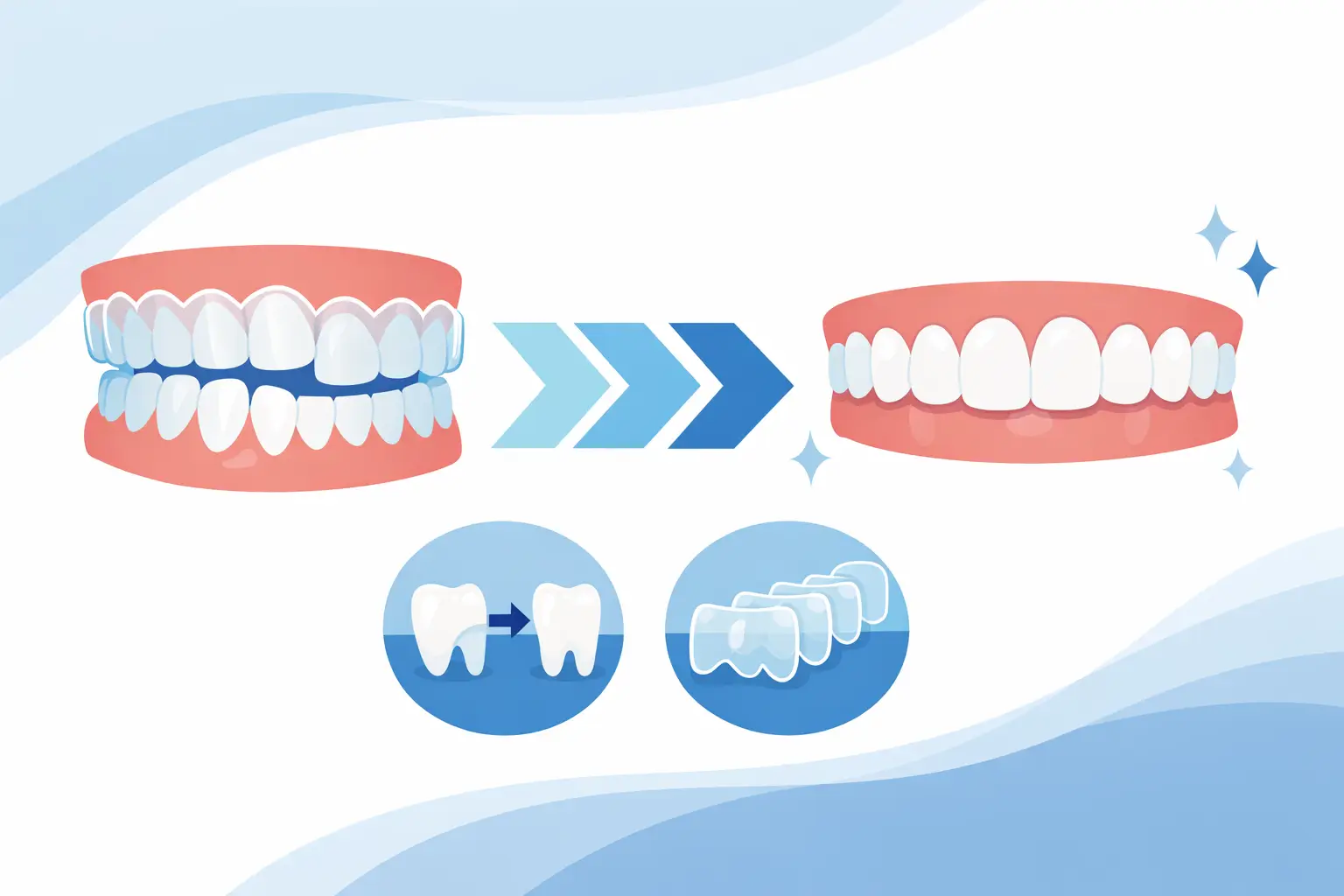
A clear aligner may look simple, but it is not a passive mouthguard. Understanding how Invisalign moves teeth begins with a key principle: each custom aligner is engineered to place gentle, highly specific pressure on selected teeth. That pressure encourages the bone and supporting tissues around each tooth to adapt gradually, creating a healthier path toward a more balanced bite and a more confident smile.
For adults considering cosmetic dentistry, the appeal is clear. Invisalign can improve crowding, spacing, certain bite concerns, and tooth alignment without the appearance of traditional brackets and wires. Still, successful treatment depends on precise planning, consistent wear, and careful professional oversight.
How Invisalign Moves Teeth With Controlled Force
Invisalign treatment starts with a digital treatment plan, not a standard set of trays. Your dentist takes detailed scans of your teeth and bite, then maps the movements needed to reach the desired result. The plan determines the sequence of aligners, the timing of each movement, and whether additional tools such as attachments or enamel reshaping may be appropriate.
Each aligner is made to fit the position of your teeth at a particular stage of treatment. When you place a new aligner, it is slightly different from your current tooth position. That small mismatch is intentional. The aligner applies controlled force, directing a tooth to move in a planned direction.
Teeth do not slide through the jawbone. They move through a biological process called bone remodeling. On the side of a tooth receiving pressure, the body gradually breaks down a small amount of bone. On the opposite side, new bone forms as the tooth changes position. The periodontal ligament, a thin layer of tissue that connects the tooth root to the bone, helps make this response possible.
This process is why orthodontic movement must be gradual. More force does not produce better or faster results. Excessive force can be uncomfortable and may interfere with predictable movement. Well-designed aligner therapy respects the biology of the mouth while steadily progressing toward the treatment goal.
One Small Movement at a Time
Most patients wear one series of aligners for a prescribed number of days before moving to the next set. Every tray builds on the movement achieved by the previous one. Over the course of treatment, these small changes can rotate teeth, close spaces, level uneven edges, or bring teeth into a better relationship with one another.
The exact schedule varies. Some cases require aligner changes every week, while others need a longer interval. Your dentist determines the right pace based on the complexity of your movements, the health of your teeth and gums, and how reliably your teeth are tracking with the aligners.
The Features That Help Invisalign Move Teeth Predictably
Clear aligners can accomplish far more than simple straightening when they are thoughtfully planned. However, certain movements require more control than aligner plastic alone can provide.
Attachments Create a Better Grip
Attachments are small, tooth-colored shapes placed on selected teeth. They are typically made of composite material and are designed to blend in with your natural enamel. Their purpose is functional: they give the aligner a more secure point of contact.
With attachments, an aligner can apply force more effectively to rotate a tooth, move it vertically, or control the position of its root. They can look unfamiliar at first, but they are often an essential part of achieving the result shown in your treatment plan. Attachments are removed when treatment is complete.
Space Must Exist Before Teeth Can Move
Crowded teeth need room to align. In some cases, moving teeth backward or expanding the dental arches slightly can create enough space. In other cases, your dentist may recommend interproximal reduction, often called IPR. This involves carefully polishing a very small amount of enamel between certain teeth to create the space needed for alignment.
IPR is not required for every patient. When it is recommended, it should be based on your tooth proportions, crowding level, bite, and long-term cosmetic goals. The goal is not simply to make teeth fit in a row. It is to create an alignment that looks natural and functions comfortably.
Elastics Can Improve Bite Relationships
For certain bite concerns, Invisalign treatment may include small elastics worn between the upper and lower teeth. These elastics add a different direction of force than aligners can create on their own. They may be used to help improve an overbite, underbite, crossbite, or other jaw-tooth relationship.
Like aligners, elastics only work when worn as instructed. Skipping them regularly can delay progress and make it harder to achieve the planned bite correction.
Why Wear Time Matters So Much
Invisalign aligners are removable, which is a major advantage for eating, brushing, and flossing. It also gives patients responsibility for the outcome. Aligners generally need to be worn about 20 to 22 hours per day unless your dentist gives you different instructions.
Removing aligners for meals and oral hygiene is expected. Leaving them out for extended periods is different. Teeth can begin to shift away from the position the current aligner is designed to guide. The next tray may feel overly tight, fail to fit fully, or stop tracking the movement as planned.
A brief feeling of pressure with a new set of aligners is common and often signals that the tray is active. Persistent pain, sharp edges, an aligner that will not seat, or a sudden change in your bite should be brought to your dentist's attention. Do not try to force a tray into place or advance to the next set early without professional guidance.
What Determines How Long Invisalign Takes?
Treatment time depends on the starting position of your teeth and the movements required. A limited cosmetic case may take several months, while comprehensive treatment involving crowding, spacing, and bite correction can take a year or longer. The number of aligners alone does not tell the entire story.
Your timeline may be affected by the complexity of tooth rotations, vertical movements, root positioning, gum health, and how consistently you wear the aligners. Some patients also need refinement aligners after the initial series. Refinements are not necessarily a problem. They are often a normal part of fine-tuning the final alignment and bite.
This is one reason professional planning matters. A straight-looking smile is not the only measure of success. Teeth should meet in a stable, comfortable bite that supports long-term oral health. For patients with worn teeth, old restorations, missing teeth, or plans for veneers or crowns, Invisalign may need to be coordinated carefully with broader restorative treatment.
The Role of Monitoring During Treatment
Regular progress checks allow your dentist to confirm that aligners are fitting correctly and that teeth are responding as expected. At these visits, your dentist can evaluate tracking, assess your bite, make adjustments when needed, and ensure that your gums and teeth remain healthy throughout treatment.
At Trinity Dental Arts, Invisalign planning is approached as part of comprehensive cosmetic and restorative care. Dr. Xhoana Gjelaj evaluates not only tooth alignment, but also the relationship between your bite, facial aesthetics, existing dental work, and long-term treatment goals. That broader perspective is especially valuable when a smile needs more than minor straightening.
Retainers Protect the Result
Once active Invisalign treatment is finished, teeth still need help holding their new positions. Bone and surrounding tissues require time to stabilize after movement. Retainers are therefore a necessary final phase, not an optional extra.
Your dentist will recommend a retainer schedule based on your case. Many patients begin by wearing retainers full-time except for meals and brushing, then transition to nighttime wear. Without retention, teeth can gradually drift, even after a successful course of aligner treatment.
The best Invisalign result is not simply teeth that look straighter in a photo. It is a smile that has been moved with precision, monitored with care, and protected for the years ahead.