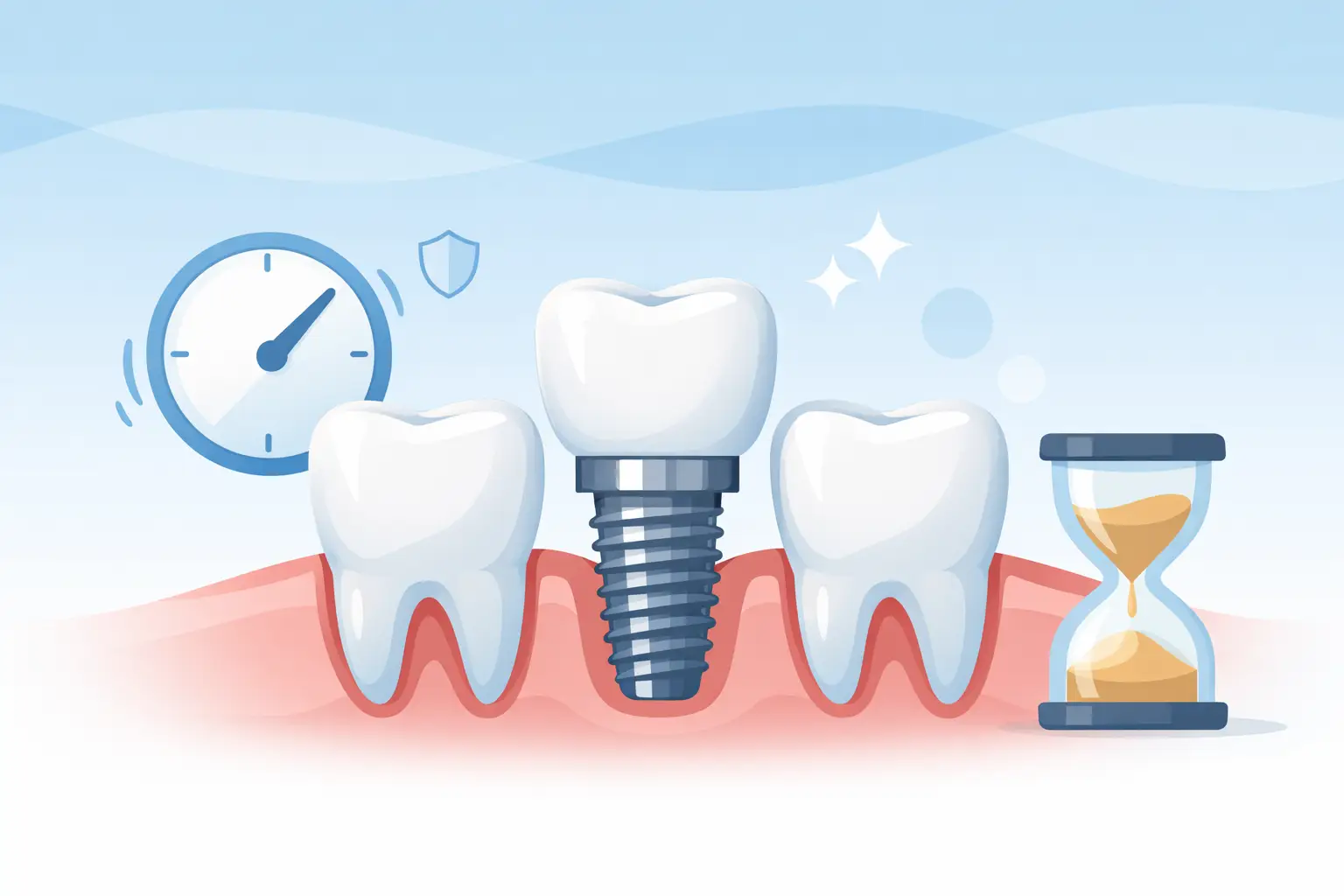
A dental implant is designed to be a long-term solution, not a temporary fix. If you are asking how long do dental implants last, the short answer is that the implant post itself can often last decades, and in many cases a lifetime, while the visible restoration on top may need maintenance or replacement sooner.
That distinction matters. A dental implant has multiple parts, and each one has its own expected lifespan. The titanium implant placed in the jawbone is built for durability. The abutment that connects the implant to the final tooth is also made to last. The crown, bridge, or full-arch prosthesis attached to the implant is the part that sees daily biting pressure, so it usually experiences wear first.
How long do dental implants last in real life?
For many healthy patients, the implant post can remain stable for 20 years or longer. Long-term studies consistently show high success rates for dental implants, especially when placement is done carefully and the patient maintains good oral health. That is one reason implants are often considered the gold standard for replacing missing teeth.
The restoration on top follows a different timeline. A single implant crown may last 10 to 15 years before it needs to be repaired or replaced, sometimes longer with excellent care and a favorable bite. Full-arch restorations such as All-on-4 or All-on-X can also last many years, but they may need occasional adjustments, relines, or replacement of worn prosthetic components over time.
So when patients hear that dental implants can last a lifetime, that usually refers to the implant fixture in the bone, not necessarily every visible part of the restoration.
What affects how long dental implants last?
Longevity depends on more than the implant material itself. The biggest factors are treatment planning, surgical precision, bite forces, oral hygiene, and overall health.
The quality and quantity of bone matter from the start. An implant needs strong support in the jaw to integrate properly. If bone loss has already occurred, procedures such as bone grafting or sinus grafting may be recommended to create a more stable foundation. That extra preparation can make a meaningful difference in long-term success.
Placement also matters. An implant positioned at the correct angle and depth is more likely to distribute chewing forces properly. Poorly placed implants may experience excess stress, which can affect surrounding bone, the restoration, or both. This is one reason patients with complex cases often benefit from a practice that handles both the surgical and restorative phases with a comprehensive plan.
Bite pressure plays a bigger role than many people realize. Patients who clench or grind their teeth can place heavy force on implants, especially on posterior teeth and full-arch restorations. The implant itself does not get cavities, but excessive pressure can loosen screws, chip porcelain, fracture acrylic, or wear down prosthetic teeth faster than expected.
Daily hygiene is another major factor. Dental implants cannot decay like natural teeth, but the gums and bone around them still need to stay healthy. Plaque and inflammation can lead to peri-implant mucositis or peri-implantitis, conditions that can compromise the supporting tissues and reduce implant lifespan. In plain terms, an implant can fail from gum and bone problems even if the metal post itself is intact.
Systemic health matters too. Smoking is one of the clearest risk factors for implant complications because it can affect healing and long-term gum health. Uncontrolled diabetes, active periodontal disease, and certain medical conditions can also increase the risk of implant failure if they are not managed carefully.
The parts of an implant do not wear the same way
It helps to think of a dental implant like a small system rather than a single piece. The implant post is the anchor in the bone. The abutment is the connector. The crown or prosthesis is the chewing surface you see and use every day.
The implant post is usually the most durable part. Once it integrates well with healthy bone, it can remain in place for many years. The crown or bridge, however, takes the impact of normal eating, occasional hard foods, and the long-term effects of the bite. Over time, materials can wear, stain, chip, or become less ideal as the mouth changes.
This does not mean the treatment failed. In many cases, replacing a worn crown after years of use is simply routine maintenance, similar to replacing tires on a car with a strong engine.
Signs your implant may need attention
A well-functioning implant should feel stable and comfortable. If something changes, it is worth having it evaluated early.
Warning signs can include soreness around the implant, bleeding gums, swelling, bad taste, gum recession, a loose crown, changes in your bite, or a feeling that the implant itself is moving. Sometimes the issue is minor, such as a loose screw or a damaged crown. Other times, it may reflect inflammation or bone loss around the implant.
Early treatment is important. Minor complications are usually easier to address before they affect the implant's long-term stability.
How to make dental implants last longer
The best way to protect your investment is consistent professional care paired with strong habits at home. Dental implants are low maintenance compared with removable options, but they are not no-maintenance.
Brush thoroughly twice a day and clean around the implant every day with floss, implant-specific threaders, or other tools recommended by your dentist. Keep regular hygiene visits and exams so the implant, bite, and surrounding bone can be monitored. If you grind your teeth, wear a night guard if one is prescribed. And if you smoke, reducing or quitting can improve both oral and overall health.
It also helps to be realistic about food habits. Chewing ice, biting fingernails, opening packages with your teeth, or regularly eating extremely hard foods can shorten the life of the restoration even if the implant itself remains stable.
Are dental implants more durable than other tooth replacement options?
In many cases, yes. Traditional bridges can work well, but they rely on neighboring teeth for support and may need replacement over time. Dentures can restore appearance and function, but they are typically less stable and may need relining or replacement as the jaw changes shape. Dental implants are unique because they replace the tooth root and help preserve bone in the area.
That said, durability is not just about the material. The right option depends on your bone support, gum health, medical history, bite pattern, budget, and treatment goals. For one patient, a single implant may be the most predictable long-term choice. For another, a full-mouth solution such as All-on-4 may offer the best balance of function, stability, and efficiency.
When do dental implants fail?
Implant failure can happen early or late, although both are relatively uncommon when treatment is planned and maintained properly. Early failure usually occurs when the implant does not integrate with the bone during healing. Late failure is more often related to infection, bone loss, smoking, uncontrolled health conditions, or mechanical overload over time.
Failure does not always mean the situation cannot be corrected. In some cases, the failed implant can be removed, the site treated, and a new implant placed after healing. The key is identifying the cause rather than assuming every case has the same solution.
Why provider experience matters
Dental implants are highly successful, but they are also technique-sensitive. Imaging, bone evaluation, restorative design, bite analysis, and follow-up care all influence the result. Patients with missing teeth, bone loss, failed dental work, or full-mouth needs often do best with a provider who can evaluate the whole picture, not just place a single fixture.
At Trinity Dental Arts, that comprehensive approach is central to implant care. For patients in Trinity and the greater Tampa Bay area, having surgical planning, restorative treatment, and long-term maintenance coordinated in one location can make the process more efficient and more predictable.
If you are considering implants, the better question may not be only how long they last, but how well they are planned, placed, and protected over time. With the right foundation and the right care, dental implants can serve you well for many years and support a smile that feels strong, stable, and truly your own.