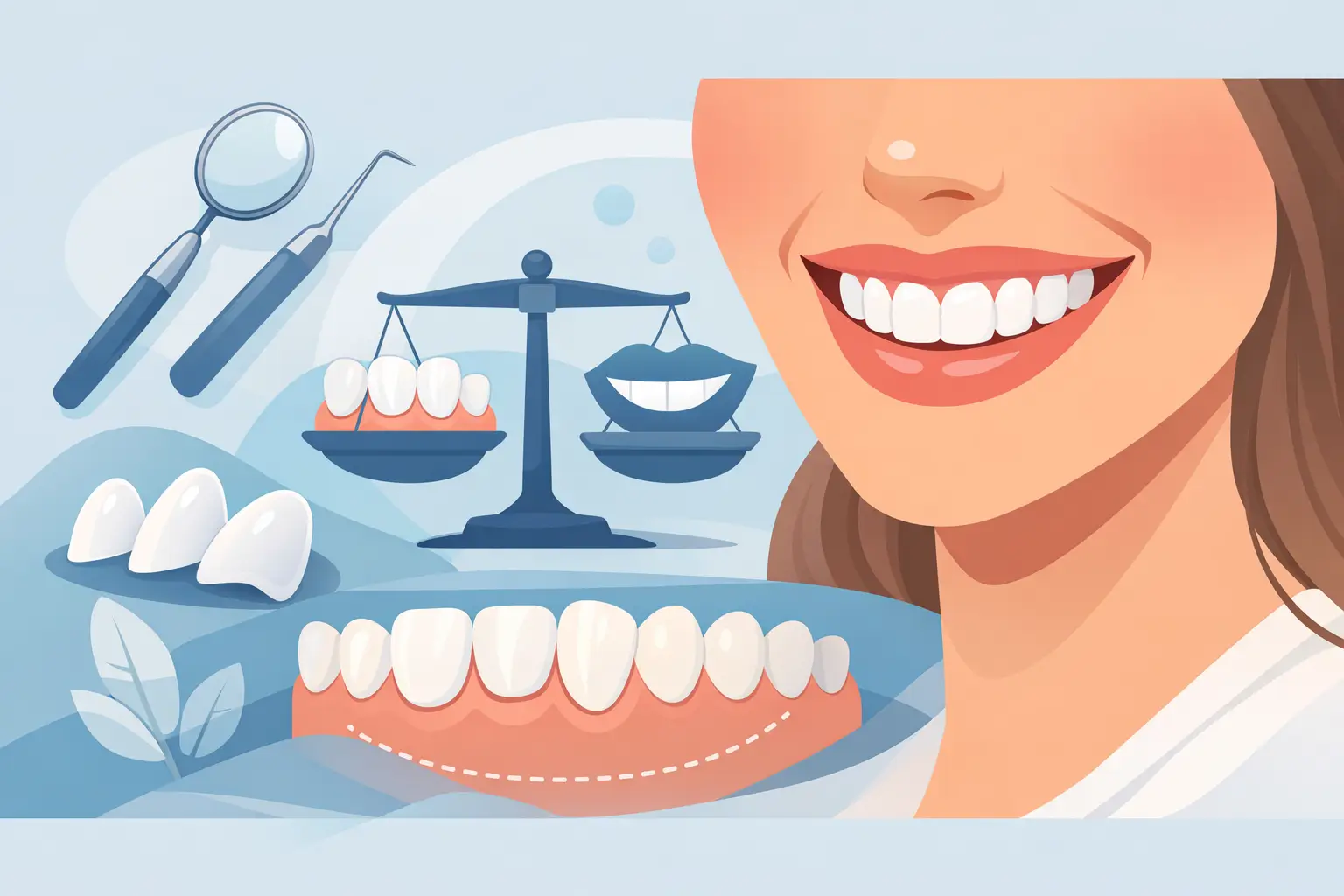
A single veneer can correct one distracting tooth. A broader smile makeover may call for six, eight, or 10 veneers across the upper teeth. If you are asking, “how many veneers do I need,” the most useful answer is not a standard number. It is the number needed to make your smile look balanced, natural, and intentional when you speak, laugh, and smile.
At Trinity Dental Arts, veneer planning is based on the whole smile, not just the tooth that first caught your attention. Dr. Xhoana Gjelaj evaluates your facial proportions, tooth display, bite, existing restorations, and cosmetic goals to recommend a result that looks like it belongs to you.
How Many Veneers Do I Need? Start With What Shows
The number of veneers you need is usually determined by the teeth visible in your natural smile. For many adults, that means the upper front teeth, since they are most prominent in photographs and conversation. The lower front teeth may also be visible, especially with a broad smile or certain lip movements.
One veneer may be appropriate when a single front tooth is chipped, unusually shaped, permanently discolored, or slightly smaller than its neighbors. This can be an excellent conservative solution when the surrounding teeth already match well in color, shape, and alignment.
More often, cosmetic concerns involve a group of teeth. If several front teeth have uneven edges, spacing, staining, worn enamel, or mismatched old bonding, treating only one tooth can make the untreated teeth look more noticeable. In those cases, a coordinated number of veneers creates a more consistent smile.
Common Veneer Ranges
Most veneer plans fall into a few broad ranges, although your treatment should never be selected by a number alone.
Two veneers may be considered for the two upper central incisors, particularly when both are worn, chipped, or discolored and the adjacent teeth are already harmonious.
Four veneers can improve the four upper front teeth when concerns are concentrated near the center of the smile. This may work well for moderate spacing, uneven tooth shape, or visible discoloration limited to those teeth.
Six veneers often cover the upper front teeth visible in a typical smile. For many patients, this is enough to create a noticeable enhancement while maintaining natural transitions to the back teeth.
Eight to 10 veneers may be recommended for a wider smile, significant color changes, more extensive wear, or a full cosmetic makeover. Treating more visible teeth can prevent a line of contrast between bright, refined veneers and natural teeth beside them.
A lower veneer plan may involve a smaller number of teeth. Whether lower veneers are beneficial depends on how much of the lower smile shows, how the teeth meet, and whether treating them improves the overall result.
Why Matching Matters More Than a Minimum Number
Veneers are custom-made to blend with adjacent teeth, but there are limits to what blending can accomplish. A very white, uniform set of four veneers beside darker or heavily worn natural teeth may look disconnected. Likewise, placing a single wide veneer on one front tooth without addressing a mismatch in the neighboring tooth can make symmetry harder to achieve.
Color is one major consideration. Veneers do not respond to whitening treatment once they are placed. If you want a brighter smile but are not planning veneers on every visible tooth, whitening natural teeth first may help establish the shade your veneers should match.
Shape and texture matter just as much. Natural teeth are not identical, and a high-quality cosmetic result should not look flat or overly uniform. Still, the front teeth should relate to one another in width, length, edge position, and brightness. The right veneer count gives the dentist enough control to create that relationship without treating teeth that do not need treatment.
Your Bite Can Change the Plan
Cosmetic dentistry is not only about how teeth look in a mirror. Veneers must function comfortably when you bite, chew, and move your jaw. Patients with grinding, clenching, edge-to-edge bites, uneven wear, or a history of chipped restorations need careful evaluation before moving forward.
In some cases, adding veneers to worn teeth can restore proportion and improve the smile’s appearance. In others, the bite needs to be managed first to protect the planned restorations. Invisalign may be recommended before veneers when tooth position or spacing makes a more conservative, predictable cosmetic result possible.
A tooth that has extensive decay, a large filling, a crack, or prior root canal treatment may not be a veneer candidate. A same-day crown or another restorative option may provide better protection for that particular tooth. This is why a comprehensive exam is essential: a smile makeover should improve appearance without overlooking the health and strength of each tooth.
When Fewer Veneers Are the Better Choice
More veneers are not automatically better. A conservative plan can be ideal when your teeth are healthy, your smile is already generally balanced, and the concern is limited to one or a few teeth.
For example, a patient with one chipped central incisor and naturally bright, well-aligned surrounding teeth may need only one veneer. A patient with two small, misshapen lateral incisors may benefit from treating those two teeth alone. When appropriate, cosmetic bonding can also be considered for very minor edge repairs or small gaps.
The trade-off is that a limited plan relies more heavily on matching the existing teeth. Natural enamel changes over time, and future whitening or dental work can affect the relationship between veneers and untreated teeth. A larger veneer plan offers more control over color and proportion, but it also means treating more teeth. The goal is a thoughtful balance, not the biggest possible treatment plan.
When a Larger Smile Makeover Makes Sense
A larger number of veneers can be worthwhile when several visible teeth share the same concerns. Common examples include generalized enamel wear, old bonding that has stained or broken down, multiple small gaps, uneven tooth lengths, or a smile that appears narrow because the visible teeth lack proportion.
Patients who want a substantial shade change often choose to treat more of the upper visible smile. This avoids the mismatch that can occur when a few very bright veneers sit next to darker natural teeth. Wider veneer plans can also create better symmetry for people who show many teeth when smiling.
The planning process should include a conversation about the look you want. Some patients prefer a subtle refinement that preserves distinctive features. Others want a brighter, more youthful, more uniform smile. Neither goal is wrong. The veneer count should support your preferred result while respecting facial features, bite function, and healthy tooth structure.
What Happens During a Veneer Consultation?
A proper consultation goes beyond selecting a shade from a chart. Dr. Gjelaj reviews your medical and dental history, examines your teeth and gums, evaluates your bite, and discusses what you would like to change. Digital imaging, photographs, and diagnostic records can help visualize how different tooth shapes and proportions may complement your smile.
You should be prepared to discuss concerns such as sensitivity, past grinding, old crowns or bonding, and whether you want to whiten untreated teeth. It is also useful to bring examples of smiles you like, while remembering that a result should be designed for your own face and tooth structure rather than copied from someone else.
Your treatment recommendation may include veneers alone, or it may involve preparatory care such as periodontal treatment, whitening, Invisalign, or restorative treatment for weakened teeth. This coordinated approach helps cosmetic results last and supports long-term oral health.
Questions to Ask Before Deciding
Before committing to veneers, ask which teeth are included and why. You should understand whether the recommendation is based on your smile width, tooth color, symmetry, bite, or the condition of existing dental work. Ask how the plan will blend with teeth that are not being treated and whether whitening should happen first.
It is also reasonable to ask about maintenance. Veneers are durable, but they still require daily brushing, flossing, regular professional care, and protection from excessive biting forces. If you clench or grind, a custom nightguard may be part of protecting your investment.
The best number of veneers is the one that lets you smile without focusing on the teeth you wish you could hide. A personalized evaluation can turn that question from a guess into a clear treatment plan built around your health, confidence, and long-term results.