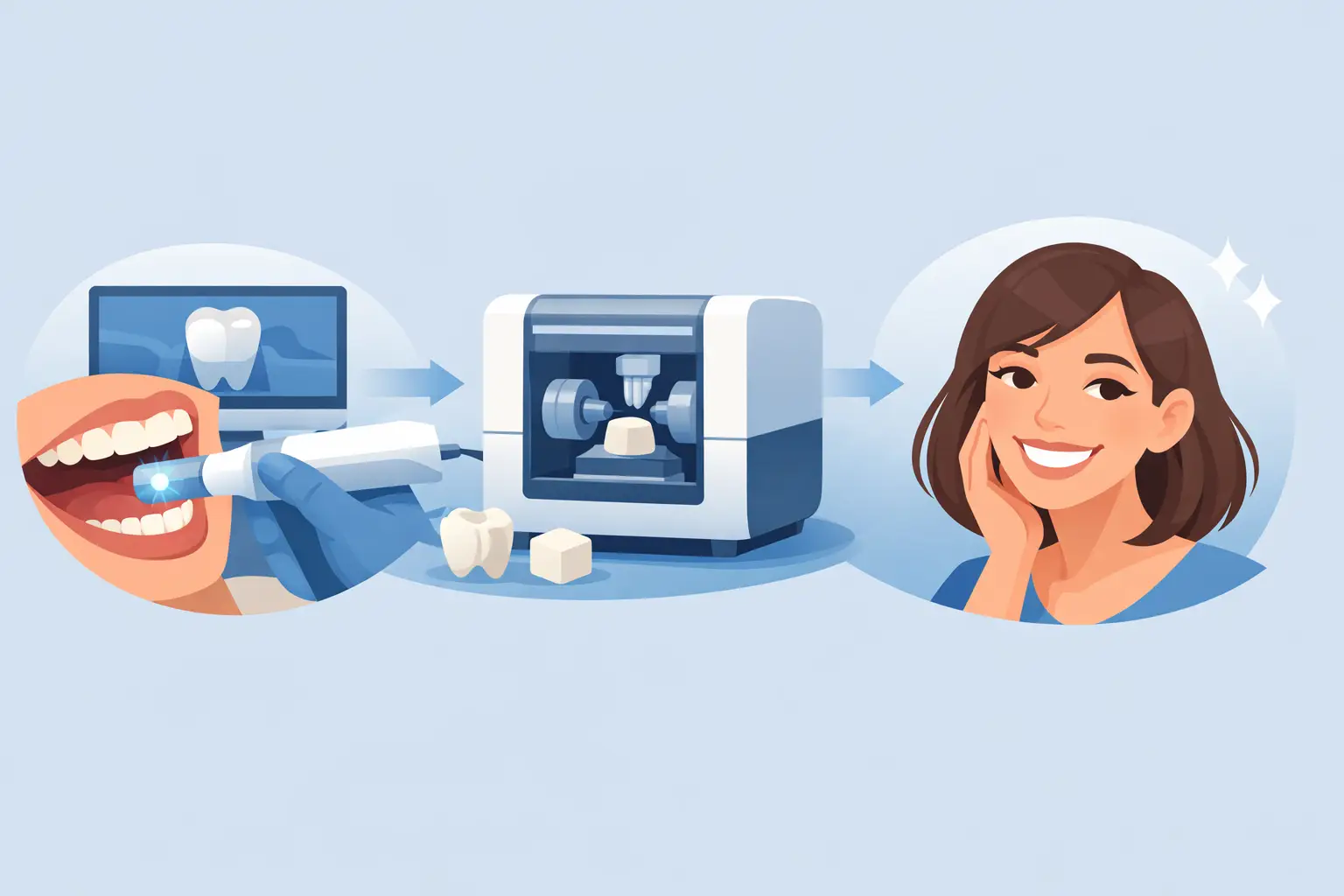
A cracked tooth does not always have to mean multiple appointments, messy impressions, and weeks with a temporary restoration. Understanding how same day crowns work can help you decide whether this advanced approach is right for a tooth that needs reliable protection and a natural-looking result.
A dental crown is a custom restoration that covers the visible portion of a damaged or weakened tooth. It can restore strength after a large filling, fracture, root canal treatment, or significant decay while improving the tooth’s shape and color. With same-day technology, the crown is planned, fabricated, and placed during one carefully coordinated visit rather than being made by an outside laboratory over several weeks.
How Same Day Crowns Work in One Visit
Same-day crowns use digital dentistry to replace several traditional steps. Instead of taking physical impressions with impression material, the dentist captures a precise digital model of the mouth. Specialized software helps design the crown, and an in-office milling unit shapes it from a solid block of high-quality ceramic.
The process is efficient, but it is not rushed. A durable crown depends on careful diagnosis, proper tooth preparation, accurate bite analysis, and detailed bonding techniques. The technology supports precision, while the dentist’s clinical judgment determines whether the restoration will look natural, feel comfortable, and protect the tooth for the long term.
1. Examination and treatment planning
The appointment begins with a comprehensive evaluation of the tooth, gums, bite, and surrounding teeth. Digital X-rays may be used to assess decay, existing fillings, fractures, and the health of the tooth root. If a tooth has an infection, a deep crack extending below the gumline, or insufficient healthy structure to support a crown, additional treatment may be needed before a final restoration can be placed.
This planning stage matters because a crown is not simply a cap placed over a problem. The goal is to preserve as much healthy tooth structure as possible while creating a restoration that distributes biting forces appropriately.
2. Preparing the tooth
After the area is numbed, the dentist removes decay, weakened material, and any failing portions of an old restoration. The tooth is then shaped to create the space needed for the ceramic crown. If substantial tooth structure is missing, the dentist may rebuild the foundation with restorative material before preparing it for the crown.
Preparation is measured in small increments. Too little reduction can make a crown bulky or interfere with the bite. Too much reduction can compromise the tooth. The right balance supports both strength and a natural appearance.
3. Capturing a digital scan
Once the tooth is prepared, a small intraoral scanner captures highly detailed images of the tooth, nearby teeth, and bite relationship. These images create a three-dimensional digital model. For many patients, this is more comfortable than traditional impression trays, particularly for anyone with a sensitive gag reflex.
The scan provides more than a picture of the prepared tooth. It allows the dentist to evaluate how the new crown should contact adjacent teeth and meet the opposing teeth when you close your mouth. Those details influence comfort, chewing function, and the longevity of the restoration.
4. Designing the crown digitally
Using design software, the dentist creates the shape of the crown based on your scan and the anatomy of surrounding teeth. The design is adjusted to support proper bite contacts, natural contours, and a smooth transition at the gumline.
For a front tooth, color matching, translucency, symmetry, and facial appearance require particular attention. For a back tooth, strength and bite function are often the primary concerns. In either location, the design is individualized rather than selected from a one-size-fits-all template.
5. Milling and finishing the ceramic
After the design is approved, the milling unit fabricates the crown from a ceramic block chosen for the appropriate shade and material characteristics. The unit uses precise instruments to shape the restoration based on the digital design.
Milling commonly takes a short portion of the visit. The crown is then refined, polished, and, when needed, customized with stains or glaze to improve its appearance. Some ceramic materials require additional finishing steps to reach their final strength and esthetic result.
6. Trying in and bonding the final crown
Before the crown is permanently placed, the dentist checks its fit, color, contours, and bite. Small adjustments may be made so the crown feels natural when you bite, speak, and chew. Once the fit is confirmed, the tooth is cleaned and the crown is bonded or cemented in place.
The final result should blend with your smile while providing dependable coverage for the underlying tooth. You leave with the permanent crown in place, without needing a temporary crown or a return visit solely for delivery.
Why Patients Choose Same-Day Dental Crowns
The clearest advantage is convenience. Completing treatment in one visit can be especially valuable for busy professionals, patients traveling from across the Tampa Bay area, or anyone managing a painful cracked tooth. It also eliminates the temporary crown phase, which can occasionally involve sensitivity, looseness, or dietary restrictions.
Digital scanning offers another meaningful benefit. The technology can provide exceptional detail and enables the dentist to assess the crown design immediately. If an adjustment is needed, it can be addressed during the same appointment instead of waiting for a laboratory-made restoration to return.
Same-day crowns can also be an excellent esthetic option. Modern ceramics can closely resemble natural enamel, with shades and surface characteristics selected to complement neighboring teeth. The quality of the outcome, however, is not defined by speed alone. It comes from material selection, thoughtful design, and precision at every stage.
Are Same-Day Crowns Right for Every Tooth?
Not always. Same-day crowns are an effective solution for many teeth, but the best option depends on your diagnosis, bite, cosmetic goals, and the complexity of the case. A tooth with extensive damage, severe grinding wear, a complex implant restoration, or highly specific esthetic requirements may benefit from a different material or a laboratory-fabricated approach.
For example, some cases call for layered ceramic techniques that provide added color depth for prominent front teeth. Other patients may need additional treatment first, such as addressing gum health or stabilizing a tooth that has been weakened by a large fracture. A careful examination determines whether an in-office crown is the ideal choice or whether another approach offers a better long-term result.
At Trinity Dental Arts, Dr. Xhoana Gjelaj evaluates the complete condition of the tooth and smile rather than treating the visible problem alone. That comprehensive perspective is particularly valuable when a crown is part of a larger cosmetic or restorative treatment plan.
What to Expect After Your Crown Is Placed
Most patients can return to normal daily activities after the numbness fades. It is wise to avoid chewing until the anesthetic has worn off so you do not accidentally bite your cheek or tongue. Mild sensitivity to temperature or pressure can occur briefly, especially if the tooth had deep decay or a large existing restoration.
A well-fitted crown should not feel high or cause persistent pain when you bite. Contact the dental office if your bite feels uneven, you experience ongoing sensitivity, or the crown feels loose. Prompt adjustments can protect both the crown and the underlying tooth.
Caring for a crown is much like caring for natural teeth. Brush twice daily with a nonabrasive toothpaste, clean between teeth every day, and maintain regular professional cleanings and exams. A crown cannot decay, but the tooth structure at its edge can still develop decay if plaque accumulates. If you clench or grind your teeth, a custom nightguard may help protect your crown and natural enamel from excessive force.
How Long Can a Same-Day Crown Last?
With consistent home care and routine dental visits, a ceramic crown can serve you well for many years. Its lifespan varies based on the tooth’s condition, crown material, bite forces, oral hygiene, diet, and habits such as clenching, nail biting, or chewing ice.
The most dependable crown is one that fits accurately, is made from the right material for its location, and is supported by healthy gums and a stable bite. A same-day crown can meet those standards when it is recommended for the right case and planned with precision.
If a damaged tooth is affecting your comfort, confidence, or ability to chew, the next step is not to assume you need the fastest option. It is to receive a thorough evaluation and choose the restoration that gives your tooth the strongest, most natural-looking future.