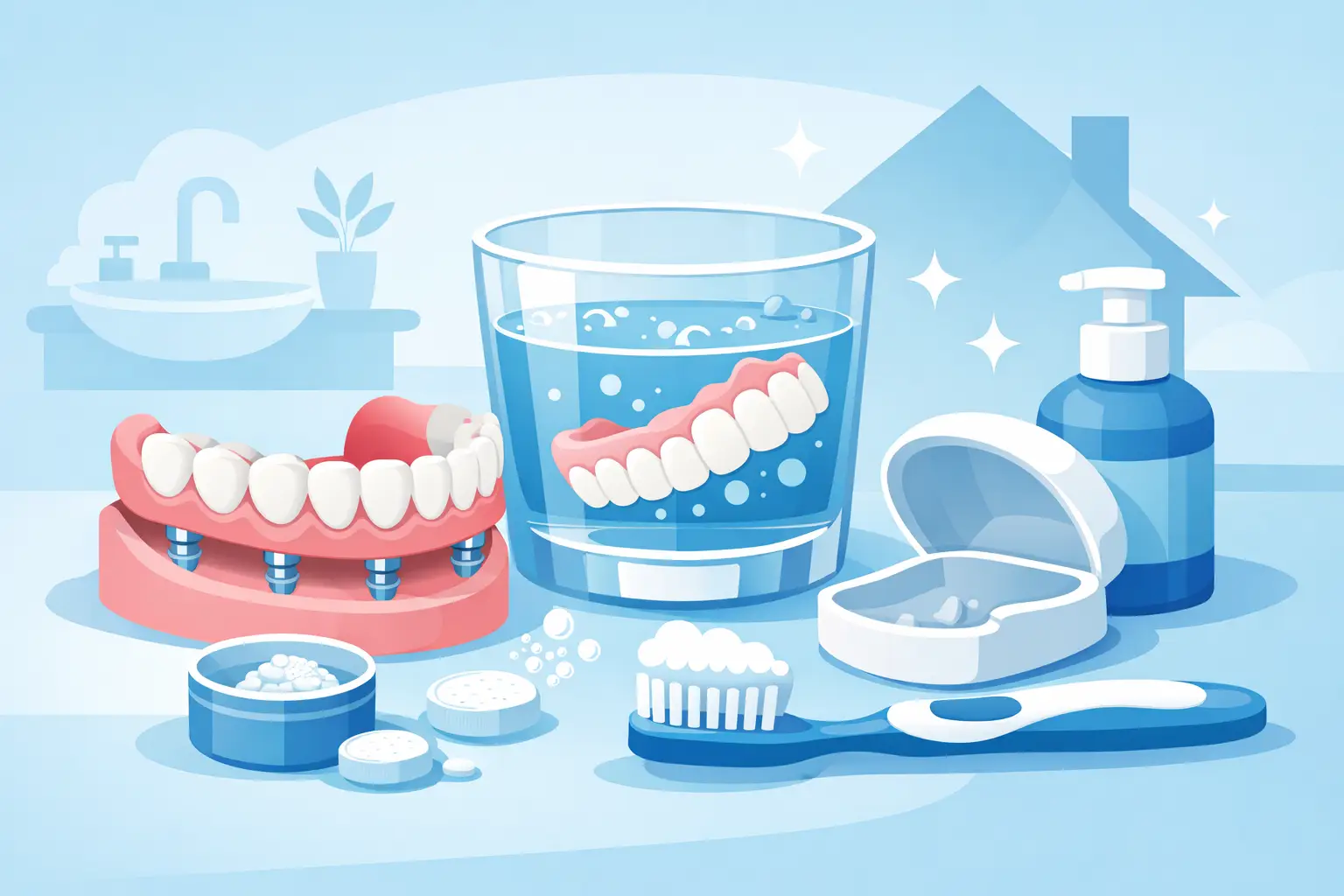
A full-arch implant restoration should feel like part of your life, not like a delicate appliance you are afraid to touch. Learning how to clean implant dentures correctly helps protect the gum tissue, the implant sites, and the precision-made teeth that restore your smile. The goal is simple: remove plaque and food debris every day without scratching the restoration or irritating the tissues around it.
For most patients with fixed full-arch teeth, cleaning is less about complicated tools and more about using the right technique consistently. The restoration itself cannot decay, but the gums and bone supporting the implants still require attentive care. Inflammation around implants can progress quietly, which makes a dependable home routine and professional maintenance visits essential.
Why implant cleaning requires a different approach
Dental implants are designed to replace tooth roots and support a custom restoration. Once healed, they are highly stable, but they are not maintenance-free. Plaque can collect where the restoration meets the gumline, beneath the bridge, and in the spaces around individual implant sites.
Natural teeth have a protective ligament around their roots. Implants do not have that same structure, so infection around an implant may advance more quickly once it begins. Early inflammation, often called peri-implant mucositis, may cause tenderness, redness, swelling, or bleeding. Left untreated, it can affect the bone supporting the implant.
This is why a quick brush across the visible teeth is not enough. Your routine needs to reach the areas you cannot easily see, especially under a fixed full-arch bridge. The exact design of your restoration matters. Some arches have more space beneath them than others, and your implant team should show you the safest way to clean your specific restoration.
How to clean implant dentures each day
Start with a soft, small-headed toothbrush. Brush the front, back, and chewing surfaces of the restoration with gentle pressure, then angle the bristles toward the gumline. A powered toothbrush can be an excellent option for patients who want more consistent plaque removal, provided it is used gently and according to the manufacturer’s instructions.
Use a low-abrasion toothpaste or gel. Highly abrasive whitening pastes may dull polished surfaces over time, particularly on certain restorative materials. Your dental team may recommend a specific toothpaste based on the material used in your new teeth and your oral health needs.
The most overlooked area is beneath the restoration. Food particles and bacterial plaque can collect there even when the teeth look clean from the outside. A water flosser is often useful for flushing debris from beneath a fixed bridge and along the gumline. Use a comfortable setting rather than the strongest pressure, and move slowly across the arch instead of concentrating the stream aggressively in one spot.
An implant-safe flossing aid, such as a floss threader or soft bridge-cleaning floss, may also be recommended. It can clean the underside of the restoration when there is sufficient space to pass it through safely. Do not force floss or a cleaning device into a tight area. If it catches repeatedly, stop and ask your implant provider to evaluate the fit and recommend the right method.
A thorough routine usually includes these distinct tools:
- A soft manual toothbrush or gentle powered toothbrush
- Low-abrasion toothpaste
- A water flosser for the gumline and underside of the bridge
- Implant-safe floss or a bridge-cleaning aid, when recommended
- Small, soft interdental brushes designed for implant restorations
You may not need every tool every day. For example, a water flosser may be the most practical daily solution for one patient, while another benefits from adding bridge floss several times a week. Consistency and correct technique matter more than owning every available device.
A morning-and-evening routine that works
In the morning, brush the full restoration and gumline before breakfast or shortly afterward. Take an extra moment to clean the tongue and the soft tissues of the mouth, since bacteria contributing to odor can accumulate there as well. If you use a water flosser in the morning, follow it with a quick brush to leave the teeth feeling clean and smooth.
At night, be more deliberate. Brush for a full two minutes, then use your water flosser or the under-bridge cleaning method your dentist has prescribed. This is the time to remove the day’s accumulation before sleep, when saliva flow naturally decreases and bacteria have more opportunity to grow.
After meals, rinsing with water can help dislodge food debris. This is particularly helpful during the first months after receiving a new full-arch restoration, when you are still learning how foods move around the bridge. Rinsing is useful, but it does not replace brushing and cleaning beneath the restoration.
Products and habits to avoid
The wrong products can damage a restoration or make the tissues around implants more vulnerable. Avoid stiff-bristled brushes, metal picks, sharp objects, and overly aggressive scraping beneath your bridge. These tools can scratch restorative surfaces, injure the gums, or create unnecessary complications.
Be cautious with abrasive powders, harsh household cleaners, and strong bleaching products. A full-arch restoration is made from carefully selected materials, and its color will not respond to whitening products the way natural enamel does. If staining becomes noticeable, professional polishing is safer than trying to whiten the restoration at home.
Smoking and vaping also work against implant health. Tobacco use can impair healing, increase inflammation, and raise the risk of complications around implants. If you have invested in full-mouth restoration, reducing or stopping tobacco use is one of the most meaningful ways to protect that investment.
Dry mouth deserves attention, too. Common medications, dehydration, mouth breathing, and certain health conditions can reduce saliva. Saliva helps wash away debris and maintain a healthier oral environment. Sip water regularly, discuss persistent dry mouth with your dentist or physician, and ask whether a dry-mouth rinse is appropriate for you.
Watch for changes around your implants
Healthy implant tissues should generally look pink and feel comfortable. Contact your dental office promptly if you notice bleeding that persists, swollen or tender gums, a bad taste that does not go away, pus, new pressure when biting, or any movement in the restoration. A fixed full-arch bridge should not feel loose.
Do not assume discomfort is normal simply because the restoration is supported by implants. Sometimes the cause is as straightforward as trapped debris or an area that needs professional cleaning. In other cases, early treatment can prevent a more serious issue from developing.
Regular professional visits remain part of implant care. Your team can inspect the restoration, evaluate the gum and bone levels around the implants, check your bite, and remove buildup from areas that home care cannot fully reach. Depending on your history and risk factors, the right maintenance interval may be more frequent than a standard dental cleaning schedule.
Personalized maintenance protects your result
There is no single cleaning routine that fits every implant patient. The shape of your bridge, the number and position of implants, your gum anatomy, and your ability to access the underside of the restoration all affect the best approach. A patient with limited dexterity may benefit from a powered brush and water flosser, while someone with more clearance beneath the bridge may add a threader-based technique.
At Trinity Dental Arts, Dr. Xhoana Gjelaj and the team emphasize that long-lasting implant results depend on precision both during treatment and after it. Your maintenance appointment is the right time to bring in the products you use at home and ask for a demonstration tailored to your restoration.
A clean, comfortable restoration should give you confidence every time you smile, speak, and eat. If your current routine feels difficult, ineffective, or uncomfortable, do not guess your way through it. A few minutes of personalized instruction can make daily care easier and help protect the healthy foundation beneath your new teeth.