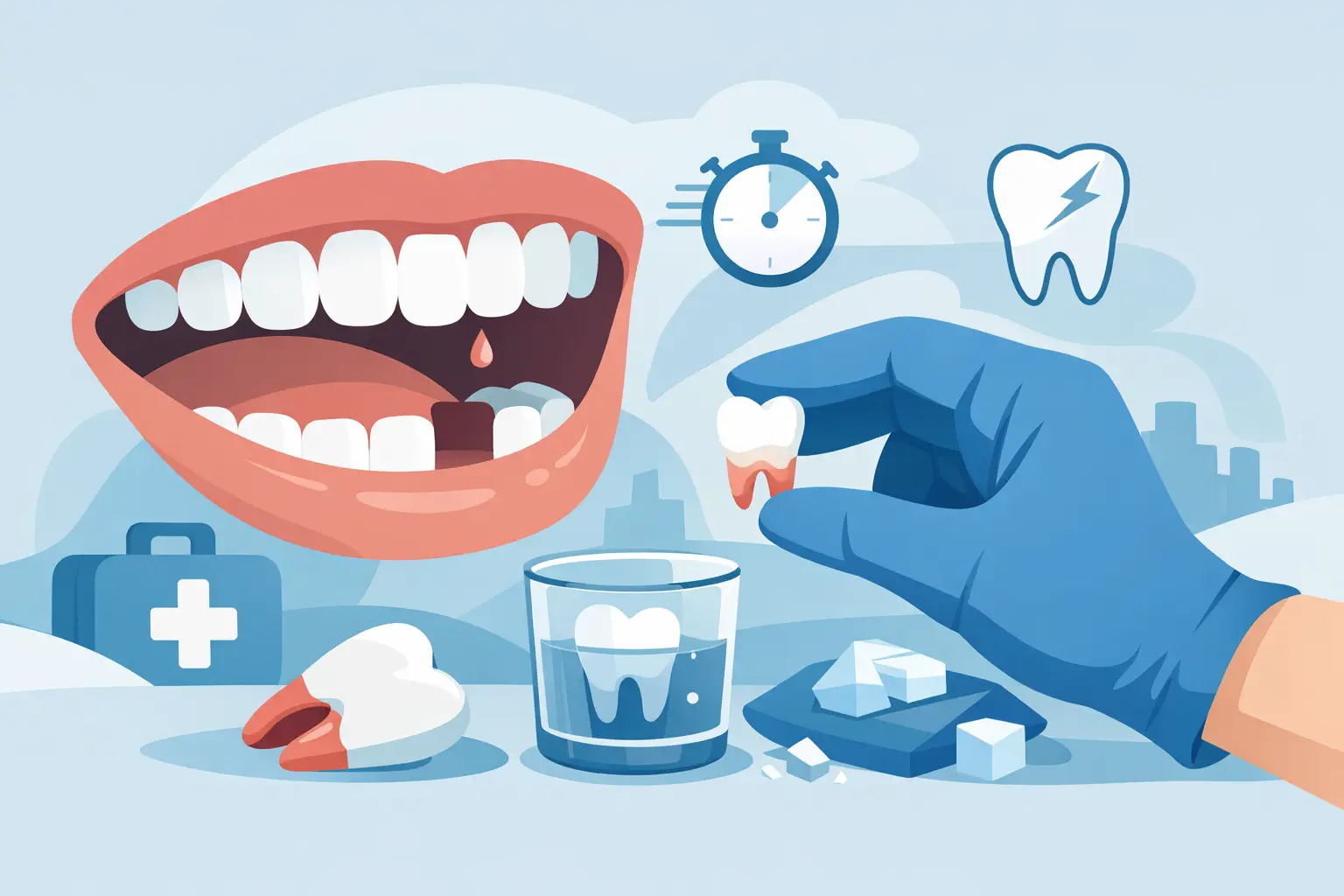
A knocked-out tooth can go from shocking to urgent in seconds. If you are searching for how to handle knocked out tooth injuries, the most important fact is this: time matters. In many cases, acting within 30 to 60 minutes can make the difference between saving the natural tooth and needing a replacement.
This is one of the few dental emergencies where what you do before you reach the office has a direct effect on the outcome. The goal is simple - protect the tooth, avoid damaging the root, and get professional care as quickly as possible.
How to handle knocked out tooth injuries right away
If an adult tooth has been completely knocked out, pick it up by the crown only. That is the part you normally see above the gums. Do not touch, scrub, or scrape the root. The root surface contains delicate cells that help the tooth reattach, and rough handling can reduce the chance of successful reimplantation.
If the tooth is dirty, rinse it gently with milk or saline if available. Clean water can be used for a very brief rinse if needed, but do not soak the tooth or scrub it with a cloth, tissue, or toothbrush. A gentle rinse is enough.
If possible, place the tooth back into the socket right away and hold it there by biting down softly on clean gauze or a cloth. This step is not always possible, especially if the patient is in pain, bleeding heavily, or unsure whether the tooth is positioned correctly. If reinserting the tooth feels unsafe or difficult, keep it moist and head to an emergency dentist immediately.
The best storage options are cold milk or a tooth preservation solution if one is available. If neither is on hand, the tooth can sometimes be kept inside the mouth between the cheek and gums, but only if the person is alert and there is no risk of swallowing it. For children, that is usually not a good option. Wrapping the tooth in a dry napkin or leaving it exposed to air is a mistake, because dryness damages the root surface quickly.
What not to do with a knocked-out tooth
People often try to help in ways that actually make the situation worse. A knocked-out tooth should never be cleaned with soap, disinfectant, or alcohol. It should not be stored in ice water, and it should not be dried off and carried loose in a pocket or bag.
It is also important not to delay care just because the bleeding seems controlled. Even if pain is mild, the clock is still running. A tooth may look intact, but the supporting bone, ligament, or nearby teeth may also be injured.
If the knocked-out tooth is a baby tooth, do not try to put it back into the socket. Reimplanting a primary tooth can damage the developing permanent tooth underneath. A child still needs prompt dental evaluation, but the response is different from that of an adult tooth.
The first 30 minutes matter most
The reason dentists treat this as a true emergency is biology. Once a tooth is out of the mouth, the periodontal ligament cells on the root begin to deteriorate. The longer the tooth stays dry, the lower the likelihood of saving it long term.
That does not mean a tooth is automatically lost after 30 or 60 minutes. Real cases vary. Storage conditions, the amount of trauma, the patient’s age, and whether the tooth can be reinserted all affect prognosis. Still, faster action consistently gives the best chance.
For adults in Trinity, New Port Richey, Palm Harbor, and the surrounding area, this is a situation where calling an emergency dental office immediately is worth it. Waiting until the next day can close off options that may still be available today.
What to expect at the dental office
Once you arrive, the dentist will first assess the tooth, socket, gums, and surrounding bone. X-rays are typically needed to confirm positioning and check for fractures. If the tooth is suitable for reimplantation, it may be placed back into the socket and stabilized with a flexible splint attached to neighboring teeth.
The exact treatment depends on the type of trauma. Some knocked-out teeth can be saved and monitored successfully. Others may have severe root damage, contamination, or socket injury that affects the outcome. Sometimes the tooth can be reimplanted as a temporary measure even if its long-term prognosis is uncertain, because preserving the site has value for future treatment.
You may also need treatment for soft tissue injuries, a bite adjustment, antibiotics, or a tetanus update depending on how the accident happened. Follow-up is critical, because complications such as infection, root resorption, or nerve damage may not show up immediately.
If the tooth cannot be saved
One of the biggest concerns after a dental injury is whether the smile can be restored naturally. The answer is often yes, but the best solution depends on the tooth, the amount of bone support, and the patient’s overall oral health.
For a single missing adult tooth, a dental implant is often the most stable and long-term option. It replaces both the root and the visible tooth, helping preserve bone while restoring function and appearance. In some trauma cases, implant placement can happen soon after the injury. In others, the site needs time to heal first, or bone grafting may be recommended to rebuild support.
This is where experience matters. Advanced practices that handle both emergency dentistry and implant reconstruction can guide patients from the immediate injury phase through final restoration without unnecessary handoffs between offices. For patients who want a permanent, aesthetically precise result, that continuity of care matters.
Pain, swelling, and home care after the injury
Even when the tooth is replanted quickly, discomfort is common. A cold compress on the outside of the face can help limit swelling during the first 24 hours. Over-the-counter pain relief may also help, provided it is appropriate for your medical history.
Until you are evaluated, stick with soft foods and avoid chewing on the injured area. If there is bleeding, gentle pressure with clean gauze usually helps. Do not keep checking the area with your fingers or tongue. That can disturb the socket and increase irritation.
After treatment, your dentist may recommend a soft diet, antimicrobial rinses, and careful brushing instructions around the splint or injured gum tissue. Healing is not just about saving the tooth that day. It is also about protecting the area over the next several weeks.
When a knocked-out tooth is part of a bigger problem
Not every dental trauma is limited to one tooth. Sports injuries, falls, car accidents, and impact to the face can involve jaw fractures, multiple loose teeth, cracked restorations, and soft tissue damage. If there is facial numbness, difficulty opening the mouth, uncontrolled bleeding, or concern about a head injury, medical evaluation may be needed along with dental treatment.
For some patients, the accident reveals preexisting issues such as periodontal disease, previous root canal treatment, or weakened bone around the tooth. Those factors can change the prognosis. A tooth that was already compromised before the injury may be less likely to succeed after reimplantation. That does not mean treatment stops. It means the plan becomes more comprehensive.
In complex cases, a results-focused approach is especially valuable. Dr. Xhoana Gjelaj’s experience in advanced restorative and implant dentistry supports not only the emergency response but also the long-term reconstruction strategy when a simple fix is not enough.
Prevention is better than urgency
No one plans for a knocked-out tooth, but some risks are easier to reduce than others. Custom mouthguards for contact sports, correcting bite issues, and treating advanced gum disease can all lower the risk of traumatic tooth loss. Prompt care for loose teeth or failing dental work also matters, because compromised teeth are more vulnerable during impact.
For families, coaches, and active adults, knowing what to do ahead of time helps. The right response is not complicated, but it does need to happen fast. Pick up the tooth by the crown, keep it moist, try to reinsert it if safe, and get emergency dental care immediately.
When a tooth is suddenly out, the moment feels chaotic. A calm, informed response gives you the best chance to protect your natural smile - and if saving the tooth is not possible, modern restorative care can still deliver a strong, natural-looking result.