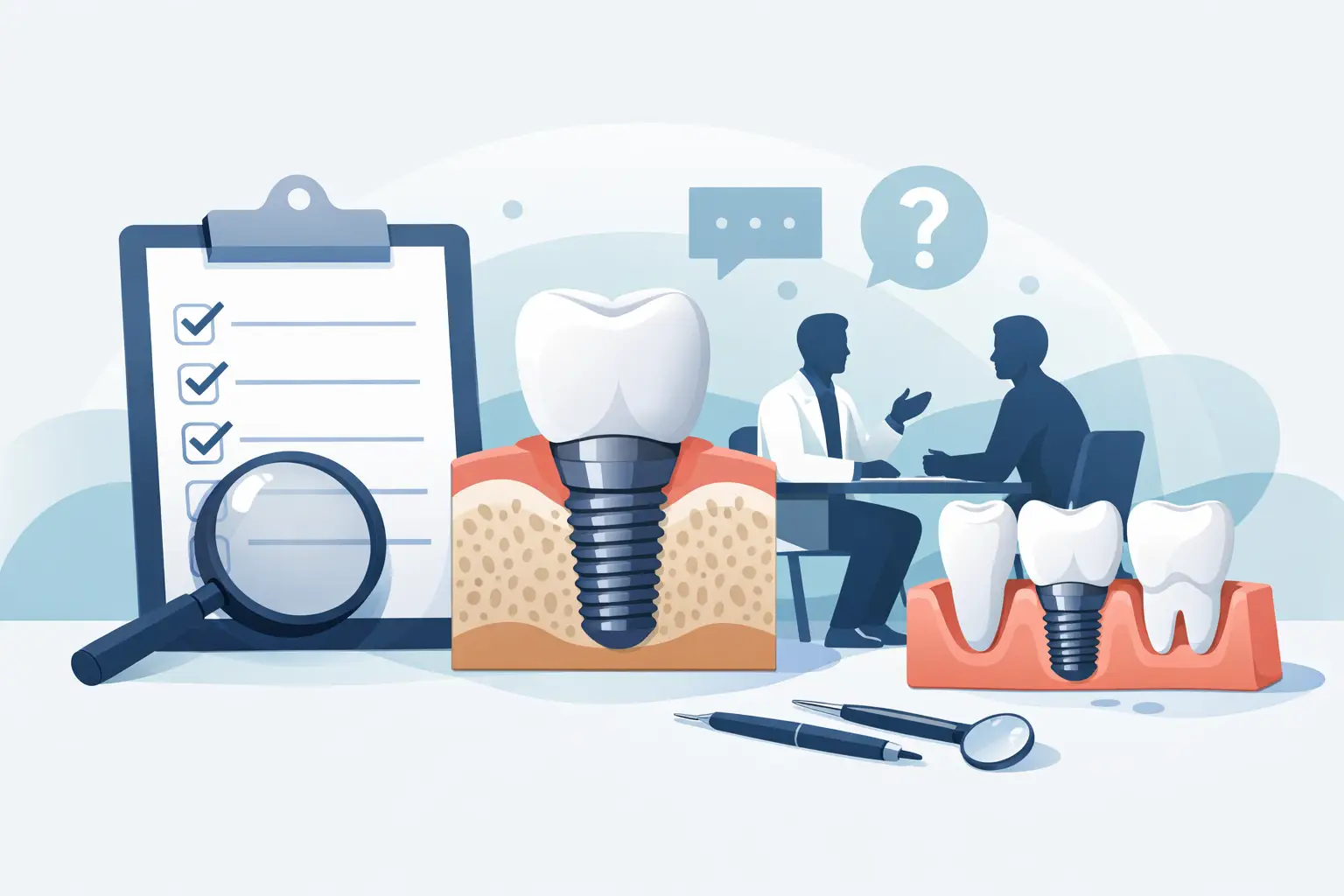
A dental implant consultation should leave you with more than a price estimate. It should give you a clear understanding of why a particular plan fits your health, smile goals, timeline, and budget. Use this implant consultation checklist to arrive prepared and recognize the signs of a thorough, personalized evaluation.
Dental implants are designed to replace missing teeth at the root level, creating a stable foundation for a crown, bridge, or full-arch restoration. Because the treatment involves both surgical planning and final smile design, the consultation is where the details matter most. A strong plan can protect your long-term oral health, improve function, and help you feel confident in the result.
Start With Your Goals and Dental History
Before imaging or treatment recommendations, your dentist should understand what brought you in. Are you replacing one tooth that was lost recently? Are several teeth failing? Are you tired of hiding your smile, struggling to chew, or dealing with recurring problems around older dental work? The answer influences the type and pace of care.
Be ready to discuss when the tooth was lost, any prior extractions, gum treatment, jaw surgery, medical diagnoses, medications, allergies, and tobacco use. Conditions such as uncontrolled diabetes, active periodontal disease, or certain medications can affect healing and may need to be managed before implant placement. These factors do not automatically rule out treatment, but they should be part of an honest conversation.
You should also share what you want your final smile to accomplish. Some patients prioritize replacing a single visible tooth so it blends naturally with neighboring teeth. Others are looking for a stable, fixed full-mouth restoration. Your goals should shape the plan, rather than being treated as an afterthought.
Implant Consultation Checklist: Questions About Candidacy
A consultation should answer a central question: do you have the bone, gum health, and overall health needed to support an implant predictably? An experienced implant provider will evaluate more than the space where a tooth is missing.
Ask how your gums and bite affect your candidacy. Healthy gum tissue supports the long-term success of implants, while a bite that places excessive force on a restoration can increase the risk of complications. If you grind or clench your teeth, ask whether a protective nightguard will be recommended after treatment.
Bone volume and bone quality are equally important. After a tooth is lost, the jawbone can gradually change. In some cases, bone grafting or a sinus graft may be recommended to create a more secure foundation. That does not necessarily mean treatment is overly complicated. It means your plan is being based on anatomy instead of assumptions.
Useful questions include: What factors make me a good candidate? Are there concerns that should be addressed before surgery? Do I need grafting, and why? What could happen if I choose not to complete the recommended preparatory treatment?
Confirm That Advanced Imaging Is Part of Planning
A conventional dental X-ray can provide helpful information, but implant planning often requires a three-dimensional view of the jaw. Cone beam CT imaging allows the dental team to assess bone dimensions, tooth roots, sinus spaces, nerves, and the ideal implant position with far greater precision.
Ask whether 3D imaging will be used and how it informs your treatment plan. This is especially relevant for full-mouth restoration, implants in the back of the upper jaw, or cases involving limited bone. Digital planning can help determine whether grafting is needed, how many implants are appropriate, and where they can be placed to support a stable final restoration.
A well-planned implant is not simply placed where bone happens to be available. It is positioned with the final tooth or teeth in mind. That prosthetically driven approach helps support natural appearance, comfortable chewing, and easier hygiene after treatment.
Understand the Recommended Treatment Path
There is no single implant treatment plan that fits every patient. A straightforward single-tooth implant may involve placement, healing, and a final custom crown. A more complex situation may involve removing failing teeth, rebuilding bone, placing multiple implants, and designing a fixed full-arch solution such as All-on-4 or All-on-X.
Ask your provider to walk you through the sequence in plain language. You should know which appointments are surgical, which are restorative, when temporary teeth may be used, and when you can expect the final restoration. Immediate fixed teeth may be possible for certain patients, but only when bone stability, bite conditions, and overall health support that approach. Faster is not always better if it compromises predictability.
Ask who will manage each phase of care. At Trinity Dental Arts, advanced implant treatment is planned with the surgical and restorative outcome connected from the beginning. Dr. Xhoana Gjelaj's implant-focused experience allows patients to discuss complex treatment in one setting, with attention to both the health of the foundation and the appearance of the finished smile.
Ask What Your Final Teeth Will Be Like
The implant itself is only one part of your result. The visible restoration determines how your smile looks, how you speak, how you chew, and how easily you can keep it clean. Ask what material will be used for the crown, bridge, or full-arch teeth, and why it is appropriate for your situation.
For a single tooth, color matching, shape, gum contours, and the neighboring teeth all matter. For a full-mouth restoration, the process should include conversation about tooth proportion, smile line, facial support, bite position, and function. A natural-looking result should not be treated as separate from a strong, functional one.
It is also reasonable to ask about temporary restorations. Find out how they will look and function during healing, what foods to avoid, and what changes may be made before the final teeth are created. This stage allows the team to refine comfort and appearance before the definitive restoration is completed.
Discuss Comfort, Sedation, and Recovery Honestly
Many patients delay implant care because they are worried about discomfort or anxiety. Raise those concerns early. Your provider should explain local anesthesia, available sedation options, and what you can realistically expect after surgery.
Recovery varies by procedure. A single implant placement may involve mild swelling and temporary dietary adjustments. Bone grafting, sinus grafting, or full-mouth treatment can require a more involved recovery period. Ask how long you may need to take away from work, when you can return to normal activity, which foods are appropriate, and whom to call if you have concerns after treatment.
Also ask how pain is managed and whether you will need someone to drive you home after sedation. Clear pre- and post-operative instructions are a sign that the practice is planning for your comfort as carefully as it plans your clinical result.
Review Cost, Financing, and What Is Included
Implant treatment is a significant investment, and you deserve a financial discussion that is specific and transparent. A quote should identify what is included, such as imaging, extraction if needed, grafting, implant placement, temporary teeth, the final restoration, follow-up appointments, and sedation when applicable.
Do not compare estimates based on a single number alone. A lower initial figure may not include the imaging, surgical components, restoration, or follow-up care required to complete the case. Ask whether the proposed price covers the full treatment sequence and whether there are clinical circumstances that could change the investment.
If you are considering financing, ask about available monthly payment options and whether treatment can be phased safely. The best financial plan is one that helps you move forward without cutting corners on the steps that protect long-term success.
Plan for Long-Term Implant Care
Implants cannot develop cavities, but the surrounding gums and bone still require consistent care. Ask how you should brush and clean around your new teeth, how often professional maintenance will be needed, and what warning signs deserve a call to the office.
Your long-term outcome also depends on habits. Tobacco use, untreated gum inflammation, skipped cleanings, and repeated grinding can put implant health at risk. A provider who discusses maintenance before treatment is showing commitment to the life of your result, not just the day it is completed.
Questions to Bring to Your Appointment
Bring a written list if it helps you feel organized. Ask about your candidacy, the need for 3D imaging or grafting, the exact treatment timeline, the type of final restoration, sedation options, recovery expectations, total investment, and maintenance. If an answer feels unclear, ask for it to be explained differently. Implant care is a major decision, and you should never feel rushed into it.
The right consultation creates confidence through details. When your provider takes time to understand your health, evaluate your anatomy, explain the options, and connect every step to the final result, you can move forward knowing your new smile is being planned for the years ahead.