A lot of adults wait years to straighten their teeth because they assume the process will be too obvious, too uncomfortable, or too disruptive to work and social life. Then the real question shows up: Invisalign vs braces for adults - which one actually makes sense when you want a better smile without making your daily routine harder?
The answer depends on more than appearance. For adults, the better choice often comes down to case complexity, lifestyle, consistency, bite correction, and how much control you want over the treatment process. Both options can create excellent results. The key is choosing the one that fits your teeth and your life, not just the one that sounds more convenient.
Invisalign vs braces for adults: what really changes the decision
At a glance, Invisalign and braces are both orthodontic systems designed to move teeth into better alignment. But they do it in very different ways.
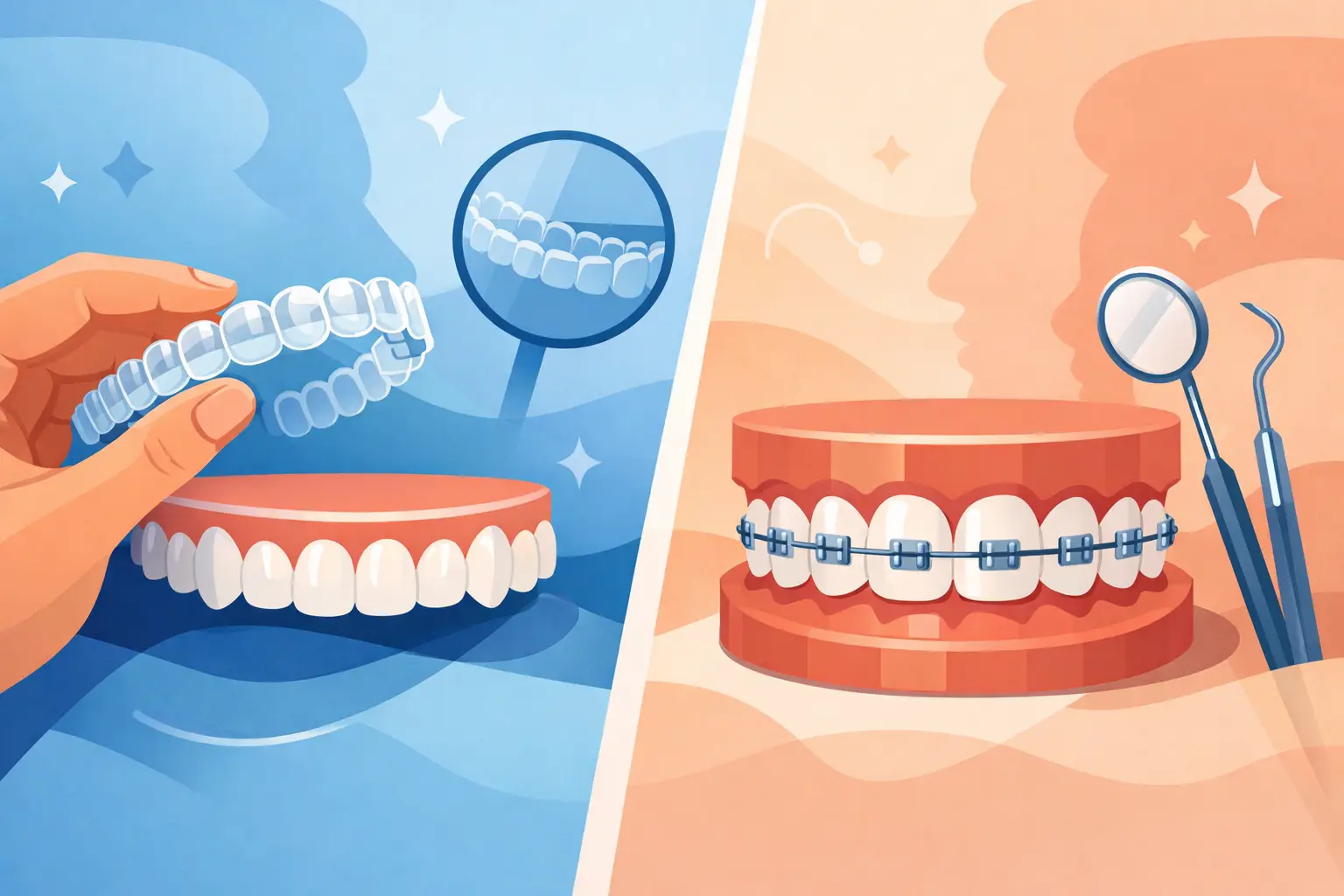
Invisalign uses a series of clear, custom-made aligners that fit over the teeth and gradually shift them over time. The trays are removable, nearly invisible in most conversations, and typically changed every one to two weeks. Adults often prefer them because they are subtle and easier to manage in professional settings.
Traditional braces use brackets attached to the teeth and connected by wires. Because they stay in place full time, they apply continuous pressure and can be highly effective for more complex movement. They are more visible, but they remove some of the patient compliance issues that can slow treatment with aligners.
For many adults, this is the first real trade-off: Invisalign offers discretion and flexibility, while braces offer fixed control.
Appearance and confidence during treatment
If appearance is a major concern, Invisalign usually has the advantage. Most adults like that the aligners are difficult to notice in meetings, photos, and everyday interactions. If you work in a client-facing role, speak publicly, or simply want orthodontic treatment to stay private, clear aligners can feel like a much easier fit.
Braces are more visible. Even with smaller brackets or clear ceramic options, they are still noticeable. That does not make them a poor choice, but it does matter to adults who have delayed treatment because they do not want a traditional orthodontic look.
That said, appearance should not be the only factor. A treatment option that looks better but is not ideal for your bite or tooth movement can lead to frustration, slower progress, or compromised results.
Comfort and daily convenience
Most adults find Invisalign more comfortable overall. There are no brackets or wires rubbing against the cheeks and lips, and the aligners are smooth. You may still feel pressure when switching to a new tray, but that pressure usually signals that the teeth are moving as planned.
Braces can cause more irritation, especially after placement and adjustment visits. Broken brackets or poking wires can also create discomfort between appointments. For some patients, this is manageable. For others, it becomes one of the hardest parts of treatment.
Daily convenience is more complicated. Invisalign is easier during meals because you remove the trays before eating. You can continue eating foods that are often off-limits with braces, such as popcorn, nuts, chewy bread, or crunchy snacks. Brushing and flossing are also simpler because there are no brackets to clean around.
But Invisalign requires discipline. You generally need to wear the aligners 20 to 22 hours a day for treatment to stay on track. If you frequently remove them, forget to put them back in, or leave them out during long meals and events, treatment can stall.
Braces are less flexible, but that fixed design can be an advantage for busy adults. You do not have to remember to wear them. They are always working.
Which works faster?
Adults often ask whether Invisalign is faster than braces. Sometimes it is, but not always.
For mild to moderate alignment problems, Invisalign can be very efficient. If the patient wears the aligners as directed, treatment may move quickly and predictably. Minor crowding, spacing, and many cosmetic concerns can respond well to clear aligners.
For more complex issues, braces may be more effective and, in some cases, more efficient. Significant bite problems, severe crowding, rotated teeth, or teeth that need substantial vertical movement may respond better to braces. In these cases, a fixed system can give the dentist or orthodontic provider more precise control.
The important point is this: the fastest treatment is usually the one best matched to your case and followed consistently.
Invisalign vs braces for adults with bite problems
This is where a professional evaluation matters most. Adults are not just trying to straighten the front teeth. Many also have bite concerns that affect comfort, wear patterns, jaw strain, and long-term oral health.
If you have an overbite, underbite, crossbite, open bite, or a history of uneven tooth wear, the choice between Invisalign and braces should be based on function as much as appearance. Clear aligners can correct many bite issues, especially with careful planning and attachments placed on the teeth to guide movement. But not every case is equally suited to aligners.
Braces may be recommended when the movement required is more advanced or when predictable control is essential. Adults who have existing restorations, gum recession, missing teeth, or a more complex restorative plan also benefit from treatment planning that looks beyond orthodontics alone.
That broader perspective matters in a cosmetic and restorative practice. A straight smile should also support healthy function, stable bite alignment, and any future dental work you may need.
Cost considerations for adults
Cost is often closer than people expect. Invisalign and braces can fall into a similar range depending on the length of treatment and the complexity of the case. In simpler cases, Invisalign may be comparable to braces. In more involved treatment, either option may cost more based on the planning and time required.
What adults should focus on is overall value. The cheapest option is not always the most efficient if it does not address the underlying problem well. Likewise, a premium treatment can lose value if it depends on patient compliance and that compliance is unlikely.
If you are comparing costs, ask what is included. Retainers, refinement aligners, emergency visits, follow-up care, and the complexity of your bite all affect the true investment.
Hygiene, maintenance, and oral health
Adults often have dental work that teenagers do not - crowns, veneers, gum recession, worn enamel, or missing teeth. That makes hygiene and maintenance especially important during orthodontic treatment.
Invisalign can make oral hygiene easier because you remove the trays to brush and floss. That can be a major benefit for adults focused on long-term dental health. You do need to keep the aligners clean and avoid trapping sugar or acid against the teeth by putting trays back in after drinks other than water.
Braces require more effort to keep clean. Food can collect around brackets and wires, and flossing takes longer. That does not make braces unsafe, but it does mean patients need to be consistent to reduce the risk of plaque buildup, decalcification, and gum inflammation.
For adults with existing periodontal concerns, hygiene habits may influence which treatment makes the most sense.
Who is usually a better fit for Invisalign?
Invisalign is often an excellent option for adults who have mild to moderate crowding or spacing, want a less noticeable treatment, and are confident they can wear aligners as directed every day. It also appeals to patients who want fewer food restrictions and easier brushing and flossing.
Many professionals, parents, and adults returning to dentistry after years of postponing treatment choose Invisalign because it feels more compatible with real life.
When braces may be the better choice
Braces are often the better choice when tooth movement is more complex, bite correction is a major goal, or consistency is likely to be a challenge. They can also be a strong option for adults who want the reassurance of a fixed appliance that does not depend on remembering to wear trays.
For some patients, braces are simply the most direct route to a stable, well-controlled result.
The best decision starts with the right diagnosis
The biggest mistake adults make is choosing a treatment system before getting a proper evaluation. Invisalign is not automatically better because it is clear. Braces are not automatically better because they are traditional. What matters is how your teeth fit together, what movements are needed, the health of your gums and bone, and what you want your smile to look and feel like at the end.
An experienced provider will evaluate more than crooked teeth. They will look at bite function, smile design, existing dental work, long-term stability, and whether orthodontic treatment should be coordinated with cosmetic or restorative care. That level of planning is especially valuable for adults who want results that are not only straighter, but healthier and more refined.
At Trinity Dental Arts, that kind of treatment planning reflects the standard of care adults expect when they are making a meaningful investment in their smile. Dr. Xhoana Gjelaj’s advanced training and restorative perspective help patients look beyond a quick fix and choose the option that supports lasting results.
If you are deciding between Invisalign and braces, do not start with the appliance. Start with the outcome you want, the complexity of your case, and the provider’s ability to guide you there with precision and clarity.