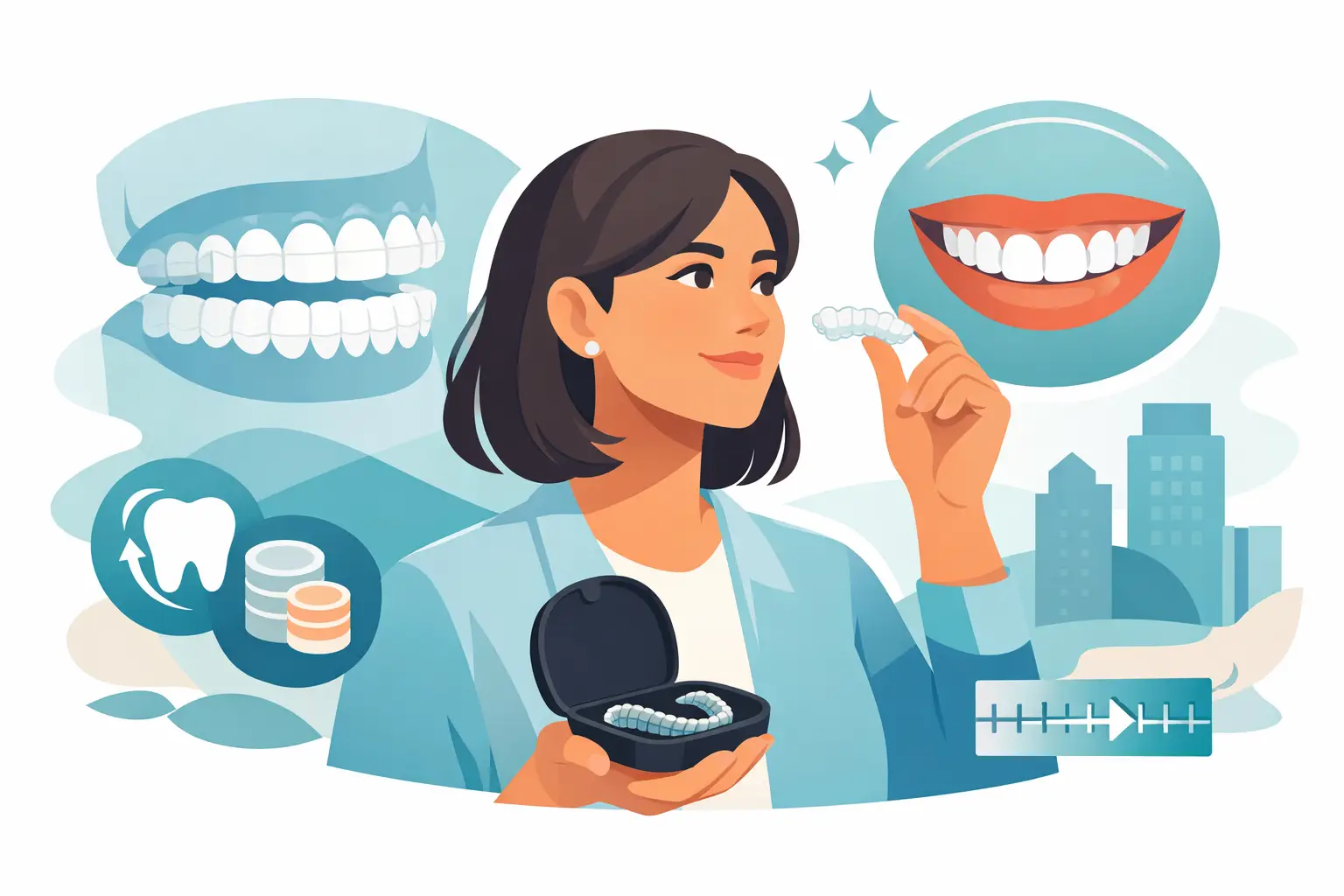
You can be successful, confident, and still hesitate to smile in photos because of one crooked front tooth or teeth that have shifted over time. That is usually the real question behind is invisalign worth it adults ask - not whether clear aligners are trendy, but whether the investment leads to a smile that feels more comfortable, attractive, and easier to maintain.
For many adults, the answer is yes. But not for everyone, and not for every type of orthodontic problem. The value of Invisalign depends on your bite, your goals, your discipline with wear time, and the quality of the treatment planning behind it. If you are considering cosmetic dentistry or want a straighter smile without metal braces, it helps to look at the decision the way a skilled dental provider does: by weighing outcome, limitations, cost, and long-term health.
Is Invisalign worth it adults considering cosmetic treatment?
Invisalign can be well worth it for adults who want a more discreet way to straighten teeth, especially when appearance matters in professional and social settings. Clear aligners are designed to move teeth gradually using a series of custom trays, and they are popular because they are far less noticeable than traditional braces.
That cosmetic advantage is only part of the story. Adults often choose Invisalign because it can also improve spacing, crowding, mild to moderate bite issues, and the cleaning challenges that come with overlapping teeth. Straighter teeth are not just about appearance. They can be easier to brush and floss properly, which may reduce the risk of plaque buildup, gum inflammation, and uneven wear.
When adults feel unhappy with their smile, even small changes can have a meaningful effect on confidence. That matters. For many patients, being able to smile freely at work, in family photos, or during conversations is not a minor benefit - it is the reason treatment feels worthwhile.
What makes Invisalign worth the cost for some adults
The biggest reason adults see value in Invisalign is convenience paired with aesthetics. The aligners are removable, so you can take them out to eat, brush, and floss. That is a major difference from braces, where brackets and wires can make oral hygiene more difficult and food choices more limiting.
Comfort is another factor. Invisalign trays are smooth and custom-made, so many patients find them easier to tolerate than brackets that may irritate the cheeks and lips. There can still be pressure when switching to a new set of aligners, but that pressure is a sign that the teeth are moving.
Treatment can also fit well into a busy lifestyle. Adults balancing work, family, and social commitments often appreciate an option that feels lower-profile and more flexible. If your job involves meeting clients, speaking publicly, or simply being face-to-face with people throughout the day, discreet treatment can carry real value.
For some adults, the cost becomes easier to justify when compared with the emotional and practical cost of doing nothing. Teeth that continue to drift can become harder to clean and may contribute to bite imbalances or cosmetic concerns that worsen over time. Addressing the issue earlier may prevent a more involved correction later.
When Invisalign may not feel worth it
Clear aligners are not magic, and they are not the best fit for every case. Some adults have more complex bite problems, major tooth rotations, significant crowding, or jaw alignment issues that may respond better to braces or a broader restorative plan.
Invisalign also requires commitment. You typically need to wear the aligners 20 to 22 hours a day for treatment to stay on track. If you know you are likely to remove them often, forget them during meals, or leave them out for long stretches, the value drops quickly. The system works well when patients follow it closely. Without consistency, treatment can stall, refinements may increase, and the overall process may become frustrating.
Cost can also be a legitimate concern. Adult patients should not feel pressured to pursue treatment simply because it is popular. If the issue is minor and does not bother you aesthetically or functionally, the investment may not make sense right now. Worth is personal. A straighter smile can be life-changing for one patient and unnecessary for another.
Is Invisalign worth it adults with bite or spacing issues?
Often, yes - but it depends on the severity and the diagnosis. Invisalign can be effective for mild to moderate crowding, gaps, relapse after previous braces, and certain bite concerns. It is especially appealing for adults whose teeth shifted after not wearing retainers years ago.
The key is proper evaluation. Two people may both say, "My teeth are a little crooked," while having very different underlying problems. One may be a straightforward aligner case. The other may have worn dental work, gum issues, or a bite relationship that needs more than cosmetic movement.
That is why treatment planning matters as much as the aligners themselves. A provider with experience in cosmetic and restorative dentistry can assess not only how to straighten the teeth, but how that movement affects smile design, function, and long-term stability. In some cases, Invisalign is part of a larger plan that may include whitening, bonding, veneers, or replacing failing dental work for a more complete result.
Cost versus value for adult Invisalign
Adult patients usually want a clear answer on price, but value goes beyond the number on the treatment proposal. Invisalign is often comparable in cost to braces, though fees vary depending on case complexity, treatment length, and whether refinement trays are needed.
A better question is what you are getting for that investment. You are not just paying for plastic trays. You are paying for diagnosis, digital planning, ongoing monitoring, bite management, and the judgment required to move teeth safely and effectively. That is one reason provider experience matters.
Dr. Xhoana Gjelaj approaches smile-related treatment with a strong focus on precision, aesthetics, and comprehensive planning, which is especially important for adults who may already have crowns, veneers, worn teeth, or other restorative concerns. Adult orthodontic treatment is rarely just about straightening teeth in isolation.
If finances are part of the hesitation, many adults find the decision easier when payment options are available. Spreading out the cost can make treatment more realistic without sacrificing quality.
The adult factors that matter most
Age alone does not make Invisalign less effective. Healthy teeth and gums matter more than whether you are 32 or 62. Many adults are excellent candidates, but they often bring different clinical considerations than teens.
Older adults may have gum recession, bone loss, restorations, missing teeth, or years of wear from grinding and clenching. Those issues do not automatically rule out Invisalign, but they do mean treatment should be planned carefully. Sometimes the best path starts with addressing gum health or replacing damaged dental work before aligners begin.
Adults also tend to have more defined expectations. They want to know how long treatment will take, whether attachments will show, what the maintenance looks like, and how the final result will hold up. Those are the right questions to ask. A worthwhile Invisalign experience is built on realistic goals, not sales language.
How to decide if Invisalign is worth it for you
If you are weighing the decision, think in terms of outcomes rather than hype. Ask yourself whether your teeth affect your confidence, whether alignment issues make cleaning harder, and whether you are willing to wear aligners as directed. Then consider whether you want the least visible orthodontic option available.
A professional evaluation should answer the rest. You should leave that consultation understanding what Invisalign can fix, what it cannot, how long treatment may take, and whether another option would serve you better. Honest guidance is part of good care.
For many adults, Invisalign is worth it because it solves a problem they see every day in the mirror without disrupting their lifestyle. For others, a different treatment may offer better function or better value. The right decision is the one that matches your clinical needs, your priorities, and the standard of result you expect.
A straighter smile should not feel like a guess. When the plan is personalized and the goals are clear, the investment becomes much easier to measure.