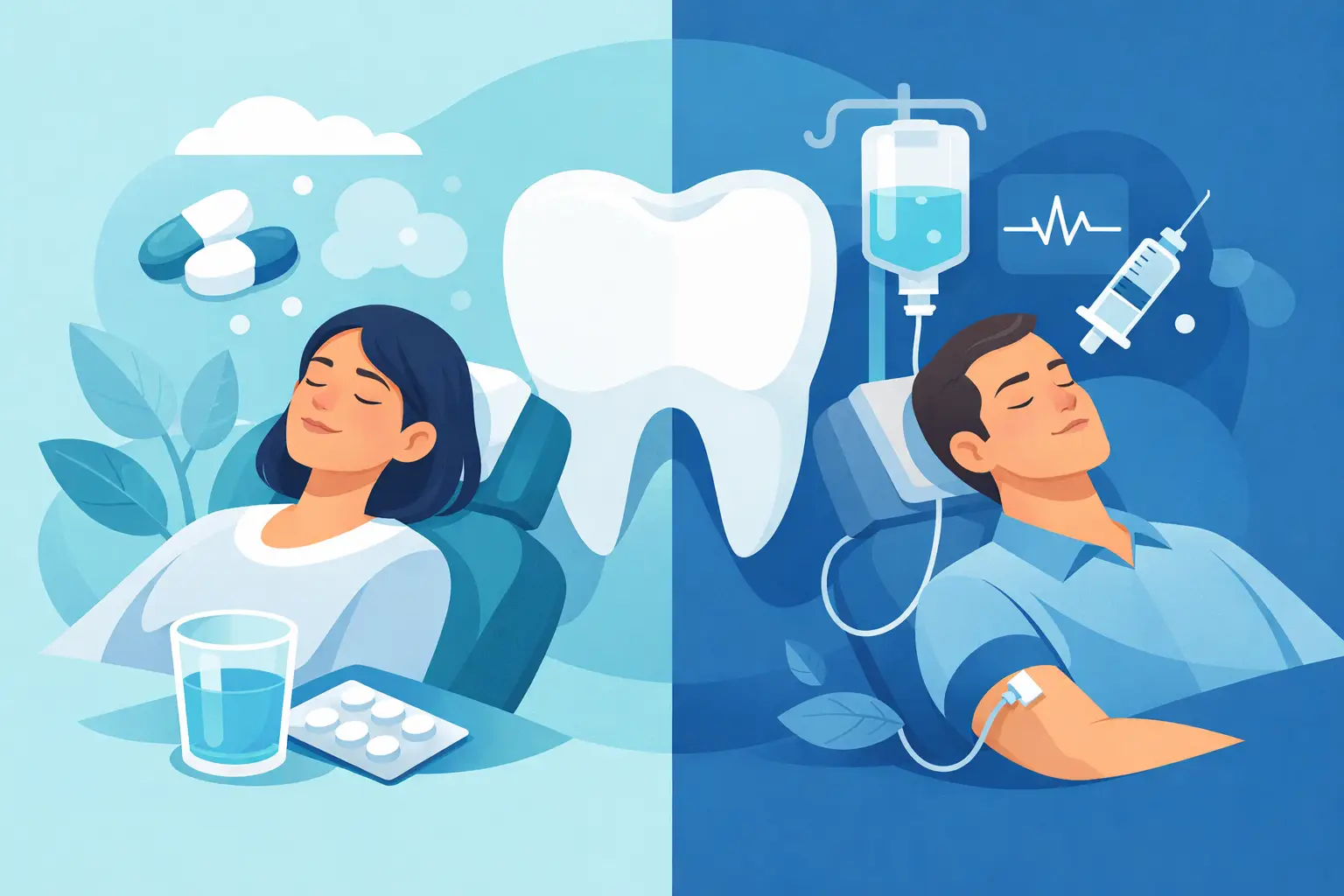
A complex dental procedure should not feel like something you simply have to endure. For patients considering dental implants, full-mouth restoration, bone grafting, or multiple procedures in one visit, oral sedation vs IV sedation is often a central question. Both options can ease anxiety and improve comfort, but they work differently and serve different clinical needs.
The right choice is not about selecting the strongest option. It is about matching the level of sedation to your health history, anxiety level, planned treatment, and recovery needs. A careful evaluation helps make treatment feel more manageable while protecting your safety at every stage.
Oral Sedation vs IV Sedation: The Core Difference
Oral sedation is taken by mouth before your appointment, usually as a prescribed tablet. It is designed to create a calm, relaxed state before you arrive for treatment. Most patients remain awake and able to respond to simple instructions, yet feel significantly less concerned about the sounds, sensations, and length of the procedure. Many have limited memory of the appointment afterward.
IV sedation is delivered through a small intravenous line and takes effect more quickly. Because medication is administered directly into the bloodstream, the dental team can adjust the level of sedation during the procedure. This gives IV sedation a higher degree of control, making it particularly valuable for longer, more involved treatment plans.
Neither option replaces local anesthesia. Even when you are sedated, local anesthetic is used to numb the treatment area so you remain physically comfortable throughout care.
How Oral Sedation Works
Oral sedation is often a practical choice for patients with mild to moderate dental anxiety, a strong gag reflex, or uneasiness about injections, drilling, or extended time in the dental chair. Your dentist provides precise instructions about when to take the medication. Depending on the plan, you may take it at home before leaving for the office or after arriving for your visit.
The experience is gradual. You may begin to feel drowsy, warm, and less focused on the surroundings. While the medication can make you feel deeply relaxed, it does not typically place you in a sleep-like state. You can still respond when the dentist asks you to open, turn your head, or take a break.
One limitation is predictability. People process oral medication at different rates, based on factors such as metabolism, age, medical conditions, and whether they followed fasting instructions. Once the medication has been taken, it cannot be adjusted with the same precision as IV sedation. For a shorter procedure or a patient whose anxiety is manageable, that may be entirely appropriate. For extensive surgery, it may not provide the level of control needed.
When IV Sedation May Be the Better Fit
IV sedation is commonly considered for patients undergoing more involved procedures, including implant placement, surgical extractions, bone grafting, sinus grafting, or comprehensive full-mouth treatment. It can also be beneficial for patients with severe dental anxiety, previous traumatic dental experiences, or difficulty completing treatment comfortably with lighter sedation.
With IV sedation, medication begins working quickly and can be carefully titrated throughout the appointment. If a procedure takes longer than expected or requires a deeper level of relaxation at a particular point, the provider can respond in real time. Patients are usually very relaxed and may remember little or nothing about the visit, while still being able to respond to verbal direction.
This does not mean IV sedation is automatically better. It requires additional planning, monitoring, and medical screening. The team monitors your vital signs continuously, and your candidacy must be reviewed carefully. For the right patient and procedure, however, IV sedation can turn a treatment that once felt overwhelming into a controlled, comfortable experience.
What Your Dentist Will Consider Before Recommending Sedation
Sedation should never be selected from a menu. A safe recommendation begins with a complete review of your medical history, current medications, allergies, airway considerations, and past experiences with anesthesia or sedation. Your dentist will also assess the complexity and expected length of your procedure.
Health conditions such as sleep apnea, heart or lung disease, liver or kidney concerns, uncontrolled diabetes, or certain medication interactions may affect which option is appropriate. Tobacco use, alcohol use, and recreational drug use should also be discussed honestly. This information is not a judgment. It helps the team plan treatment safely and avoid preventable complications.
Your goals matter, too. Some patients need help getting through a single appointment. Others are completing a multi-step implant or cosmetic treatment plan and want to consolidate care efficiently. At Trinity Dental Arts, Dr. Xhoana Gjelaj evaluates sedation alongside the surgical and restorative plan so the comfort strategy supports the quality of the final result.
Recovery: What to Expect After Each Option
Both oral and IV sedation require recovery time, and neither is compatible with driving yourself home. You will need a responsible adult to bring you to the appointment, remain available during treatment if requested, and take you home afterward. Plan to rest for the remainder of the day and postpone work, major decisions, exercise, alcohol, and operating machinery.
After oral sedation, grogginess may linger for several hours. Some patients feel clear-headed sooner than expected, but that does not mean they are safe to drive or resume normal activity. Follow the instructions provided by your dental team rather than relying on how alert you feel.
After IV sedation, patients often wake up feeling relaxed but may have little memory of the procedure. Drowsiness can persist into the evening. Your companion should stay with you as directed, especially if you have also received pain medication following surgery. Eating, hydration, prescribed medications, and post-procedure instructions should be followed closely to support a smooth recovery.
Preparing for a Sedation Appointment
Preparation is a meaningful part of safe sedation care. Your dental team will give you instructions tailored to the medication and procedure, including when to stop eating or drinking, which routine medications to take, and what clothing to wear. Do not make assumptions based on a previous medical or dental appointment. Fasting and medication instructions can differ depending on the treatment and type of sedation.
Be sure to arrange transportation before the day of your procedure. Wear comfortable clothing with sleeves that allow access to your arm if IV sedation is planned, and avoid bringing unnecessary valuables. If you develop a cold, fever, breathing symptoms, or another illness before the appointment, contact the office. A change in your health can affect whether sedation should proceed as scheduled.
Questions Worth Asking at Your Consultation
A productive sedation consultation should leave you with a clear sense of what will happen before, during, and after treatment. Ask which level of sedation is being recommended and why it fits your procedure. Ask how you will be monitored, what you should expect to feel, how long recovery may take, and which medications or health conditions could affect your plan.
You may also want to ask whether treatment can be completed in fewer visits with sedation and how that may affect recovery. For patients planning dental implant treatment or a full-mouth restoration, these details can help coordinate work schedules, transportation, and support at home.
Choosing Comfort Without Compromising Care
The decision between oral sedation and IV sedation is individualized. Oral sedation can be an effective, lower-intensity option for patients who need help relaxing through routine or moderately involved care. IV sedation offers greater control and is often better suited to complex surgery, longer appointments, or more significant anxiety.
The best next step is a thorough consultation where your dentist can connect your health history, comfort needs, and treatment goals. When sedation is planned with the same precision as the dentistry itself, you can focus less on apprehension and more on the confident, lasting result your treatment is designed to achieve.