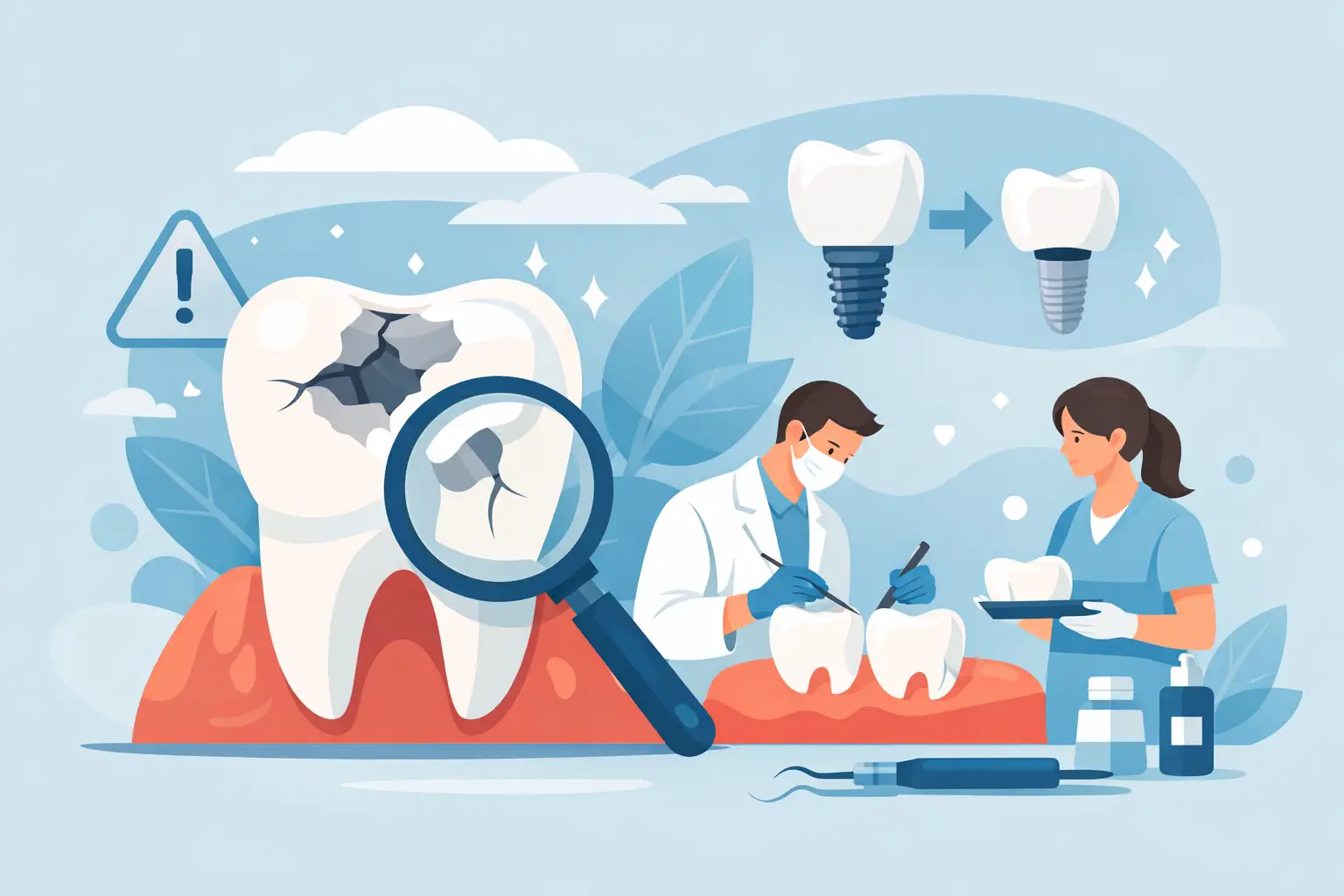
A crown that repeatedly comes loose, a tooth that hurts when you chew, or a bridge that no longer feels stable is more than an inconvenience. These can be early signs that it is time to replace failing dental work before the problem affects the tooth, bone, bite, or appearance of your smile. The right answer is not always to start over immediately. It is to identify why the restoration failed and create a treatment plan that protects what is healthy while delivering a lasting result.
For many adults, older restorations fail quietly. A small gap develops at the edge of a crown. Decay forms beneath a restoration. An implant-supported crown fractures after years of heavy bite pressure. By the time pain or visible damage appears, the underlying issue may be more advanced. A detailed evaluation allows your dentist to address the cause rather than simply patch the symptom.
Signs Your Dental Work May Need Attention
Not every worn restoration requires replacement right away. Minor roughness, surface staining, or a small chip may sometimes be polished or repaired. However, recurring problems deserve a closer look, especially when they involve discomfort, instability, or changes in your bite.
Warning signs include a crown or bridge that moves, cracks, or repeatedly comes off; pain when biting; new sensitivity to hot or cold; bleeding or swelling around a restored tooth; food consistently getting trapped around the restoration; and a dark line developing near the gumline. You may also notice that your teeth no longer meet comfortably or that you are avoiding chewing on one side.
A restoration can look acceptable from the outside while the tooth beneath it is compromised. Digital imaging, bite analysis, and a thorough examination help reveal hidden decay, root fractures, infection, bone loss, or excessive pressure that may not be visible in a mirror.
Why Dental Restorations Fail
Dental crowns, bridges, fillings, and implant restorations are designed to withstand everyday use, but no restoration lasts forever. Longevity depends on the material used, the health of the supporting tooth or bone, oral hygiene, bite forces, and the precision of the original treatment.
Decay is a frequent reason conventional restorations fail. Bacteria can enter through a worn or leaking margin where the restoration meets the tooth. If decay progresses beneath a crown, the tooth may lose the structure needed to support it safely. In some cases, the tooth can be treated and restored again. In others, it may no longer be predictable to save.
Bite-related damage is another common cause. Clenching, grinding, or an uneven bite can place extreme force on crowns, bridges, and natural teeth. A replacement that ignores the bite problem may fracture or loosen again. For this reason, a well-designed plan considers how your upper and lower teeth function together, not just the isolated tooth that broke.
Gum disease and bone loss can also undermine dental work. Teeth rely on healthy gums and bone for stability. Implant treatment likewise depends on adequate bone and a clean, healthy environment around the implant. When inflammation is present, restoring the foundation is often the first priority.
How to Replace Failing Dental Work Without Repeating the Problem
The most successful replacement plans begin with diagnosis, not a product recommendation. At Trinity Dental Arts, Dr. Xhoana Gjelaj evaluates the condition of the restoration, the remaining tooth structure, gum health, bone support, bite, and cosmetic goals before recommending a path forward.
When a New Crown May Be the Right Choice
If the tooth beneath a failing crown is healthy enough to support a new restoration, replacing the crown may be an excellent conservative option. Modern ceramic crowns can be designed to blend naturally with surrounding teeth while restoring strength and function.
Before placing a replacement crown, the dentist must remove the old restoration and inspect the tooth carefully. Any decay, cracks, or weakened areas should be addressed first. If a root canal is needed because the nerve is infected or severely damaged, that treatment should be completed before the final crown is placed.
Same-day crown technology can be valuable for appropriate cases, reducing the time spent in a temporary restoration. However, complex cosmetic cases, significant bite changes, and full-mouth planning may require a more detailed process to achieve the best fit and appearance.
When an Implant Is a Better Long-Term Solution
If a tooth cannot be predictably saved, a dental implant can replace the missing tooth from the root up. The implant is placed in the jawbone and, after proper healing and integration, supports a custom crown. This approach does not rely on neighboring teeth for support and can help maintain bone in the area of the missing tooth.
Implants are not automatically the right choice for every patient. Bone quantity, gum health, medical history, healing capacity, and the location of the tooth all matter. Some patients need bone grafting or a sinus graft before implant placement is possible. While that can add treatment time, it may provide the stable foundation needed for a more durable result.
For patients with multiple failing teeth or widespread damage, individual repairs may become less predictable and more costly over time. Full-mouth restoration can coordinate implants, fixed new teeth, bite rehabilitation, and cosmetic planning into one comprehensive solution. All-on-4 or All-on-X treatment may be considered when a full arch requires replacement with a fixed, implant-supported design.
The Value of a Comprehensive Treatment Plan
Replacing one failed crown without evaluating the rest of the mouth can be a missed opportunity. If several restorations are aging, if your bite has changed, or if you have a history of repeated fractures, a broader plan can prevent a cycle of emergency repairs.
A comprehensive plan may include digital imaging, photographs, scans, periodontal evaluation, and a review of existing restorations. It should answer practical questions: Which teeth are stable? Which teeth have a guarded prognosis? Is there active disease? Are your teeth being damaged by grinding? What level of cosmetic improvement do you want as part of treatment?
This planning is particularly important when replacing front teeth or restoring several teeth at once. A restoration must do more than fill space. It should support your speech, bite, facial balance, and smile aesthetics. Material selection, tooth shape, shade, and gumline contours all influence the final result.
There are trade-offs to consider. A short-term repair may cost less initially, but it may not address a severely weakened tooth. An implant can offer exceptional stability and preservation of surrounding structures, yet it involves surgery and a healing period. A full-mouth approach requires a larger commitment, but it can be more predictable than treating one failing area at a time when widespread disease or damage is present.
What to Expect During Treatment
The first step is a consultation focused on your symptoms, goals, health history, and current dental work. Advanced imaging and clinical examination allow the dentist to determine whether a restoration can be repaired, replaced, or whether the underlying tooth needs a different solution.
Treatment is then sequenced to protect your health and comfort. Infection, gum inflammation, or damaged tooth structure is addressed before final restorations are made. Temporary restorations may be used while tissues heal or while your final crowns are crafted. For patients with dental anxiety or more extensive treatment needs, sedation dentistry can help make care more comfortable.
After treatment, maintenance matters. Daily brushing and cleaning around restorations, professional hygiene visits, and periodic examinations help protect your investment. If grinding is a concern, a custom night guard may be recommended to reduce damaging forces on teeth and restorations.
Do Not Wait for a Dental Emergency
Failing dental work rarely improves on its own. A small crack can become a fracture, minor leakage can become deep decay, and discomfort can progress into infection. Seeking care early may expand your options and reduce the amount of treatment needed.
If you are dealing with loose, damaged, painful, or outdated restorations, an expert evaluation can replace uncertainty with a clear plan. The goal is not simply to make a tooth look repaired. It is to create a healthy, stable foundation for a smile that feels comfortable, functions confidently, and is built to last.