When a front tooth is chipped, worn, uneven, or discolored, the question usually is not whether to fix it. It is how to fix it well. For many patients comparing veneers vs bonding for front teeth, the real goal is simple: achieve a natural-looking result that holds up in everyday life and feels worth the investment.
Both treatments can improve the shape, color, and symmetry of visible teeth. Both can produce beautiful cosmetic results. But they are not interchangeable. The right option depends on how much change you want, how long you want it to last, and whether the condition of your teeth supports a more conservative or more comprehensive approach.
Veneers vs bonding for front teeth: what is the difference?
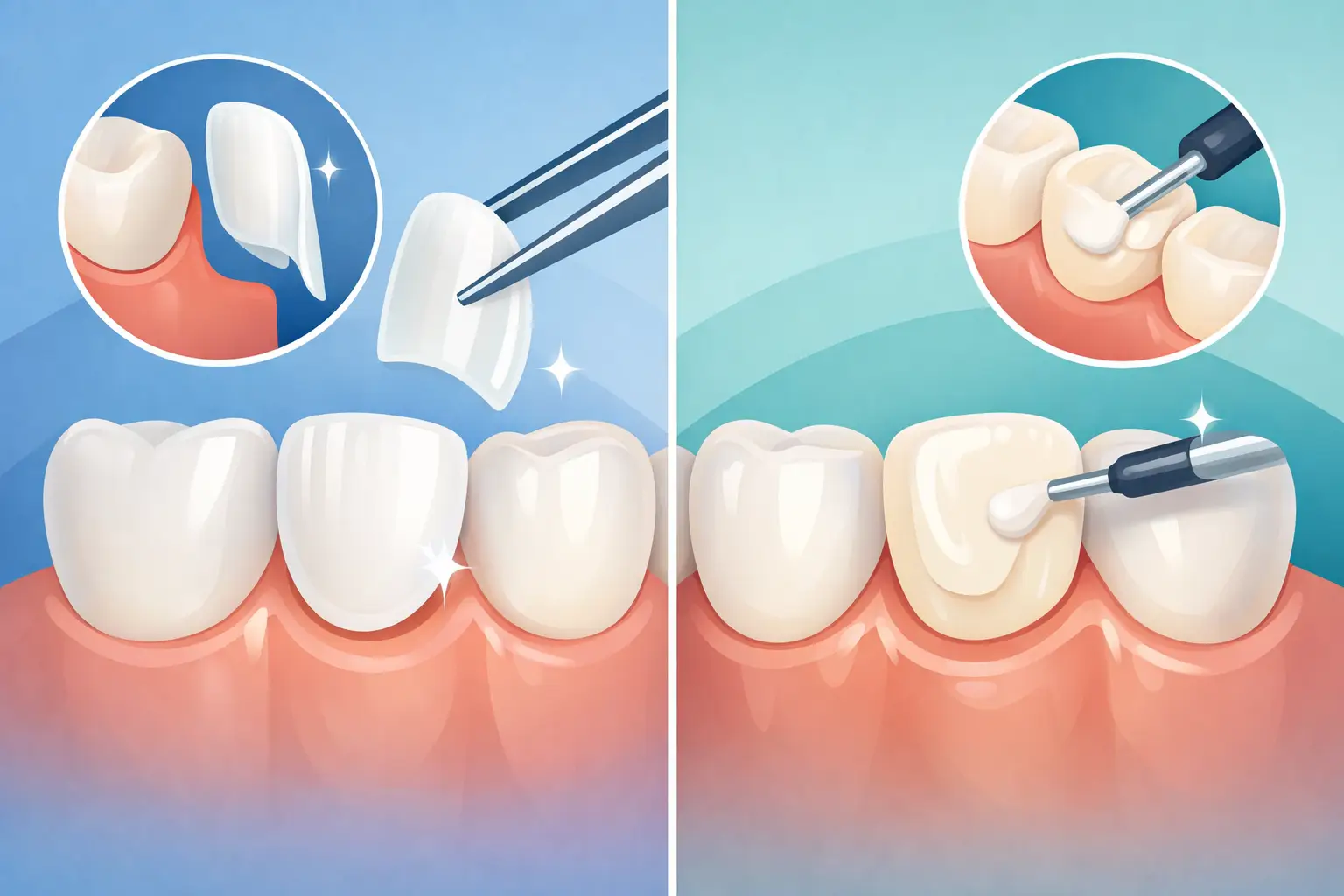
Dental bonding uses a tooth-colored composite resin that is applied directly to the tooth, shaped by the dentist, and hardened with a curing light. It is often used to repair small chips, close minor gaps, smooth edges, or improve the appearance of isolated imperfections. Because the material is added directly to the tooth, bonding is typically completed in one visit and usually requires little to no enamel removal.
Porcelain veneers are thin custom shells that cover the front surface of the tooth. They are designed to change color, shape, size, and overall balance in a more controlled and long-lasting way. Veneers usually require some enamel preparation, digital planning or impressions, and placement over more than one appointment.
If you are deciding between the two, it helps to think in terms of scope. Bonding is often ideal for smaller corrections. Veneers are better suited for broader cosmetic changes or cases where longevity and stain resistance matter more.
When bonding makes sense
Bonding is often the more conservative choice for front teeth when the issue is limited and the underlying tooth is healthy. A small chip on one central incisor, slightly uneven lateral teeth, or a narrow gap between front teeth can often be corrected beautifully with composite.
This option also appeals to patients who want to improve their smile without committing to a more extensive treatment plan. Because there is usually minimal drilling, bonding can preserve more natural tooth structure. It is also generally less expensive upfront than veneers.
That said, bonding has limits. Composite resin is durable, but it is not as strong or stain-resistant as porcelain. On front teeth, where light reflection and surface texture matter, even excellent bonding may not maintain the same polish over time as a well-made veneer. Patients who drink coffee, red wine, or tea regularly may notice discoloration sooner.
When veneers are the better choice
Veneers are often the stronger option when multiple cosmetic concerns exist at once. If front teeth are worn, misshapen, permanently stained, mildly misaligned, or inconsistent in size, veneers allow for a more comprehensive redesign. They can create uniformity that is harder to achieve with direct bonding alone.
Porcelain also offers a level of translucency and surface finish that closely mimics natural enamel. For patients seeking a high-end cosmetic result, especially in the smile zone, that difference can matter. Veneers tend to resist staining better and maintain their appearance longer with proper care.
This is where treatment planning becomes essential. An experienced cosmetic dentist looks beyond the single tooth and evaluates the smile as a whole - facial proportions, lip movement, bite forces, gum symmetry, and the way light hits the front teeth. That level of planning is especially important when veneers are being considered for the most visible teeth.
Appearance: which looks more natural?
Either treatment can look natural in the right case. The better question is which one will look natural for your specific teeth.
Bonding can blend very well when repairing a small area. In skilled hands, it can be shaped and shaded to match adjacent enamel surprisingly well. For modest improvements, it is often an excellent esthetic solution.
Veneers generally provide more control over final appearance. Because they are fabricated outside the mouth, the shape, contours, texture, and shade can be refined with greater precision. If a patient wants brighter front teeth, better symmetry, and a more polished smile design, veneers usually offer a more predictable cosmetic result.
The trade-off is that veneers are not simply a quick cover-up. They require careful case selection. If bite issues, clenching, gum disease, or untreated decay are present, those problems should be addressed first to protect the investment.
Durability and maintenance
Durability is one of the clearest differences in the veneers vs bonding for front teeth decision.
Bonding can last several years, especially when used for small repairs and maintained well. But it is more prone to chipping, edge wear, staining, and surface dullness over time. Front teeth take frequent functional stress, especially in patients who bite nails, chew ice, grind their teeth, or use their teeth to open packaging. Bonding can be repaired, which is an advantage, but touch-ups may become part of the long-term picture.
Porcelain veneers usually last longer and hold their finish better. They are more resistant to staining and wear than composite resin. That does not make them indestructible. Veneers can still fracture under excessive force, and patients who clench or grind may need a night guard to protect them. But for many adults seeking a durable cosmetic upgrade, veneers often provide better long-term value.
Cost matters, but so does value
Bonding usually has a lower initial cost, which makes it attractive for patients wanting meaningful cosmetic improvement without a larger upfront investment. For one or two teeth, it can be a smart and efficient solution.
Veneers cost more because they involve detailed planning, custom fabrication, materials, and multiple steps. Still, price alone should not drive the choice. If bonding needs periodic repairs or replacement and veneers would have been the more suitable treatment from the start, the cheaper option may not be the better value.
This is especially true for front teeth, where cosmetic dissatisfaction is hard to ignore. Patients often live with the result every day in photos, conversations, and professional settings. The right treatment should fit not only your budget, but also your expectations.
Tooth preparation and reversibility
Patients often ask whether veneers damage natural teeth. The honest answer is that veneers usually require enamel removal, so the tooth is permanently altered. That is why they should be recommended thoughtfully, not casually.
Bonding is typically more conservative and in some cases reversible or close to it, depending on how much reshaping is needed. For younger patients or those unsure about making permanent changes, this may be a significant advantage.
Still, preserving tooth structure does not automatically mean bonding is best. If a patient wants major color correction or reshaping on front teeth, repeated bonding may become less ideal than a properly planned veneer treatment.
Which option is right for your front teeth?
Bonding may be the better choice if you have a small chip, minor spacing, slight irregularities, or want a conservative and cost-conscious improvement. Veneers may be the better choice if you want a more dramatic smile upgrade, longer-lasting brightness, or correction of several cosmetic concerns at once.
There are also situations where a combination approach works best. A patient may benefit from veneers on the most visible teeth and bonding on a less prominent tooth, depending on anatomy, budget, and esthetic goals. Cosmetic dentistry is not one-size-fits-all.
The best outcomes come from a detailed exam, honest discussion, and treatment planning that accounts for your bite, enamel condition, habits, and long-term goals. At a practice focused on advanced cosmetic and restorative care, that conversation should be precise, not sales-driven. Patients deserve to understand not only what can be done, but what should be done.
What to ask at your consultation
If you are considering veneers or bonding, ask how each option will look in your specific smile, how long the result is expected to last, what maintenance is involved, and whether your bite places either treatment at risk. It is also worth asking how much natural tooth structure will be altered and whether the treatment plan is designed for one tooth or your overall smile balance.
For patients in Trinity and the surrounding Tampa Bay area, choosing a provider with strong cosmetic judgment matters as much as choosing the procedure itself. Front teeth are unforgiving. Small differences in shape, symmetry, and translucency can change the entire result.
A confident smile should not look artificial, and it should not leave you wondering if you chose too little treatment or too much. The right plan is the one that respects your natural teeth, meets your cosmetic goals, and gives you a result you can feel good about every time you speak, laugh, or see yourself in the mirror.