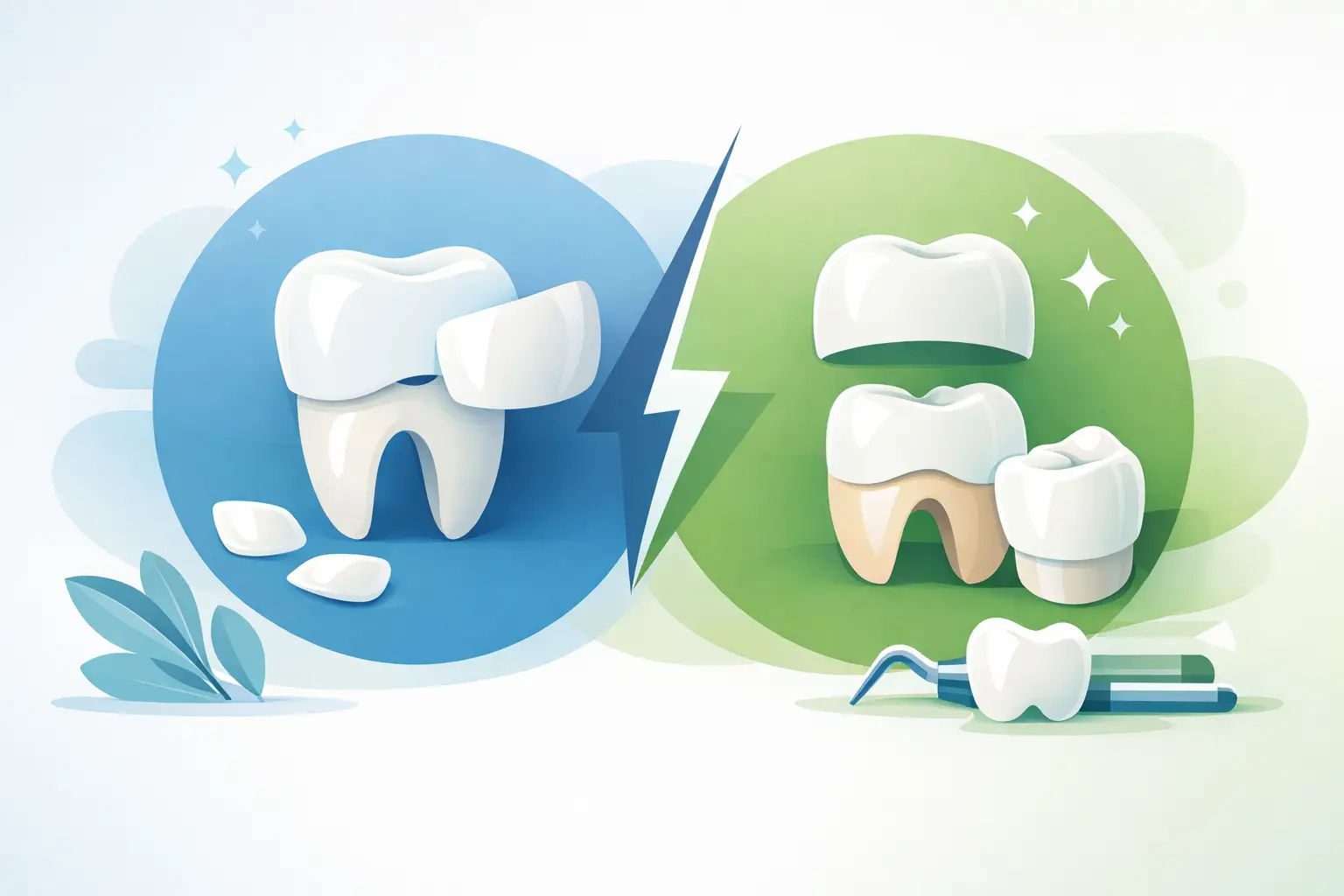
A single discolored front tooth, a chipped edge, or an old filling that keeps breaking can make the choice feel deceptively simple: veneer or crown? The veneers vs crowns difference is not just about appearance. It comes down to how much healthy tooth structure remains, what the tooth needs to withstand, and whether the primary goal is cosmetic improvement, long-term protection, or both.
Both restorations can create a natural-looking smile when they are thoughtfully designed. However, they solve different problems. Choosing the wrong option can mean removing more tooth structure than necessary or placing a restoration that is not strong enough for the tooth's condition.
Veneers vs Crowns Difference: Coverage Changes Everything
A veneer is a thin, custom-made shell, most often crafted from porcelain, that bonds to the front surface of a tooth. It is designed to improve what people see when you smile: color, shape, length, minor spacing, and small chips or wear. Because it covers only the visible front and sometimes wraps slightly around the edge, a veneer generally preserves more of the natural tooth than a crown.
A dental crown covers the entire visible portion of the tooth above the gumline. The tooth is shaped to create room for the restoration, and the crown protects it from all sides. This full-coverage design makes a crown the better choice when a tooth is weakened by extensive decay, a large failing filling, a fracture, severe wear, or prior root canal treatment.
In simple terms, veneers are primarily cosmetic restorations that can also address minor functional concerns. Crowns are restorative solutions that can be designed beautifully enough to enhance a smile at the same time.
When a Veneer May Be the Better Choice
A veneer may be appropriate when the underlying tooth is healthy and structurally sound, but its appearance does not match the rest of the smile. Porcelain reflects light in a way that can closely resemble natural enamel, making it a strong option for visible front teeth.
Veneers can be especially effective for teeth with stubborn discoloration that may not respond predictably to whitening, small chips, uneven edges, mild gaps, or naturally small or irregularly shaped teeth. They can also be part of a comprehensive smile makeover, where several teeth are planned together to create balanced color, proportion, and symmetry.
The key limitation is that a veneer does not reinforce a compromised tooth the way a crown does. If decay extends around the tooth, a crack is present, or a substantial amount of natural structure has been lost, placing a thin veneer may not provide the protection the tooth needs.
Veneers also require a healthy foundation. Active gum disease, untreated decay, and uncontrolled grinding should be addressed before cosmetic treatment. If you clench or grind your teeth, a custom nightguard may be recommended to help protect porcelain and your natural teeth from excessive force.
When a Crown Is the More Protective Solution
Crowns are often recommended when preserving the tooth is the priority. A tooth with a large filling can become more vulnerable over time because less natural enamel remains to support it. A crown holds the tooth together and distributes biting pressure more evenly.
For a back tooth that absorbs significant chewing force, strength is usually more important than conservative cosmetic coverage. A crown may also be the right treatment for a front tooth with a deep fracture, extensive decay, major wear, or discoloration combined with structural damage.
Modern crowns are not limited to an artificial-looking result. High-quality ceramic materials can be color-matched, shaped, and layered to blend with surrounding teeth. For many patients, the ideal result is both functional and cosmetic: a tooth that feels secure, looks natural, and supports a confident smile.
Some crown cases may be eligible for same-day treatment using digital scanning and in-office milling technology. Whether that approach is appropriate depends on the tooth's location, the complexity of the restoration, bite conditions, and the desired material. A more complex esthetic case may benefit from additional planning and laboratory craftsmanship.
How Much Tooth Preparation Is Required?
Tooth preparation is one of the most meaningful differences between veneers and crowns. A traditional veneer usually requires a small amount of enamel reduction on the front of the tooth so the porcelain sits naturally rather than looking bulky. In select cases, minimal-preparation veneers may be possible, but they are not right for every tooth or every smile design.
A crown requires more shaping because it needs enough space to cover the entire tooth and still have adequate material thickness. That added coverage is what gives a crown its protective advantage, but it also means the procedure is less conservative when a tooth is otherwise healthy.
The best treatment is not automatically the one that removes the least tooth structure. If a tooth is weakened, choosing a veneer solely to avoid crown preparation can leave it vulnerable to future fracture. Conversely, placing a crown on a tooth that only needs cosmetic refinement may sacrifice healthy enamel unnecessarily. The right recommendation is based on a close evaluation of the tooth, gums, bite, X-rays, and overall smile goals.
Appearance, Durability, and Long-Term Maintenance
Both veneers and crowns can last many years, but neither is permanent. Their lifespan depends on material quality, the health of the supporting tooth, oral hygiene, bite forces, dietary habits, and regular professional care.
Porcelain veneers are highly stain resistant and can retain a bright, natural appearance. They are well suited to the front of the smile, where lifelike translucency matters most. Crowns can also be made from esthetic ceramic materials, although the ideal material choice may differ between front and back teeth because those areas have different functional demands.
A veneer or crown can chip, loosen, fracture, or develop decay at the edge if bacteria reach the tooth-restoration margin. Brushing twice daily, cleaning between teeth, and attending routine dental visits remain essential. Avoiding habits such as chewing ice, opening packages with teeth, or biting hard objects also helps protect your investment.
If you are considering several veneers, color planning should happen before final placement. Whitening natural teeth after veneers are bonded will not change the porcelain shade, so many patients whiten first and then select the final veneer color to match their preferred smile.
Cost Considerations Without Guesswork
The cost of a veneer or crown varies according to the material used, the complexity of the tooth, whether additional treatment is needed, and the level of cosmetic detail involved. A straightforward crown and a highly customized front-tooth crown are not the same treatment, even though both are called crowns.
Insurance may contribute toward a crown when it is considered medically necessary, although coverage varies by plan and is never guaranteed. Veneers are commonly considered elective cosmetic treatment. An accurate estimate requires an examination and a clear treatment plan, particularly when more than one tooth is involved.
It is wise to compare value rather than price alone. A restoration that is planned carefully around your bite, gumline, facial features, and long-term oral health is less likely to feel like a short-term cosmetic fix.
Can You Replace an Old Veneer With a Crown?
Yes, but only when the tooth's condition calls for it. An old veneer may need replacement because of wear, chipping, staining at the margins, or changes in the surrounding teeth and gums. If the tooth beneath it remains healthy and stable, another veneer may be appropriate.
If new decay, a crack, or extensive damage is found, a crown may offer better protection. This is why replacing cosmetic dentistry should never be treated as a simple copy-and-paste procedure. The tooth should be reassessed before deciding on the next restoration.
A Personalized Decision Protects Your Smile
A veneer can be an excellent choice for a healthy tooth that needs a refined cosmetic change. A crown can be the right answer when the tooth needs full protection as well as an improved appearance. The distinction matters most when the result must look natural and remain dependable under daily use.
At Trinity Dental Arts, Dr. Xhoana Gjelaj evaluates cosmetic goals alongside tooth structure, gum health, and bite function to recommend treatment that supports the smile you want and the oral health you need. A focused consultation can replace uncertainty with a clear, personalized plan for your next step.