If you have been told you do not have enough bone for upper dental implants, the missing piece may not be the implant itself. It may be the space above it. That is where the question comes in: what is a sinus lift for implants, and why would your dentist recommend one before treatment can move forward?
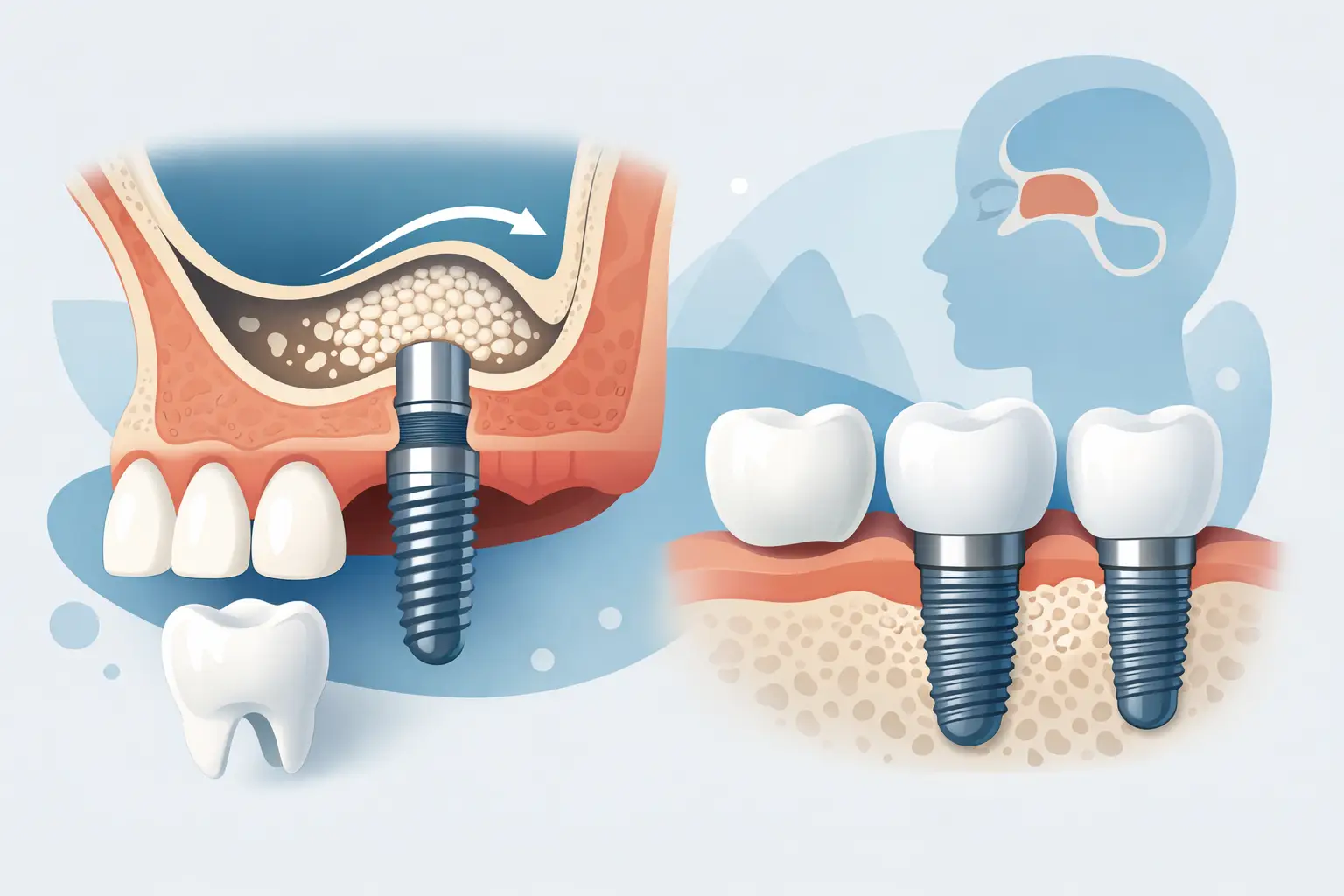
A sinus lift is a bone grafting procedure performed in the upper back jaw, usually where the premolars and molars sit. In that area, the floor of the maxillary sinus can drop lower over time, especially after teeth have been missing for a while. At the same time, the jawbone can shrink after tooth loss. When those two things happen together, there may not be enough vertical bone to place an implant securely.
A sinus lift creates more usable bone height by gently raising the sinus membrane and placing grafting material underneath it. That added space gives the body a framework to build bone, which can make implant placement possible where it otherwise would not be.
Why a sinus lift may be needed before implants
Upper molar and premolar implants can be more complicated than implants in other parts of the mouth. The bone in the back of the upper jaw is often naturally thinner and softer. Add bone loss from missing teeth, and the available support may be too limited for a predictable implant result.
This is one of the most common reasons patients hear they need grafting before implant surgery. It does not mean you are not a candidate for implants. In many cases, it means your treatment needs to be properly staged so the final result has better long-term support.
The need for a sinus lift depends on several factors. How long the tooth has been missing matters. Your sinus anatomy matters. Your overall bone volume matters. Some patients only need a minor internal lift done at the time of implant placement, while others need a more traditional sinus graft and a healing period before implants can be placed.
What is a sinus lift for implants doing, exactly?
The name sounds more dramatic than the procedure usually feels. A sinus lift does not remove the sinus or change how it functions. It simply repositions the thin membrane lining the sinus upward to create room below it for bone graft material.
Think of it as making more foundation where the implant needs to go. Dental implants rely on enough healthy bone to integrate properly. Without that support, the implant may not achieve the stability needed for long-term success.
During healing, the grafted area gradually becomes part of the jaw. The body replaces or incorporates the graft material over time, depending on the type used. Once enough bone has developed, the implant can be placed into a stronger, more stable site.
How the procedure is performed
Treatment starts with imaging, usually a 3D CBCT scan, to measure bone height and evaluate the sinus anatomy. This step is essential because sinus shape, membrane thickness, and existing bone levels vary from one patient to another.
There are two main approaches. The first is a lateral sinus lift, often used when bone height is very limited. In this method, a small opening is made in the side of the upper jaw. The sinus membrane is gently elevated, grafting material is placed beneath it, and the area is closed to heal.
The second is a crestal or internal sinus lift, which may be used when there is already some bone present and only a modest increase is needed. This approach is less extensive and is often done through the implant site itself.
Which method is right depends on how much bone is available and how much additional height is needed. This is where the experience of the implant dentist matters. Careful planning helps reduce complications and improves the chances of a smooth recovery.
What kind of bone graft material is used?
Several types of grafting material can be used for a sinus lift. These may include your own bone, donor bone, synthetic bone substitute, or a blend of materials. Each has advantages depending on the case.
The right choice is based on the amount of grafting needed, the quality of the existing bone, your health history, and the treatment timeline. There is no one-size-fits-all answer. A well-planned graft is not just about filling space. It is about creating an environment where bone can mature and support an implant predictably.
Does a sinus lift hurt?
Most patients are surprised that recovery is more manageable than they expected. The procedure is typically done with local anesthesia, and sedation can be an option for patients who feel anxious or are having more extensive treatment.
You can expect some swelling, mild bleeding, pressure, or congestion for a few days. Many patients describe it as feeling more like sinus pressure than sharp dental pain. Prescription or over-the-counter medications may be recommended to keep you comfortable and support healing.
You will usually be asked to avoid blowing your nose, forceful sneezing, drinking through a straw, smoking, or anything else that creates pressure in the sinus area during early healing. Following those instructions matters because the graft needs time to stabilize.
How long does healing take?
Healing time depends on the size of the graft, the technique used, and your body’s response. In some cases, the implant can be placed at the same appointment as the sinus lift if enough initial bone is present to stabilize it. In other cases, a healing period of several months is needed before implant placement.
This is one of those situations where faster is not always better. For patients who want a long-lasting result, allowing the graft to mature properly can be the wiser path. A rushed implant in inadequate bone may save time up front but create bigger problems later.
Your dentist will monitor healing with follow-up visits and imaging before moving to the next stage.
Who is a good candidate?
Many adults missing upper back teeth are potential candidates for a sinus lift if they want implants and do not have enough natural bone. Patients in their 40s, 50s, 60s, and beyond often need this procedure simply because bone loss increases over time after extraction.
Good candidates generally have healthy enough gums and overall health to heal normally. Conditions like uncontrolled diabetes, active periodontal disease, heavy smoking, or chronic sinus issues may affect treatment planning, but they do not always rule it out. They mean your case needs closer evaluation.
This is why a personalized exam matters more than assumptions. Two people can both be missing an upper molar and need very different treatment plans.
Risks and trade-offs to understand
A sinus lift is a highly established procedure, but like any surgery, it comes with considerations. The most common complication is a tear in the sinus membrane. Small tears can often be repaired during the procedure, while larger ones may require the graft to be delayed.
Other possible issues include infection, graft failure, prolonged sinus symptoms, or slower-than-expected healing. These are not the norm, but they are part of an honest conversation about treatment.
The trade-off is straightforward. A sinus lift adds time and cost to the implant process, but it may be what allows an implant to be placed with much better support and predictability. For many patients, that trade is worth it because the goal is not just getting an implant in place. The goal is building a stable foundation for a restoration that can last.
Why expertise matters with sinus grafting
This is not a procedure you want approached casually. The anatomy is delicate, the planning is technical, and the outcome affects the success of the implant that follows. An experienced implant dentist evaluates more than the amount of bone. They also look at bite forces, restorative goals, sinus health, and whether treatment can be combined with other procedures.
At a specialty-focused practice such as Trinity Dental Arts, sinus grafting is part of a larger implant strategy, not a separate event. That matters when you are trying to avoid piecemeal treatment and want one team thinking through the entire result from surgery to final tooth replacement.
Common misconceptions about sinus lifts
One common misconception is that needing a sinus lift means implants are risky or unlikely to work. In reality, it often means your case is being diagnosed correctly. Identifying inadequate bone before implant placement is a sign of thorough planning, not a red flag.
Another misconception is that every upper implant needs one. Many do not. If enough bone is present, no sinus graft is necessary. The recommendation depends entirely on your anatomy and treatment goals.
Patients also sometimes assume dentures are the only fallback if they have bone loss. That is often not true. Bone grafting procedures, including sinus lifts, have helped many patients qualify for implant treatment who might once have been told they were not candidates.
If you are considering upper dental implants and have heard you may need grafting, the right next step is not guessing from symptoms or online images. It is getting a precise evaluation with 3D imaging and a treatment plan built around the amount of bone you have now - and the result you want to keep for years.