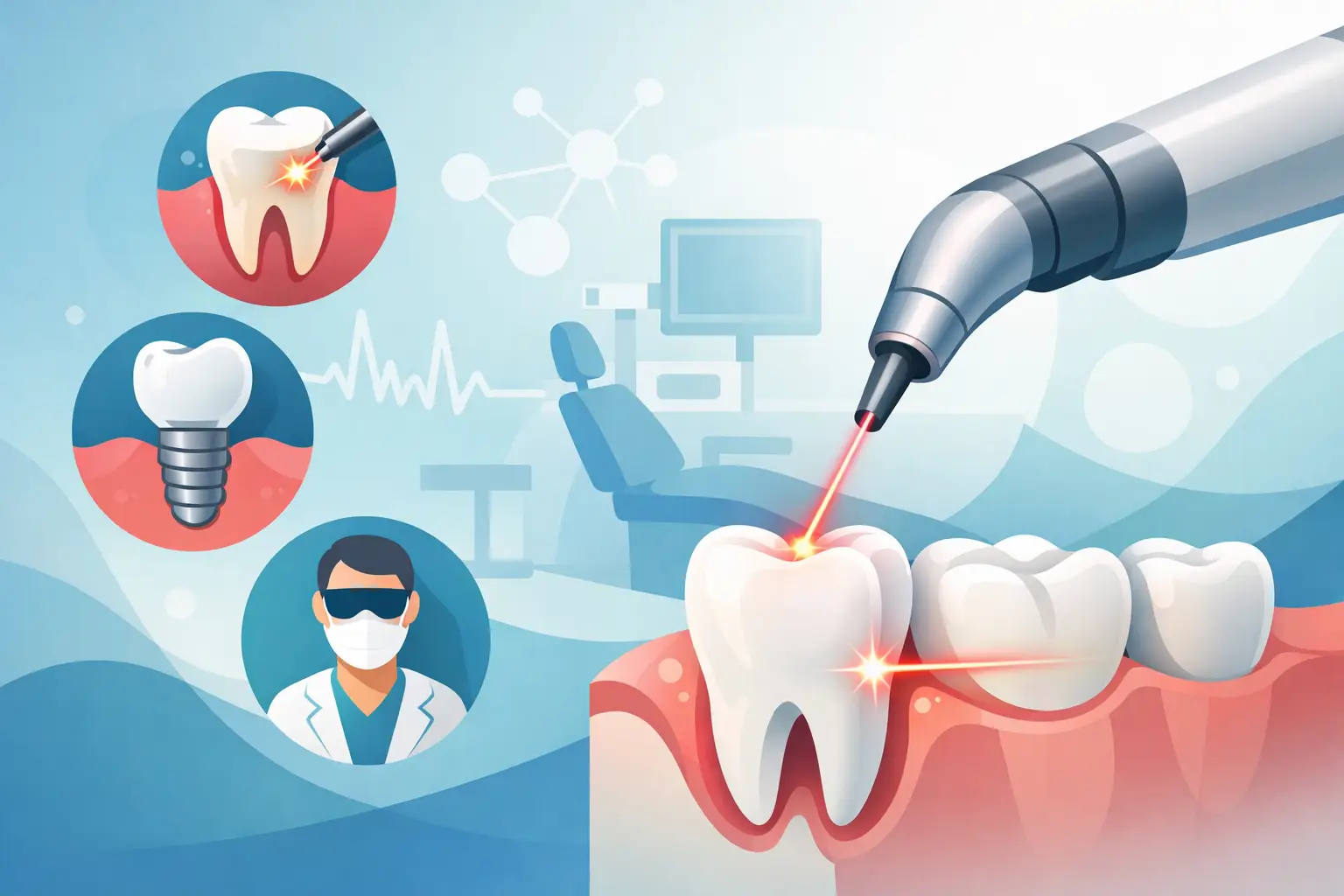
If you have ever been told you need gum treatment, a filling, or soft tissue reshaping, you may have asked a very practical question: what is laser dentistry used for, and is it actually better than traditional tools? The short answer is that dental lasers are used for a wide range of procedures involving gums, soft tissue, and in some cases teeth themselves. The better answer is that it depends on the condition being treated, the type of laser being used, and the experience of the dentist performing the procedure.
Laser dentistry is not a single treatment. It is a category of technology that uses focused light energy to remove, reshape, disinfect, or stimulate tissue with a high level of precision. In the right clinical situation, that precision can mean less bleeding, less swelling, and a more comfortable recovery. It can also allow a dentist to perform certain procedures more conservatively.
What Is Laser Dentistry Used for in Daily Practice?
In modern dental care, lasers are commonly used for soft tissue procedures, periodontal therapy, and selected hard tissue treatments. That includes treating infected gum tissue, reducing bacteria in periodontal pockets, reshaping the gumline, exposing partially erupted teeth, and helping manage inflammation around implants. Some lasers can also be used to detect cavities or prepare small areas of decay.
For patients, the appeal is understandable. Many laser-assisted procedures involve less vibration and less pressure than traditional instruments. In some cases, there may be little or no need for sutures. For anxious patients, that alone can make treatment feel more manageable.
Still, laser dentistry is not a replacement for every drill, scalpel, or conventional technique. It is a tool, and like any advanced tool, its value comes from proper case selection.
Common Dental Problems Lasers Can Help Treat
Gum disease and periodontal pockets
One of the most established uses for laser dentistry is periodontal treatment. When gum disease progresses, bacteria and inflammation can create deep pockets around the teeth. Lasers may be used to remove infected tissue, reduce bacterial load, and support a cleaner healing environment.
This can be especially helpful for patients trying to stabilize their oral health before restorative or cosmetic treatment. Healthy gums are the foundation for everything from veneers to full-mouth rehabilitation. If the supporting tissues are inflamed, the long-term result of any dental work becomes less predictable.
Gum contouring and smile design
Laser dentistry is also used in cosmetic gum reshaping. If a patient has a gummy smile, uneven gumlines, or excess tissue around certain teeth, a laser can often refine the contours with excellent precision. This matters in cosmetic dentistry because the appearance of the gums affects how balanced the teeth look.
For patients considering veneers or other esthetic treatment, soft tissue shaping may be part of creating a more proportionate smile. In these cases, precision matters as much as appearance. A small change in the gumline can completely change how a tooth is framed.
Removing soft tissue growths
Lasers can be used to remove benign soft tissue lesions such as fibromas or excess tissue folds. They may also help with frenectomies, where a tight band of tissue under the tongue or inside the lip needs to be released.
Because lasers can cut and coagulate at the same time, these procedures may involve less bleeding than traditional methods. For many patients, that makes the treatment experience feel less intimidating.
Canker sores and discomfort relief
Some dental lasers are used to reduce the pain of aphthous ulcers, commonly called canker sores. While this does not mean lasers cure the underlying reason those sores develop, they may help make symptoms more tolerable and shorten irritation.
This is a smaller use case than gum treatment or contouring, but for patients dealing with painful recurring sores, it can be meaningful.
Decay detection and cavity treatment
Depending on the laser system, lasers may be used to help detect areas of tooth decay or remove small amounts of decayed structure. Hard tissue lasers can sometimes prepare teeth for fillings with less vibration than a standard drill.
That said, not every cavity is a laser cavity. Larger areas of decay, certain locations in the mouth, or more complex restorative needs may still be better managed with traditional handpieces and instruments. A results-oriented dentist will choose the method that serves the tooth best, not the one that simply sounds newer.
Implant and surgical support
In advanced practices, lasers may also support implant-related care by helping manage soft tissue around implants, improving access during certain procedures, or assisting with bacterial control. This is especially relevant in a specialty-focused environment where implant health and tissue stability are critical to long-term success.
For patients with full-mouth reconstruction needs, every detail matters - including how the gum tissue heals and responds before, during, and after treatment.
Why Patients Often Prefer Laser Dentistry
The reason laser dentistry gets so much attention is not just technology. It is comfort, precision, and healing.
A laser can often target diseased or excess tissue while preserving more healthy tissue around it. That can reduce trauma to the area and create a cleaner field for treatment. Many procedures also involve less bleeding because the laser helps seal small blood vessels as it works.
Patients may also notice reduced swelling and a smoother recovery in certain cases. Some treatments require less anesthetic, and some soft tissue procedures may not require stitches at all. These are not guarantees for every patient or every procedure, but they are common reasons people ask about lasers when comparing treatment options.
From a clinical standpoint, another benefit is control. In skilled hands, lasers allow highly refined work in areas where detail matters, especially around the gumline.
When Laser Dentistry May Not Be the Best Choice
This is where the conversation needs some honesty. Laser dentistry is useful, but it is not automatically the best option for everything.
Some procedures still call for traditional tools because they offer better access, speed, or predictability. Certain fillings, crown preparations, or deep structural issues may be better managed conventionally. The right approach depends on the diagnosis, the tissue involved, and the final treatment goal.
There is also more than one kind of dental laser. Different wavelengths interact with tissue differently. A soft tissue laser used for gum contouring is not the same as a laser designed for hard tissue. That means the phrase laser dentistry can sound broader than it really is unless the dentist explains exactly what technology is being used and why.
Most importantly, the outcome depends heavily on the provider. Technology does not replace judgment. A highly trained dentist who understands surgical precision, restorative planning, and tissue behavior will know when laser treatment adds value and when another method is more appropriate.
Is Laser Dentistry Safe?
Yes, when performed by a properly trained dental professional, laser dentistry is considered safe. Dental lasers have been used for years across multiple types of treatment, and practices that invest in this technology typically do so to improve precision and patient experience.
Safety also depends on planning and technique. Protective eyewear is used, settings must be carefully selected, and the treatment has to match the condition being addressed. This is another reason credentials and experience matter, particularly when laser therapy is part of more complex restorative or surgical care.
Who Is a Good Candidate?
A good candidate for laser dentistry is usually someone who needs treatment involving soft tissue, gum inflammation, or selected areas of decay and would benefit from a more conservative approach. Patients with dental anxiety may also appreciate laser-assisted care because it can reduce some of the sensations they dislike most, such as pressure, cutting, or prolonged bleeding.
Patients planning cosmetic treatment, implant care, or full-mouth restoration may also benefit when laser technology is used to improve tissue contours and support healing. At a practice such as Trinity Dental Arts, where advanced implant and cosmetic procedures are part of everyday care, laser dentistry can play a supporting role in delivering cleaner, more precise outcomes.
The best way to know whether it fits your case is through a clinical evaluation. What looks like a simple gum issue may actually be part of a larger restorative problem. On the other hand, a small issue that once required a more invasive approach may now be treated more comfortably with the right laser system.
What to Ask Before Choosing Laser Treatment
If a dentist recommends laser dentistry, ask what problem the laser is solving, what type of laser is being used, and whether there are other treatment options. You should also ask how it may affect healing time, comfort, and long-term results.
Those questions matter because the goal is not to choose the newest technology for its own sake. The goal is to choose the treatment that gives you the healthiest, most stable result with the least unnecessary trauma.
For many patients, laser dentistry is valuable because it makes care more precise and more comfortable. For others, it is one piece of a broader treatment plan. The best dentistry is not about using every tool. It is about using the right tool at the right time, with a clear plan for the result you want.