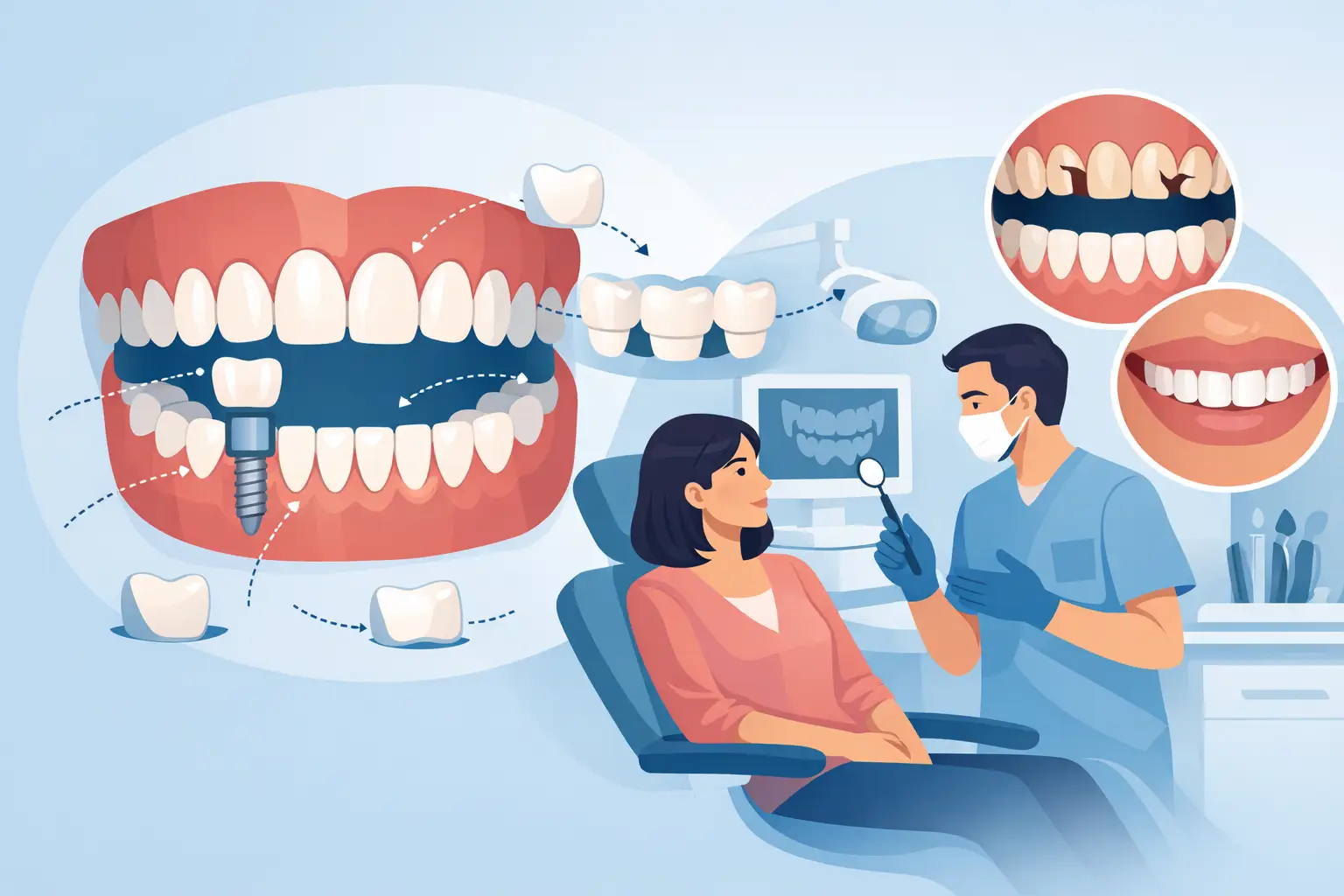
A patient usually asks this question after years of putting up with problems that no longer feel manageable - broken teeth, ongoing pain, difficulty chewing, or dental work that keeps failing one piece at a time. If you are wondering when do you need full mouth reconstruction, the short answer is this: you need it when multiple dental issues are affecting your function, comfort, oral health, and confidence at the same time.
Full mouth reconstruction is not a single procedure. It is a customized treatment plan that rebuilds or restores most or all of the teeth in the upper arch, lower arch, or both. The goal is not just to improve how your smile looks. It is to restore a healthy bite, dependable function, long-term stability, and, in many cases, quality of life.
When do you need full mouth reconstruction?
You may need full mouth reconstruction when isolated treatment is no longer enough. A filling here and a crown there can work for a while, but there comes a point when the problems are connected. Teeth may be worn down, missing, infected, cracked, loose, or unsupported. Your bite may have shifted. Your jaw joints may be under strain. At that stage, treating one tooth without looking at the whole system often leads to temporary fixes instead of lasting results.
For many adults, the tipping point is cumulative damage. Years of grinding, gum disease, untreated decay, trauma, or failing dental work can create a chain reaction. One tooth breaks, then the opposite side takes more pressure, then another restoration fails. Before long, chewing becomes uneven, appearance changes, and discomfort becomes part of daily life.
The signs that it may be time
One of the clearest signs is widespread tooth damage. If you have several broken, cracked, severely worn, or decayed teeth, a comprehensive plan may be more effective than repairing each issue separately. This is especially true when the damage affects both your bite and the strength of your remaining teeth.
Missing multiple teeth is another major sign. Gaps do more than change your smile. They allow neighboring teeth to shift, alter bite forces, and place extra stress on the teeth that remain. Over time, that can affect chewing efficiency, bone support, and overall oral health.
You may also be a candidate if you have advanced gum disease or significant bone loss that has compromised the foundation of your smile. In these situations, reconstruction often involves more than crowns or veneers. It may require periodontal treatment, extractions in some areas, implant planning, or bone grafting to rebuild a healthier base.
Chronic pain is another red flag. If you regularly deal with jaw soreness, headaches, facial tension, or pain when chewing, your bite may be out of balance. A collapsed bite from worn or missing teeth can place excessive pressure on muscles and joints. Reconstructing the mouth is often about function first, with aesthetics following naturally.
Failing dental work can also point toward reconstruction. If you have multiple old crowns, bridges, root canals, or large fillings that are breaking down at the same time, replacing them one by one may not be the most predictable path. Sometimes the better solution is a coordinated plan that addresses the health, fit, and longevity of the entire mouth.
Full mouth reconstruction vs cosmetic dentistry
This is where many patients get confused. Cosmetic dentistry focuses primarily on improving appearance. Full mouth reconstruction is medically driven, even though the cosmetic improvement can be dramatic.
If your main concern is color, minor spacing, or shape, cosmetic treatment may be enough. If your teeth are worn, broken, missing, painful, unstable, or no longer functioning well, reconstruction is a different category of care. It is built around diagnosis, bite design, structural support, and long-term durability.
That distinction matters because the planning is more complex. The doctor is not only asking how your smile should look. They are asking how your teeth should meet, how force should be distributed, which teeth can be saved, what needs to be replaced, and how to create a result that can hold up over time.
Conditions that often lead to full mouth reconstruction
Several underlying problems commonly bring patients to this point. Severe wear from grinding or clenching is one of the most common. Teeth can become short, flat, sensitive, and prone to fracture. In some cases, the bite collapses gradually, and patients do not realize how much structure they have lost until they start having repeated problems.
Extensive decay is another cause. When cavities affect multiple teeth or old restorations repeatedly fail, the mouth may need a more strategic rebuild. Trauma can also create the need for reconstruction, whether from an accident, sports injury, or years of stress fractures.
Periodontal disease is a major factor as well. Even if teeth are still present, they may no longer have the support needed for long-term stability. And for patients with multiple missing teeth, the combination of bone loss, shifting teeth, and uneven bite forces can make comprehensive treatment the most predictable option.
What treatment can include
Because full mouth reconstruction is personalized, the exact treatment varies from patient to patient. It may involve crowns, implant-supported tooth replacement, bone grafting, periodontal therapy, bite correction, root canal treatment, veneers in select cases, or extractions when teeth cannot be predictably saved.
For some patients, implant-based full-arch solutions are the right answer because they replace compromised teeth with a more stable and functional foundation. For others, the goal is to preserve as many natural teeth as possible while rebuilding the bite with carefully planned restorations. There is no single formula. The right plan depends on the condition of your teeth, gums, bone, joints, and overall health.
This is one reason patients often seek out a practice with advanced surgical and restorative capabilities under one roof. Complex cases benefit from a provider who can evaluate the full picture rather than treating isolated symptoms. Dr. Xhoana Gjelaj’s experience in implant and full-mouth restorative care is especially valuable for patients who want clarity on what is salvageable, what is not, and what will serve them best long term.
Why timing matters
Many patients wait because they assume reconstruction is only for the most extreme cases. Others worry that if they are not in constant pain, they should keep patching things as they go. That approach can work for a while, but delay often makes treatment more involved.
A cracked tooth can become an infection. A missing tooth can lead to shifting and bite imbalance. Worn teeth can continue to shorten until the bite becomes harder to restore. Bone loss can progress and reduce future options. Early evaluation does not always mean immediate treatment, but it gives you the chance to make decisions before the problem expands.
That said, there is a difference between needing full mouth reconstruction now and likely needing it later. Some patients are in an active breakdown phase and should move quickly. Others still have time to phase treatment in a controlled way. A thorough exam, digital imaging, and bite analysis help determine where you fall.
What to expect during an evaluation
A proper consultation should feel detailed, not rushed. The doctor will assess your teeth, gums, bite, bone levels, existing restorations, facial support, and any symptoms you are having. Photos, digital scans, and X-rays are often part of the process because they reveal issues that are easy to miss in a basic exam.
From there, the focus shifts to planning. Which teeth can be saved predictably? Which are compromising the rest of the mouth? Is your bite stable enough to restore conservatively, or does it need a more complete reset? Are implants part of the solution? Can treatment be staged? Those questions shape the roadmap.
For many patients, one of the biggest reliefs is finally understanding what is happening. Instead of reacting to one dental emergency after another, they get a structured plan with priorities, timelines, and realistic expectations.
Is full mouth reconstruction worth it?
If your mouth is affecting how you eat, speak, sleep, or feel about your appearance, this is not simply elective care. It is functional rehabilitation. The value comes from improving daily comfort, protecting long-term oral health, and reducing the cycle of repeated short-term repairs.
The investment is significant, and every patient deserves an honest conversation about scope, timing, and financing. But it is equally important to weigh the cost of doing nothing or continuing to patch a failing system. In many cases, reconstruction is the more efficient and more predictable path over time.
The best next step is not to guess whether your case is severe enough. It is to get a comprehensive evaluation from a dentist with advanced experience in complex restorative treatment. When your teeth, bite, and oral health are all working against each other, the right plan can change much more than your smile.