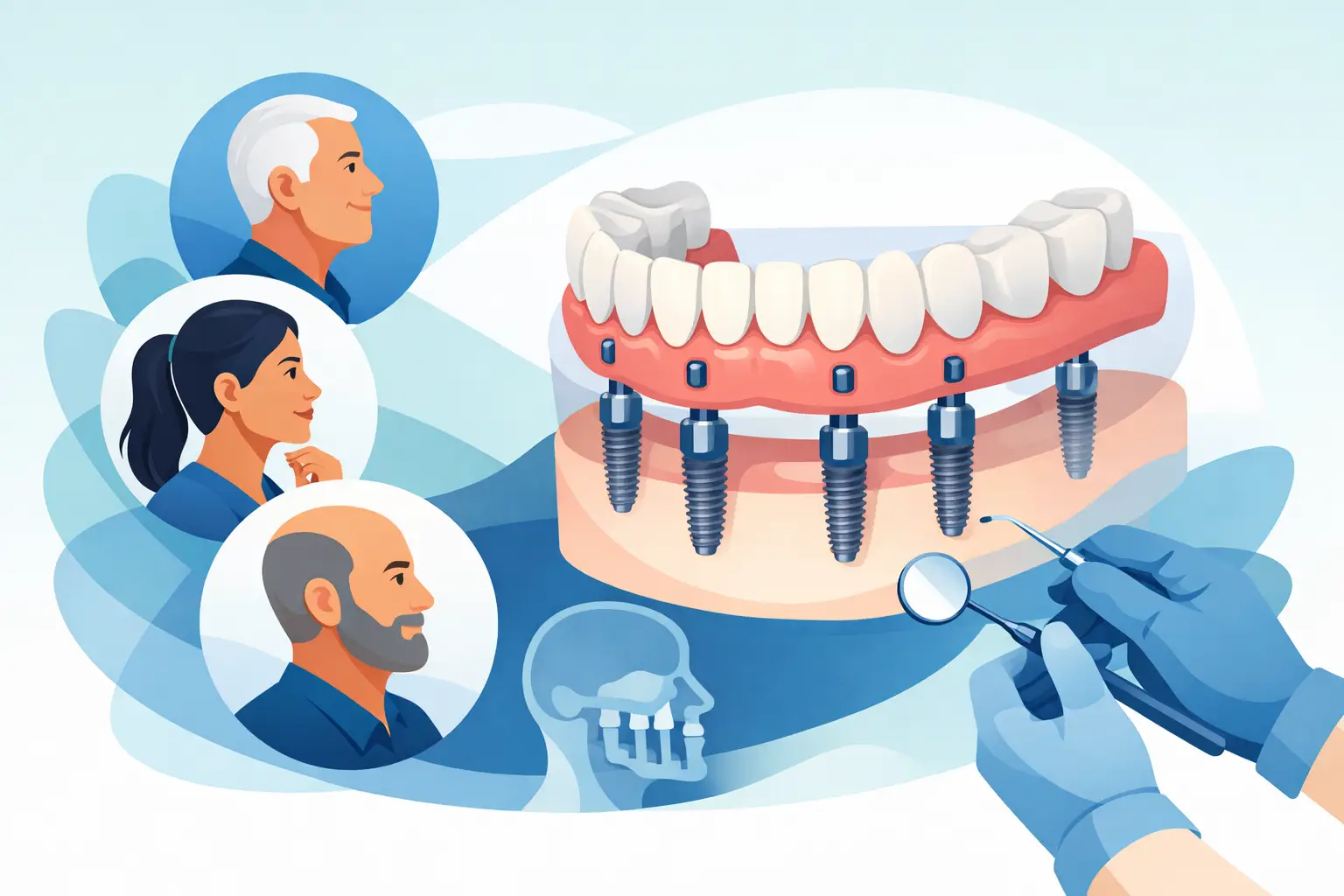
Losing most or all of your teeth changes more than your smile. It affects how you eat, how clearly you speak, and often how comfortable you feel in social settings. If you have been researching full-arch tooth replacement, you may be asking who is a candidate for All-on-X and whether this treatment is realistic for your situation.
The short answer is that many adults with extensive tooth loss, failing teeth, or severe dental breakdown may qualify. The longer answer matters more. All-on-X is not a one-size-fits-all treatment. The right candidate is someone whose oral health, bone structure, medical history, and treatment goals line up with a carefully planned implant-supported solution.
Who Is a Candidate for All-on-X?
All-on-X is designed for patients who need to replace an entire upper arch, lower arch, or both. Instead of replacing each tooth with a separate implant, this approach uses a strategic number of dental implants to support a full fixed bridge. The exact number of implants can vary, which is why the term All-on-X is often used rather than limiting the discussion to one set configuration.
In practical terms, a strong candidate is often someone who is missing most of their teeth already, has many teeth that cannot be predictably saved, or is tired of wearing a removable denture. These patients usually want something more secure, more functional, and more natural-looking than traditional tooth replacement options.
Age alone does not decide candidacy. A healthy adult in their 40s may be a candidate, and so may someone in their 70s. What matters more is overall health, jawbone condition, gum health, and whether implant treatment can be performed safely and predictably.
Common Situations That Make All-on-X a Good Option
Many patients who consider All-on-X have been dealing with dental problems for years. Sometimes the issue is advanced decay across multiple teeth. In other cases, it is severe wear, broken dental work, gum disease damage, or long-term tooth loss that has gradually made the mouth harder to restore.
All-on-X is often a strong option for patients with multiple failing teeth. If you are facing repeated crowns, extractions, infections, or extensive repairs across an entire arch, it may make more sense to step back and look at the long-term picture. Saving individual teeth is not always the best investment if the foundation is already compromised.
This treatment can also be ideal for denture wearers who want a fixed alternative. Many people do reasonably well with removable dentures for a period of time, then become frustrated by slipping, pressure spots, reduced chewing ability, or the inconvenience of taking teeth out at night. An implant-supported full-arch restoration can provide more stability and confidence.
Patients with significant bone loss may still qualify as well. This is one of the reasons a detailed evaluation is so important. In some cases, angled implant placement and advanced planning make treatment possible even when bone has changed over time. In other cases, additional procedures may be needed before implants can be placed safely.
The Health Factors That Affect Candidacy
Being a candidate for All-on-X is not just about your teeth. Your general health plays a role in healing, implant stability, and long-term success.
Patients with well-managed medical conditions are often still eligible for treatment. Diabetes, for example, does not automatically rule out implants, but blood sugar control matters. Certain autoimmune conditions, medications, and a history of radiation therapy in the jaw area may also require closer review. Smoking is another major factor because it increases the risk of healing complications and implant failure.
Gum health matters too. Active periodontal disease must be addressed before or as part of treatment planning. If infection is present, the mouth needs to be stabilized so the implants have the healthiest possible environment.
This is where provider experience becomes especially important. Complex full-mouth cases require more than a quick glance or a simple yes-or-no answer. A thorough exam, 3D imaging, and a personalized treatment plan help determine whether All-on-X is appropriate now, later, or with additional preparatory care.
Bone Support and Why Imaging Matters
A common concern patients have is whether they have enough bone for implants. That concern is valid, especially if teeth have been missing for a long time. After tooth loss, the jawbone naturally begins to shrink because it is no longer being stimulated by tooth roots.
The good news is that not every patient needs the same amount or type of bone support. All-on-X was developed in part to make full-arch implant treatment possible for more people, including some who may not be candidates for a larger number of traditional implants. Implant position, bone quality, sinus location, and bite forces all influence the plan.
This is why cone beam imaging and full diagnostic records are critical. They show how much bone is available, where the strongest support exists, and whether grafting or other surgical planning is needed. You cannot determine candidacy accurately from symptoms alone.
Who May Need Additional Treatment First?
Some patients are good candidates for All-on-X, just not immediately. They may need preparatory treatment to create a healthier and more stable starting point.
That can include extractions of non-restorable teeth, treatment for active gum infection, bone grafting in select cases, or management of bite issues. For patients with severe clenching or grinding, the final prosthetic plan may also need special design considerations to protect the implants and restoration.
There are also cases where a patient wants All-on-X, but another option may be more appropriate. If several teeth are still healthy and restorable, a more conservative approach might preserve natural tooth structure longer. On the other hand, if the remaining teeth are likely to fail one by one, full-arch treatment may offer a clearer path forward.
That balance requires honest evaluation. The best treatment plan is not the most aggressive one. It is the one that gives you the strongest long-term result.
Lifestyle and Expectations Matter Too
A candidate for All-on-X should also be ready for the responsibility that comes with implant care. Although these restorations are fixed and feel far more natural than removable dentures, they are not maintenance-free.
Patients need to commit to home care, regular professional maintenance, and follow-up visits. The bridge and implants must be monitored over time. Good hygiene, routine exams, and protection against excessive bite force are all part of long-term success.
Expectations matter as well. All-on-X can deliver dramatic improvement in appearance, stability, and chewing function, but treatment still involves surgery, healing, planning, and investment. Patients who do best are usually those who understand the process and want a lasting solution rather than a temporary patch.
When All-on-X May Not Be the Right Fit
Not everyone is an ideal candidate at the moment they first ask about treatment. Uncontrolled medical issues, untreated periodontal disease, heavy smoking without willingness to reduce risk, or severe bone limitations can complicate care.
There are also financial considerations. Full-arch implant treatment is a major investment, and patients should understand the full scope of what is included, from surgery to the final restoration and maintenance. For many, financing helps make care more manageable, but the decision should still be made with a clear understanding of long-term value.
In some situations, a phased approach is smarter. A patient may begin with disease control, extractions, or temporary solutions before moving into full-arch implant treatment. That does not mean All-on-X is off the table. It often means the treatment is being done properly rather than rushed.
Why the Evaluation Stage Is So Important
If you are wondering who is a candidate for All-on-X, the answer should come from a comprehensive consultation, not a guess based on photos or general online advice. Full-arch implant dentistry is highly personalized.
An experienced implant provider will evaluate your remaining teeth, gums, bone anatomy, medical history, bite, smile design, and long-term goals. That is the only way to know whether you are a strong candidate, whether additional treatment is needed first, or whether a different solution would serve you better.
At a practice focused on advanced implant and full-mouth restoration, that evaluation is where the real clarity begins. In the right hands, patients who have been told their mouth is too complex or too far gone often learn they still have meaningful options.
If your teeth are failing, your denture no longer feels like a real answer, or you are tired of piecing together short-term fixes, this is the kind of question worth asking in person. The best next step is not to assume you do or do not qualify. It is to get a careful diagnosis and find out what is genuinely possible for your smile.