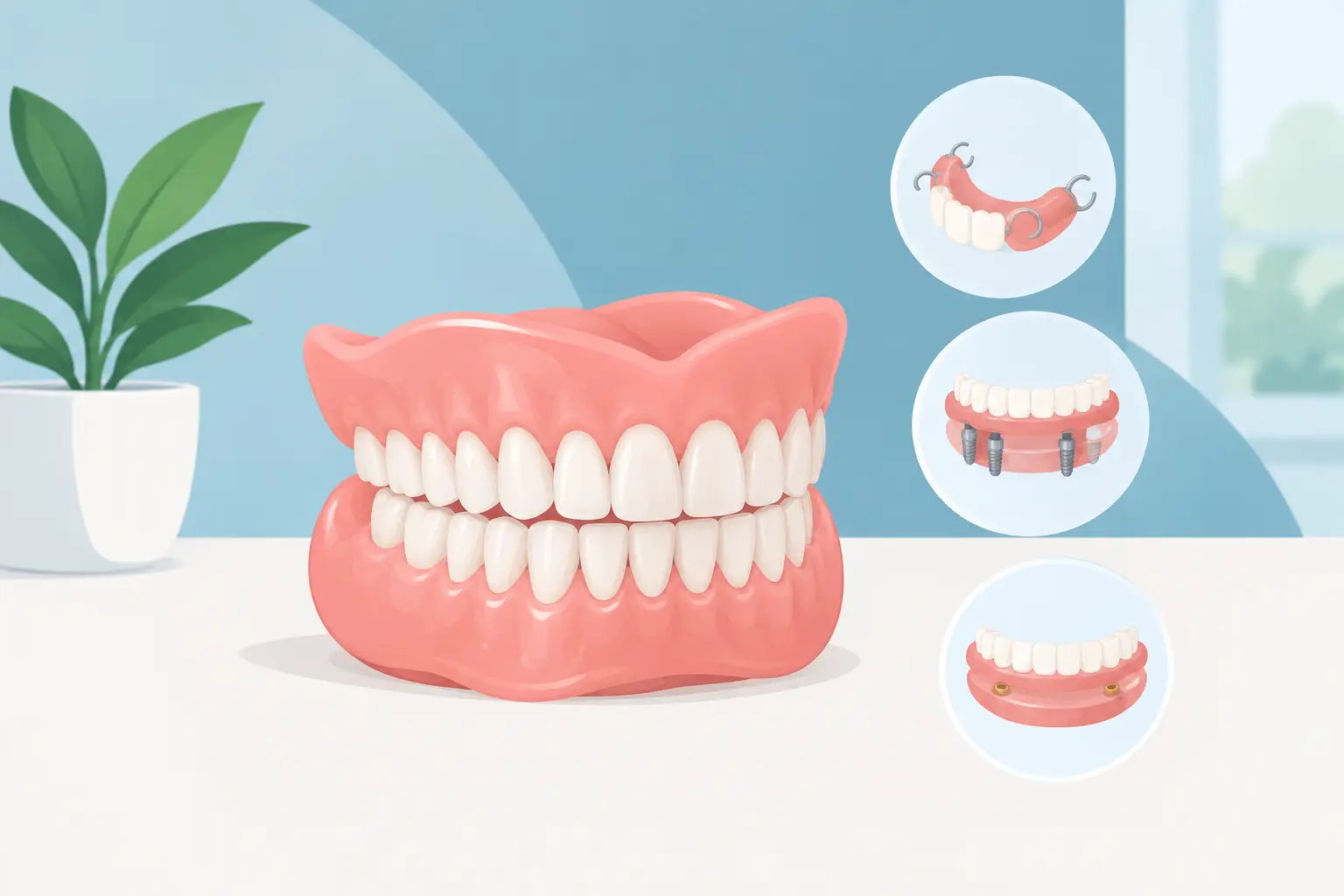
A lower appliance that shifts when you speak, lifts when you eat, or rubs sore spots along your gums is more than an inconvenience. It can change the foods you choose, make social situations stressful, and leave you wondering whether your teeth will stay in place. The best options for loose dentures depend on why the fit has changed, the health of your jawbone and gums, and whether you want a short-term correction or a more permanent solution.
For many patients, looseness is not a problem to simply tolerate. It is a clinical signal that your mouth has changed and your current restoration may no longer be properly supported. A comprehensive evaluation can identify the cause and clarify which treatment will provide the most dependable result.
Why Dentures Become Loose Over Time
The jawbone needs stimulation from tooth roots to maintain its shape and volume. After teeth are lost, the bone gradually remodels. As the ridge becomes lower or narrower, an appliance that once fit closely can begin to rock, slide, or create pressure points.
This process can be especially noticeable in the lower jaw, where there is less surface area for suction. Changes in saliva, weight, medications, gum health, and the condition of the existing restoration can also affect stability. A loose fit is not always caused by a single issue, which is why an exam is more useful than repeatedly trying a new adhesive or attempting to adjust the appliance at home.
Persistent movement can irritate the soft tissue, contribute to sores, and make chewing inefficient. If you are avoiding nutritious foods because eating is difficult, or if the appliance is cracking, causing pain, or no longer staying in place, it is time for a professional assessment.
Best Options for Loose Dentures: Start With the Cause
A precise treatment plan begins with an examination of your bite, gums, bone levels, and the condition of the restoration itself. Digital imaging may be used to evaluate whether bone loss, inflammation, or an uneven bite is contributing to the problem.
When the underlying structures are healthy and the restoration is still in good condition, a reline or professional adjustment may improve the fit. This can be an appropriate conservative option when facial support, bite relationship, and materials remain sound. It does not stop future bone changes, however, so its benefit may be limited if the jaw ridge has significantly changed.
If the appliance is worn, fractured, poorly designed, or no longer matches your bite, replacing it may be considered. Yet for patients who are tired of movement and daily compromises, replacement alone may not address the main issue: a lack of stable support from the jaw.
That is where dental implants change the conversation. Implants are placed in the jawbone to serve as artificial tooth roots. They can provide the foundation for teeth that remain securely in place while helping preserve the bone that supports your facial structure.
Implant-Supported Teeth for Greater Stability
Implant-supported treatment is often the most reliable long-term option for patients who want to move beyond loose, removable teeth. The right approach depends on your bone quality, oral health, goals, and the number of teeth being replaced.
Implant-Retained Solutions
In some cases, implants can stabilize a removable restoration using precision attachments. This provides substantially more retention than relying on suction or adhesive alone. Patients often report improved confidence when speaking and greater comfort during meals.
The key trade-off is that this option remains removable for cleaning and may not deliver the same feel or chewing stability as a fixed restoration. It can be an effective step forward for the right patient, particularly when budget, anatomy, or treatment preferences make a fixed option less suitable.
Fixed Full-Arch Teeth
For patients seeking teeth that do not come out, a full-arch implant solution may be the better fit. All-on-4 and All-on-X treatment uses strategically placed dental implants to support a full set of fixed teeth. The number and placement of implants are determined by your individual anatomy, available bone, bite forces, and long-term restorative needs.
A fixed full-arch restoration is designed to provide a stable, natural-looking smile and strong chewing function. Because it is secured to implants, there is no daily removal and no need to rely on adhesive. Many eligible patients can receive a provisional set of fixed teeth on the day of implant surgery, then transition to a final restoration after healing and integration are complete.
This is a more involved treatment than a reline or replacement. It requires careful planning, surgery, healing, and a commitment to long-term maintenance. For patients whose quality of life has been limited by shifting teeth, those additional steps can be worthwhile because the goal is not merely a better fit. The goal is a stable foundation for eating, speaking, smiling, and living with confidence.
When Bone Loss Affects Your Choices
Bone loss does not automatically disqualify you from dental implants. It does mean that planning must be more precise. Three-dimensional imaging allows the doctor to assess the height, width, and density of the available bone, as well as the location of important anatomical structures.
Some patients benefit from bone grafting before implant placement. In the upper jaw, a sinus graft may create the support needed in areas where the sinus limits available bone. In other cases, strategic implant placement can avoid the need for extensive grafting. There is no universal answer, and promises of a one-size-fits-all solution should be treated carefully.
An experienced implant provider evaluates the entire restorative plan, not just whether an implant can be placed. The final teeth must have proper support, a balanced bite, cleansable contours, and materials selected for lasting function. That level of planning helps reduce complications and supports a more predictable result.
What to Do While You Are Waiting for Treatment
Adhesive can provide a temporary measure for mild movement, but it should not be used to mask pain, sores, sudden changes in fit, or a broken restoration. Using more adhesive than usual is often a sign that the fit needs to be evaluated.
Avoid attempting to reshape or repair an appliance yourself. Household glues and do-it-yourself adjustments can damage the material, create rough edges, and make professional repair more difficult. Continue gentle daily cleaning of your mouth and restoration, and contact a dental office promptly if you develop swelling, bleeding, persistent pain, or open sores.
If anxiety has delayed treatment, ask about comfort options during your consultation. Sedation dentistry may help qualified patients feel more relaxed during surgical or restorative care. A thoughtful practice will also discuss timing, expected healing, home care, and financing before treatment begins, so you can make decisions without pressure.
Choosing the Right Provider for Complex Tooth Replacement
Loose teeth are often treated as a simple fit issue, but lasting correction requires surgical and restorative expertise working together. Look for a provider who performs a comprehensive exam, uses advanced imaging when appropriate, and can explain the differences between temporary retention and fixed implant-supported teeth in plain language.
At Trinity Dental Arts, Dr. Xhoana Gjelaj approaches full-mouth restoration with detailed implant planning and a focus on both function and appearance. This matters because the result should do more than stay in place. It should support a comfortable bite, natural smile proportions, and a long-term plan for maintenance.
The most helpful next step is a personal evaluation rather than another temporary workaround. Once the cause of looseness is clear, you can choose a solution that fits your health, lifestyle, and vision for a more stable smile.