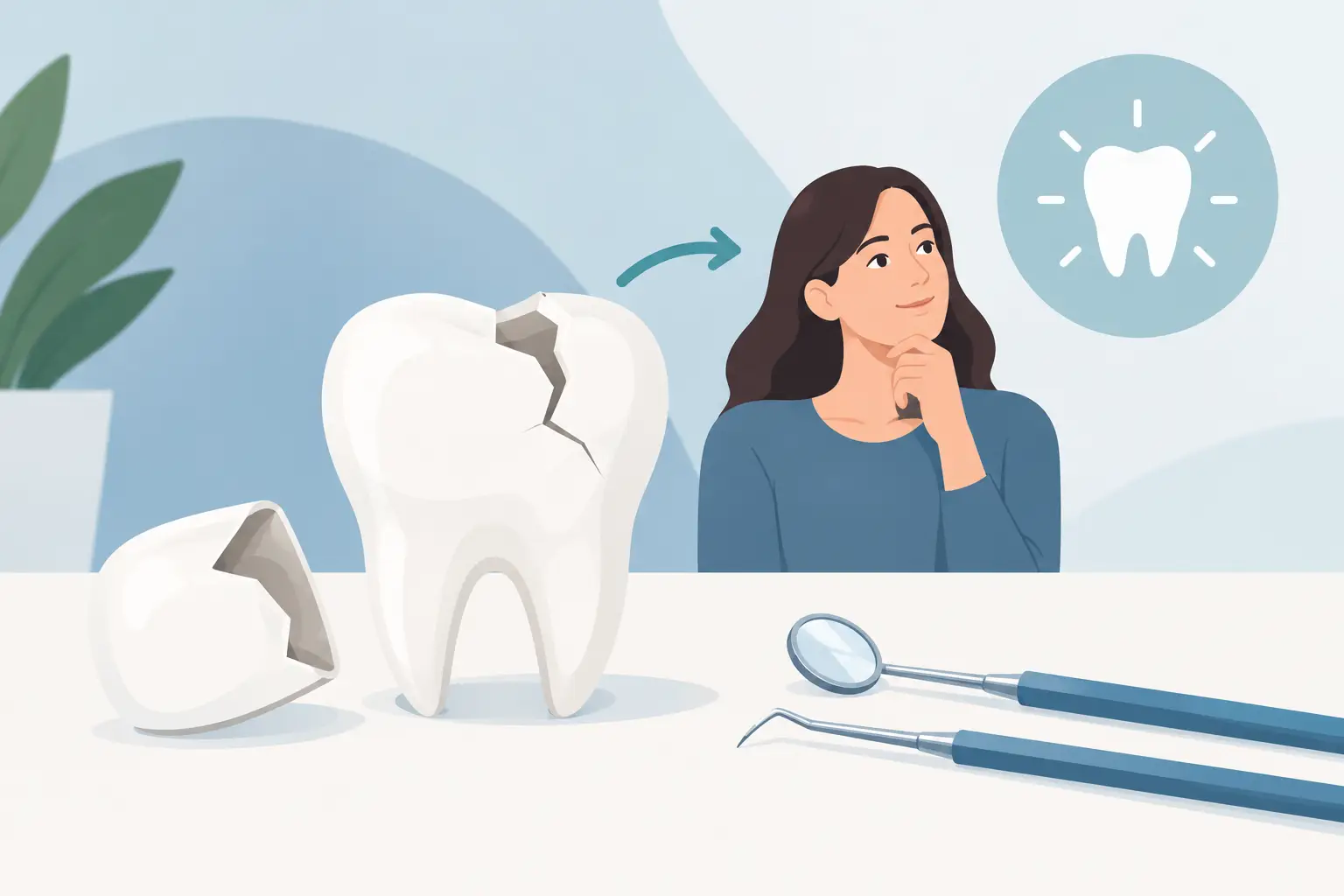
A crown can fail at the least convenient moment: during dinner, before a presentation, or when you bite down on something that never used to be a problem. Broken crown treatment is not one-size-fits-all, but acting promptly can protect the tooth underneath, relieve discomfort, and prevent a manageable issue from becoming a more complex restoration.
A chipped, cracked, or loose crown does not always mean you are facing tooth loss. The right answer depends on why the crown failed, how much of it is damaged, and whether the natural tooth and root remain healthy. A thorough examination gives you clear options instead of guesswork.
What to Do When a Dental Crown Breaks
First, save any piece of the crown you can find. Rinse it gently with water and place it in a clean container. Even if the piece cannot be reused, it may help your dentist understand how the restoration fractured.
Avoid chewing on that side of your mouth. The tooth beneath a crown may be more vulnerable to pressure, temperature, and bacteria, particularly if the crown has come off completely. Choose soft foods and avoid sticky candy, ice, nuts, and hard crusts until you are evaluated.
If a sharp edge is rubbing your tongue or cheek, dental wax can provide temporary coverage. Over-the-counter pain medication may help if it is safe for you to take, but do not place aspirin directly on the tooth or gum tissue. It can irritate the area without treating the source of the pain.
A crown that is fully intact but loose should also be addressed quickly. Trying to force it back into place or using household glue can damage the restoration, trap bacteria, and complicate professional treatment. Dental adhesive sold for temporary use may be an option only when a dentist advises it and you cannot be seen promptly.
When Broken Crown Treatment Is an Emergency
A broken crown deserves timely care, but certain symptoms call for an urgent dental appointment. Contact a dentist right away if you have severe or worsening pain, facial swelling, fever, uncontrolled bleeding, trauma to the face or jaw, or a tooth that feels loose. These symptoms may indicate infection, damage to the tooth structure, or injury beyond the crown itself.
Sensitivity to cold air or drinks is common when a crown breaks, especially when dentin is exposed. Brief sensitivity may be manageable while you wait for an appointment. Pain that lingers, throbs, wakes you at night, or occurs without a trigger needs more immediate attention. The tooth's nerve may be inflamed or infected.
For patients in Trinity and the greater Tampa Bay area, prompt evaluation also matters because Florida's busy schedules often tempt people to wait until discomfort becomes unbearable. Early treatment generally preserves more natural tooth structure and gives your dentist more restorative options.
Why Crowns Break or Come Loose
Crowns are designed to withstand normal biting forces, but they are not indestructible. A single hard bite can crack porcelain or fracture a weakened tooth below it. Grinding and clenching place repeated stress on restorations, sometimes causing hairline cracks that worsen over time.
Decay is another common reason for crown failure. Bacteria can enter at the edge where the crown meets the tooth, especially if cement has weakened or brushing around the gumline has become difficult. The crown may appear fine from the outside while decay gradually compromises the tooth underneath.
Age also plays a role. Crowns can serve patients well for many years, but materials, cement, bite forces, and oral health conditions change over time. A crown that has lasted a long time may simply need replacement. An examination can determine whether the issue is limited to the restoration or reflects a larger structural problem.
How a Dentist Determines the Right Repair
The most effective treatment starts with finding the cause, not simply covering the problem. Your dentist will examine the crown, surrounding gum tissue, bite, and remaining tooth structure. Digital X-rays may be used to check for decay below the crown, root changes, cracks, or infection that cannot be seen during a visual exam.
If the crown is intact and the tooth is healthy, it may be possible to clean the crown and tooth and recement it. This is usually the most conservative option, but it is only appropriate when the crown still fits precisely and there is no hidden decay or fracture.
A minor porcelain chip can sometimes be smoothed or repaired with composite bonding. This works best when the damage is small, outside the primary biting zone, and does not affect the crown's fit or strength. A larger crack, missing section, or fractured biting surface generally requires a new crown. Repairing a significantly damaged crown may look acceptable initially but can leave it vulnerable to another failure.
When decay has developed under the restoration, the old crown is removed and the tooth is cleaned. If enough healthy structure remains, the tooth can be rebuilt and protected with a new custom crown. If the nerve is infected or severely inflamed, root canal treatment may be needed before the final crown is placed.
When the Tooth Under the Crown Cannot Be Saved
Sometimes the crown is not the true problem. A vertical root fracture, extensive decay extending deep below the gumline, or a tooth that has lost too much structure may make another crown unreliable. In those cases, repeatedly replacing crowns can lead to more expense and frustration without providing a stable long-term result.
Dental implant treatment may be considered when a tooth is nonrestorable. An implant replaces the tooth root with a biocompatible post and supports a custom crown designed to blend with your smile and bite. This is a more involved process than replacing a crown, and it requires careful planning, healing, and adequate bone support. However, it can provide a durable, independent solution when preserving the natural tooth is no longer predictable.
This is where comprehensive care matters. Dr. Xhoana Gjelaj evaluates both the immediate need and the long-term prognosis, so treatment decisions are based on the health of the tooth, bone, gums, and bite rather than a temporary fix alone.
What to Expect During Crown Replacement
For a new crown, the dentist removes the failed restoration and any decay or weakened material. The tooth is then shaped to support the new crown, or rebuilt first if it needs additional support. Digital scanning can create a detailed impression without traditional impression material, supporting a precise fit and natural-looking result.
A temporary crown may protect the tooth while the final restoration is made. In appropriate cases, same-day crown technology can allow patients to receive their final crown in one visit. Whether this is the right choice depends on the tooth's condition, the location in the mouth, cosmetic requirements, and whether more treatment is needed first.
The final crown should feel comfortable and allow your teeth to come together naturally. A bite that feels even slightly high deserves an adjustment. Left untreated, an uneven bite can create soreness, jaw strain, or new stress on the crown.
Protecting Your New Crown
Good home care helps a crown last, but it also protects the tooth and gum tissue around it. Brush twice daily with a soft toothbrush, clean between teeth every day, and pay close attention to the crown's gumline. Regular professional cleanings and examinations allow small changes to be addressed before they become painful emergencies.
If you clench or grind, a custom night guard may reduce the force placed on your crowns and natural teeth. Avoid using teeth to open packages, cut fishing line, or crack hard objects. Those habits can damage even high-quality restorations.
A broken crown is disruptive, but it is also a useful signal to have the entire tooth evaluated with precision. Seeking care early gives you the best chance of restoring comfort, function, and confidence with a solution built to last.