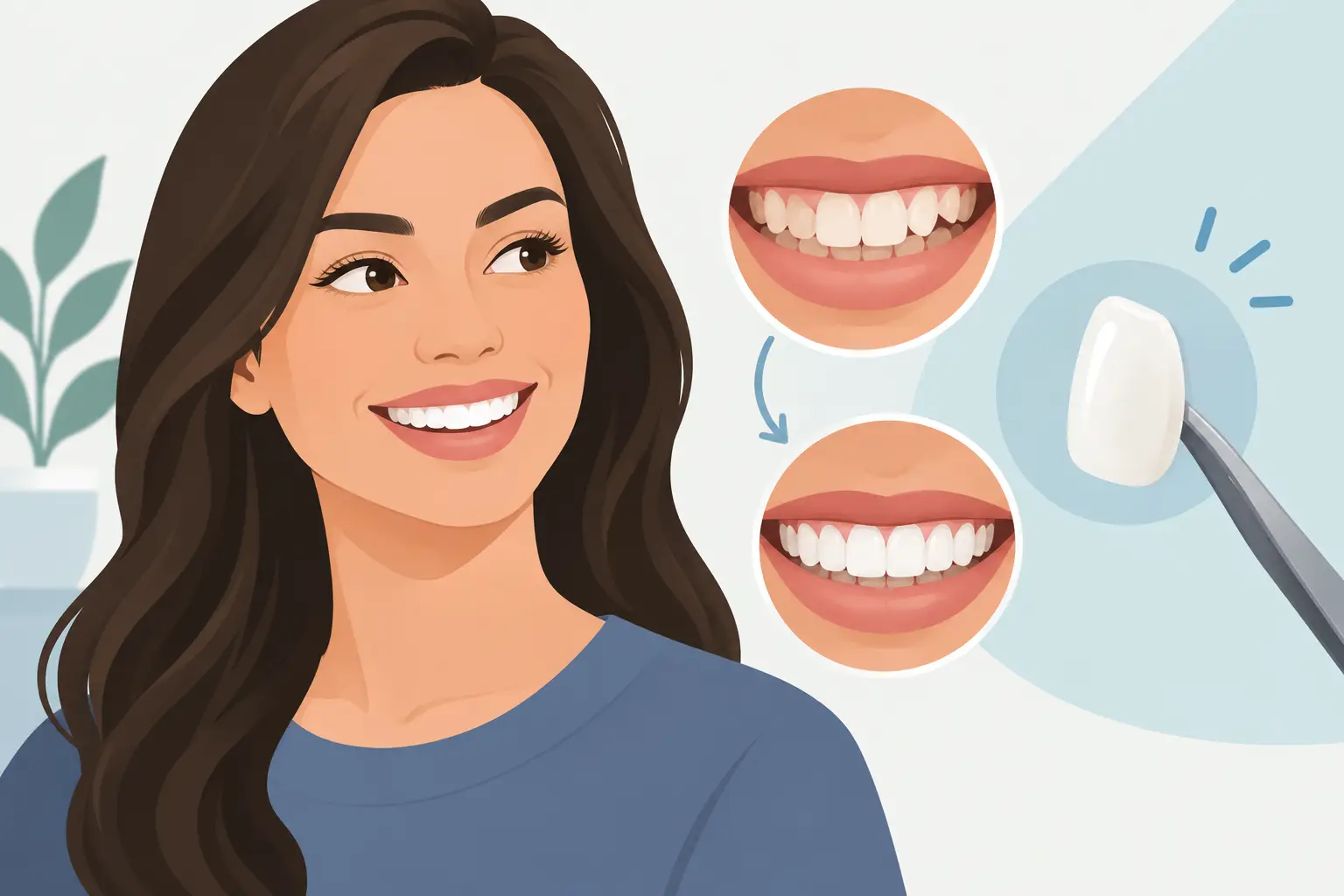
A tooth can look crooked for very different reasons. It may be slightly rotated, unevenly shaped, worn shorter than neighboring teeth, or truly out of position in the jaw. That distinction matters when asking, can veneers fix crooked teeth? In many cases, veneers can create the appearance of a straighter, more balanced smile. But they do not physically move teeth, and they are not the right solution for every type of misalignment.
For patients considering cosmetic dentistry, the best choice comes down to the severity of the crowding, the health of the teeth and gums, the bite, and the smile outcome you want to maintain for years.
Can Veneers Fix Crooked Teeth Visually?
Yes, veneers can often correct the appearance of mildly crooked teeth. A veneer is a thin, custom-crafted shell, usually made from high-quality porcelain, that bonds to the front surface of a tooth. By adjusting the veneer’s shape, width, length, and color, a cosmetic dentist can make teeth appear more aligned and proportionate.
Veneers are especially effective when the concern is limited to the visible front teeth. For example, a patient may have one tooth that sits slightly behind another, a rotated lateral incisor, or teeth with uneven edges that make the smile look irregular. Carefully designed veneers can create a more even smile line without months of orthodontic treatment.
The result is not simply a whiter tooth surface. A well-planned veneer case considers facial proportions, lip movement, gum symmetry, bite forces, and the relationship between every visible tooth. The goal is a smile that looks naturally straight rather than overly uniform or artificial.
When Veneers Are a Strong Option
Veneers may be an excellent choice when tooth misalignment is mild to moderate and primarily cosmetic. They can be particularly valuable for adults who want to address several concerns at once, such as small gaps, discoloration that does not respond well to whitening, worn enamel, chips, or uneven tooth shape.
A patient who has two slightly overlapping front teeth, for instance, may be able to achieve a more harmonious smile with veneers if there is enough room to conservatively reshape the teeth. In this situation, veneers can improve alignment and color in one comprehensive cosmetic treatment plan.
Veneers are also appealing to patients who have completed orthodontic treatment in the past but still dislike the shape, color, or proportion of their teeth. Straight teeth do not always look balanced, especially when enamel is worn or teeth vary significantly in size.
Porcelain is highly stain resistant and can closely replicate the light-reflecting qualities of natural enamel. With excellent home care and regular professional maintenance, veneers can provide long-lasting cosmetic improvement.
When Invisalign May Be the Better Choice
If teeth are significantly crowded, rotated, protruding, or positioned in a way that affects the bite, moving them with clear aligners may be the more conservative and predictable approach. Invisalign treatment gradually shifts teeth into healthier positions. It treats the cause of the alignment issue rather than covering its visible effect.
This can be especially important if crooked teeth make cleaning difficult, contribute to uneven wear, or cause the teeth to collide improperly when you bite. Placing veneers over teeth that are severely misaligned may require removing more natural enamel than is ideal. It can also make it harder to create a stable bite.
For some patients, the strongest plan is not an either-or decision. Invisalign can first place the teeth in a better position, and veneers can then refine the final appearance. This combination may allow for more conservative veneer preparation while delivering a highly polished smile makeover.
Clear aligners require daily commitment. They must be worn as directed, and treatment takes time. Veneers are faster once the treatment plan is finalized, but they involve a permanent change to the teeth. A thorough consultation helps place those trade-offs in the right context.
Why the Bite Must Be Evaluated First
Cosmetic treatment should never be planned by looking only at photographs of the front teeth. Your bite determines how the upper and lower teeth meet during chewing, speaking, and jaw movement. If the bite places excessive pressure on a veneer, it can increase the risk of chipping, debonding, or premature wear.
Grinding and clenching also deserve attention. Patients who grind their teeth may still be candidates for veneers, but they may need a protective nightguard and a treatment plan designed around their bite forces. Ignoring these habits can compromise even beautiful cosmetic work.
Gum health is equally important. Inflamed or receding gums can change how teeth appear and affect the long-term appearance of veneers. Before cosmetic treatment, a dentist should evaluate periodontal health, existing restorations, decay, cracks, and the amount of healthy enamel available for bonding.
What the Veneer Process Looks Like
The process begins with a detailed cosmetic and functional evaluation. Your dentist reviews your goals, examines tooth position and bite function, and determines whether veneers, Invisalign, crowns, or a combination of treatments best fits your needs. Digital imaging, photographs, and diagnostic models may be used to plan the desired proportions before treatment begins.
If veneers are appropriate, the teeth are prepared conservatively. In many cases, a small amount of enamel is adjusted to make room for the porcelain and avoid a bulky appearance. The amount varies by tooth position and the degree of correction needed. Some very minor cases may require minimal preparation, but no-prep veneers are not automatically the best or healthiest answer for every smile.
Temporary veneers may be placed while the final porcelain veneers are crafted. This gives patients an opportunity to evaluate the look and feel of the new smile. At the final visit, the veneers are bonded with precision, and the bite is checked carefully.
The outcome should feel comfortable, look balanced, and support normal speaking and chewing. Quality cosmetic dentistry is as much about planning and function as it is about color and shape.
Veneers Have Limits With Crooked Teeth
Veneers cannot correct every alignment problem. They do not move roots, widen a narrow arch, correct major jaw discrepancies, or resolve significant bite problems. Trying to use veneers as a shortcut for complex orthodontic concerns can lead to bulky teeth, over-preparation, or an unstable result.
There are also situations where a tooth is too damaged, heavily filled, or structurally compromised for a veneer to be the right restoration. A crown may offer more complete coverage when a tooth needs both cosmetic improvement and added protection. If gum disease, active decay, or infection is present, those issues must be treated before elective cosmetic work begins.
This is why treatment recommendations should be individualized rather than based on a single goal like getting straighter-looking teeth quickly. The healthiest plan is the one that respects the condition of the teeth underneath the smile.
Choosing Between Veneers and Orthodontics
A useful question is whether you want to change tooth position, tooth appearance, or both. If the main concern is a small visible irregularity combined with discoloration, chips, or uneven shapes, veneers may deliver the most complete cosmetic change. If your teeth are crowded, your bite feels off, or you want to preserve as much natural enamel as possible, Invisalign may be the better starting point.
Some patients choose orthodontics alone and are pleased with the improvement. Others want the finishing detail that veneers can provide after alignment. There is no universal answer, and a trustworthy treatment plan should explain why one approach is recommended over another.
At Trinity Dental Arts, Dr. Xhoana Gjelaj approaches cosmetic treatment with the same precision used in comprehensive restorative care. For patients in Trinity and the greater Tampa Bay area, that means evaluating the health, function, and appearance of the entire smile before recommending a path forward.
A straighter-looking smile should never come at the expense of healthy teeth or a stable bite. The right consultation can clarify whether veneers are the efficient cosmetic solution you want, whether clear aligners should come first, or whether a carefully planned combination can give you the most natural and lasting result.