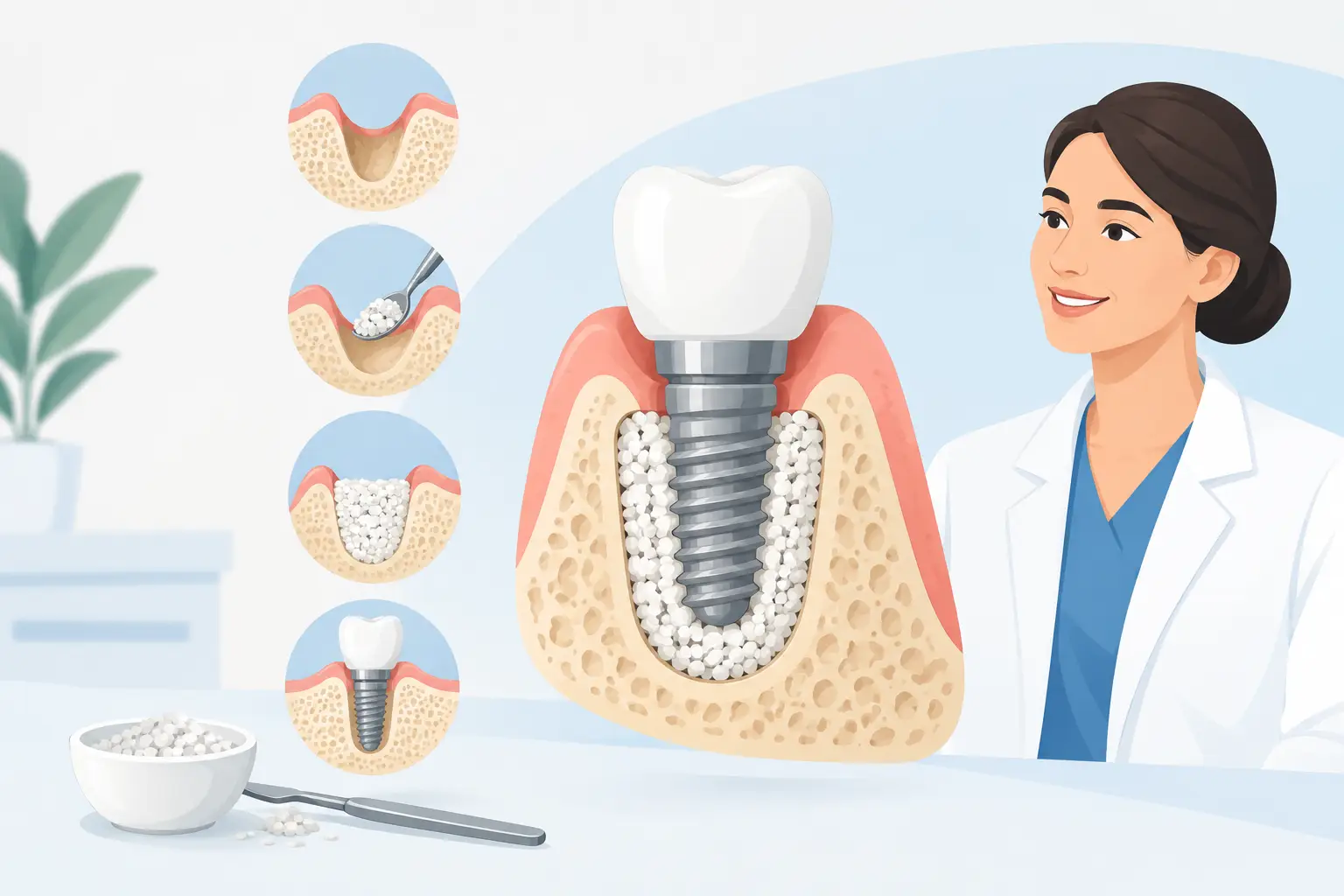
A missing tooth affects more than the visible space in your smile. Once a tooth is lost, the jawbone in that area can gradually shrink because it no longer receives the stimulation of a tooth root. This dental bone graft guide explains how rebuilding that foundation can make dental implant treatment more predictable, stable, and lasting.
For patients considering an implant, a bone graft is not automatically required. It is a personalized surgical recommendation based on the amount, quality, and location of your existing jawbone. The goal is straightforward: create a strong, healthy site that can support an implant in the ideal position for your bite, appearance, and long-term oral health.
What Is a Dental Bone Graft?
A dental bone graft is a procedure that adds bone or bone-like material to an area of the jaw that has lost volume. Over time, your body uses the graft as a framework to build new living bone. The result is a more secure foundation for a dental implant or, in some cases, a way to preserve bone immediately after a tooth is removed.
The material may come from your own body, a human donor source processed for medical use, an animal-derived source, or a synthetic mineral material. Each option has specific clinical uses. The right choice depends on the size of the defect, the location in the mouth, your overall health, and the treatment plan. What matters most is not the label on the material, but whether it is selected and placed correctly for your anatomy.
A graft can be placed at the same appointment as an extraction, before implant surgery, or alongside implant placement. Timing is one of the most important decisions in treatment planning.
Why Bone Loss Can Affect Dental Implants
Dental implants are designed to integrate with the jawbone. For that integration to occur successfully, there must be enough bone around the implant to provide stability and support the final restoration.
Bone loss can happen after a tooth is removed, but it can also result from gum disease, infection, trauma, long-term tooth loss, or a failing tooth that has damaged the surrounding bone. In the upper back jaw, the natural sinus cavity may also limit available bone height. Placing an implant without accounting for these conditions can compromise implant position, esthetics, bite function, and longevity.
A graft is often recommended because the best implant treatment is not simply about placing an implant where bone happens to remain. It is about placing it where the replacement tooth should be. That difference is especially meaningful in visible areas of the smile and in full-mouth restoration cases, where precision affects the final result.
Types of Bone Grafting Procedures
Your treatment may involve one of several grafting approaches. During a comprehensive evaluation, advanced imaging helps identify which approach, if any, fits your needs.
Socket Preservation
Socket preservation is performed after a tooth is removed. Graft material is placed into the extraction site to reduce the natural collapse of bone during healing. It does not stop all remodeling, but it can preserve more of the ridge and simplify future implant placement.
This option is often valuable when an implant is planned but cannot be placed immediately due to infection, anatomy, or the need for additional healing.
Ridge Augmentation
Ridge augmentation rebuilds the width or height of the jawbone after bone loss has already occurred. The procedure may use graft material, a protective membrane, and sometimes specialized techniques to hold the graft in the intended shape while healing takes place.
These cases require careful planning. A narrow ridge may need added width, while a more significant defect may require a staged approach before an implant can be placed.
Sinus Graft
A sinus graft, sometimes called a sinus lift, is used in the upper back jaw when there is not enough bone between the sinus cavity and the area where an implant is needed. The sinus membrane is gently elevated, and graft material is placed beneath it to create additional bone height.
For the right patient, this procedure can make implant treatment possible in an area that would otherwise lack adequate support. Whether an implant can be placed at the same time depends on the amount of existing bone and initial implant stability.
Grafting at Implant Placement
Minor grafting is sometimes completed at the time of implant placement to fill small gaps or improve the contour of the bone around the implant. This can reduce the number of surgical visits. However, combining procedures is appropriate only when the implant can be placed with sufficient stability and the site is free of active infection.
What to Expect During Treatment
Bone grafting is typically performed with local anesthesia. For patients who feel anxious about dental surgery or are having more extensive treatment, sedation options may be considered as part of a personalized plan.
After the area is numb, the dentist prepares the site, places the graft material, and may cover it with a membrane designed to protect the healing area. Sutures are then placed. The procedure itself is often more comfortable than patients expect, particularly when treatment is carefully planned and post-operative instructions are followed.
Some swelling, tenderness, and minor bleeding are normal in the first few days. Prescription or non-prescription medication may be recommended depending on the procedure and your health history. Many patients return to routine activities quickly, but strenuous exercise, smoking, and disturbing the surgical area can interfere with healing.
How Long Does a Bone Graft Take to Heal?
Healing is not identical for every patient. A small socket preservation graft may be ready for the next stage in several months, while a more extensive ridge augmentation or sinus graft can require a longer healing period. Your body needs time to convert the grafted area into stable bone that can support an implant.
Factors that influence healing include the size and location of the graft, the type of material used, whether infection was present, your oral hygiene, and health conditions that affect healing. Tobacco use is particularly concerning because it reduces blood flow and can increase the risk of graft and implant complications.
Follow-up visits allow your dentist to monitor the site and determine when it is ready for implant placement. In some cases, a 3D scan is used before moving forward. This confirms that the treatment plan is based on healed anatomy rather than assumptions.
Is Dental Bone Grafting Painful?
Patients commonly worry about discomfort, but modern anesthesia, thoughtful surgical technique, and clear aftercare make the experience manageable for most people. The level of soreness usually depends on the extent of the graft. A small graft after an extraction often produces less discomfort than a larger reconstruction involving multiple areas.
Pain should generally improve, not worsen, in the days after surgery. Persistent severe pain, increasing swelling, fever, drainage, or a bad taste should prompt a call to the dental office. Early attention can protect healing and provide reassurance.
Preparing for a Better Outcome
The success of grafting begins before surgery. Share your full medical history, including medications, diabetes management, immune conditions, and tobacco use. Do not stop prescribed medications unless the clinician coordinating your care instructs you to do so.
After treatment, protect the area. Take medications exactly as directed, maintain the recommended oral hygiene routine, eat softer foods if advised, and attend every follow-up visit. Avoid smoking and nicotine products during healing. They are among the most preventable risks to blood supply and tissue recovery.
For complex implant cases, the greatest value comes from seeing the entire plan before the first procedure. Dr. Xhoana Gjelaj and the Trinity Dental Arts team evaluate the bone, bite, gum tissue, and final smile goals together, rather than treating a graft as an isolated step. That comprehensive approach helps ensure the surgical foundation supports a result that looks natural and functions comfortably.
If you have been told you need a graft, ask why it is recommended, what type of graft is planned, whether treatment can be completed in stages, and how it supports the final implant result. Clear answers can turn a major decision into a confident next step.