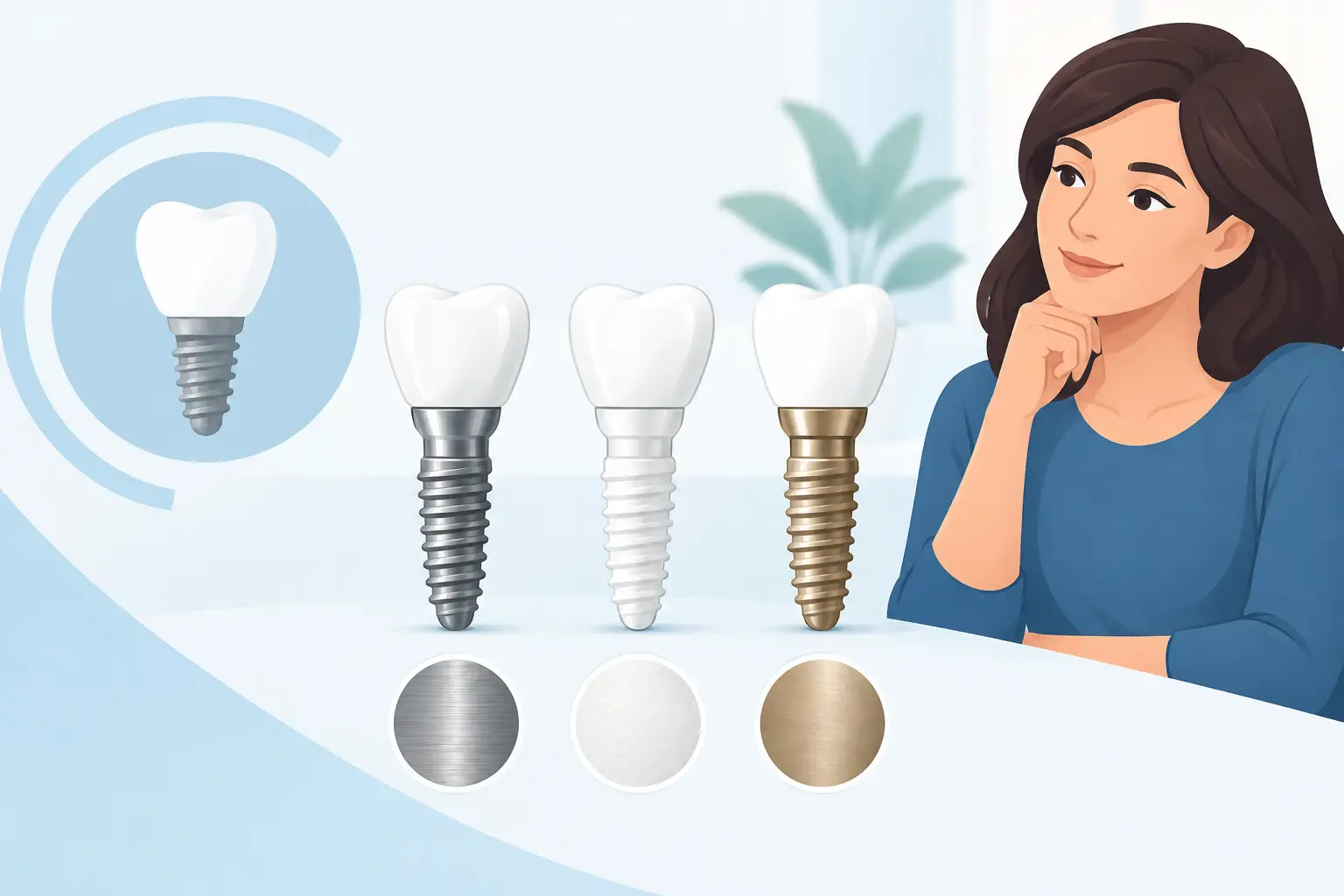
A dental implant is designed to become a long-term part of your smile, so the material beneath the gumline deserves more than a quick comparison. Dental implant materials affect how the implant integrates with bone, how it performs under bite pressure, and, in certain cases, how natural the final restoration appears. The right choice is rarely about selecting the newest material. It is about matching proven science to your health, anatomy, bite, and aesthetic goals.
For most patients, titanium remains the standard. Zirconia is a valuable alternative in carefully selected situations. The crown attached to the implant also has its own material choices, which can influence the final appearance and function. Understanding the distinctions helps you have a more confident, productive conversation during your implant consultation.
The Main Dental Implant Materials
The implant itself is the small post surgically placed in the jawbone to replace a missing tooth root. That post, the connecting abutment, and the visible crown are separate components. They may not all be made from the same material.
Titanium: the established standard
Titanium has been used successfully in dental implants for decades. It is lightweight, exceptionally strong, and highly biocompatible. Most importantly, titanium has a long clinical record of osseointegration - the process in which living bone heals directly to the implant surface and creates a stable foundation.
Modern titanium implants are typically made from commercially pure titanium or titanium alloys. Their surfaces are specially engineered to support bone attachment. This is not merely a technical detail. Strong integration is central to an implant's ability to handle everyday chewing forces over many years.
Titanium's versatility also benefits patients with more complex needs. It is available in a broad range of sizes and designs, allowing the surgical plan to be tailored to available bone, the location of the missing tooth, and the intended restoration. For full-mouth restoration cases, that flexibility can be especially important when several implants must work together under significant force.
Titanium is not a visible metal tooth. Once healed and restored, the implant body sits beneath the gumline and jawbone. In many cases, the final crown and abutment design fully address the esthetic demands of the smile.
Zirconia: a metal-free alternative
Zirconia is a high-strength ceramic material. Because it is naturally white, it can be appealing to patients who prefer a metal-free option or have very thin gum tissue in a highly visible area. Zirconia is also biocompatible and can integrate with bone.
However, zirconia implants are not simply titanium implants in a different color. Their design options, surgical handling, and long-term evidence base differ. Many zirconia implants are manufactured as a single piece, meaning the implant and abutment are connected rather than separate components. This can limit the ability to adjust the angle of the final crown in certain situations.
For the right patient, zirconia can provide an excellent solution. Yet it is usually not the default answer for every missing tooth. Titanium has more extensive long-term data, more component options, and greater flexibility for complex bite and full-arch cases. A skilled implant dentist weighs those practical factors rather than treating “metal-free” as an automatic advantage.
What Determines the Best Implant Material?
The best material depends on the complete treatment plan, not a single preference. A consultation should begin with a detailed evaluation of your oral health, medical history, gum condition, bone volume, and the way your teeth meet when you bite.
Bone quality matters because implants need adequate support to integrate and remain stable. If bone volume has diminished after tooth loss, bone grafting may be recommended before or during implant placement. The graft material and healing plan are separate considerations from the material of the implant itself, but both influence the stability of the final result.
The location of the implant matters, too. A back tooth must withstand heavy chewing pressure. A front tooth requires exact attention to gum contours, crown shade, translucency, and the way light reflects from the restoration. Titanium can be an excellent choice in either region, while zirconia may be considered when the esthetic circumstances and anatomy support it.
Your bite is equally significant. Grinding or clenching can place substantial force on implants and restorations. In these cases, the implant design, number of implants, crown material, and protective nightguard recommendations may be more consequential than a simple titanium-versus-zirconia decision. Proper planning protects the entire system.
Implant Materials and Allergy Concerns
Patients sometimes ask whether they can be allergic to titanium. True titanium allergy is considered uncommon, and titanium implants have an extensive record of biocompatibility. Still, any history of metal sensitivity, unexplained reactions to medical devices, or significant allergies should be discussed before treatment.
An implant dentist can review your health history and, when appropriate, coordinate with your physician or allergy specialist. Zirconia may be worth discussing for patients with specific concerns, but it should be chosen based on sound clinical indications rather than fear alone. A careful diagnosis is more useful than assumptions based on online claims.
The Material You See: Choosing the Implant Crown
The visible tooth on top of an implant is usually a ceramic restoration, not titanium or zirconia in its raw implant form. Common crown options include layered porcelain, lithium disilicate, and zirconia-based ceramic. Each creates a different balance of strength and natural appearance.
For a highly visible front tooth, a more translucent ceramic may offer lifelike depth and color variation. For a back tooth or a patient with powerful chewing forces, a stronger zirconia crown may be more appropriate. In many cases, modern multilayer zirconia provides an appealing middle ground, combining durability with improved esthetics.
The abutment, which connects the crown to the implant, can also be made from titanium or zirconia. A zirconia abutment may help reduce a gray shadow beneath especially thin gum tissue near the front of the mouth. But material selection must work with the implant system, gum architecture, and crown design. A beautiful result depends on how every component functions together.
Why Precision Matters More Than a Material Label
A premium material cannot compensate for poor diagnosis, improper implant position, uncontrolled gum disease, or a restoration that does not fit the bite. Long-term implant success is built on thoughtful planning, precise placement, stable gum and bone health, and ongoing professional maintenance.
At Trinity Dental Arts, Dr. Xhoana Gjelaj brings advanced implant and cosmetic expertise to this planning process. Digital imaging, detailed restorative planning, and a comprehensive view of your oral health help determine whether titanium, zirconia, or a particular crown material best supports your outcome. For patients in Trinity and the greater Tampa Bay area, having surgical and restorative care coordinated in one practice can make complex decisions clearer and more efficient.
Material selection also includes practical considerations. Some implant systems have more established component availability than others, which can matter if a crown ever needs repair or replacement years later. The initial cost is relevant, but the value of a well-planned, maintainable solution should carry greater weight than choosing solely by price or marketing language.
Questions to Ask at Your Implant Consultation
Ask which material is recommended for your specific case and why. Your dentist should be able to explain how your bone, gum tissue, bite, and smile goals shape that recommendation. It is also reasonable to ask about the proposed crown material, the expected maintenance, the treatment timeline, and whether sedation options are available if anxiety has kept you from pursuing care.
If you are replacing several teeth or considering a full-mouth implant solution, ask how material choices affect the design of the entire restoration. In these cases, the number and placement of implants, the strength of the final bridge, and your bite relationship are closely connected. The best plan is one designed around your long-term function, not a one-size-fits-all product category.
A dental implant should feel like part of your own mouth - stable, comfortable, and natural in appearance. The most reliable path to that result is a personalized plan built on proven materials, precise clinical execution, and a provider who considers every layer of your restoration before treatment begins.