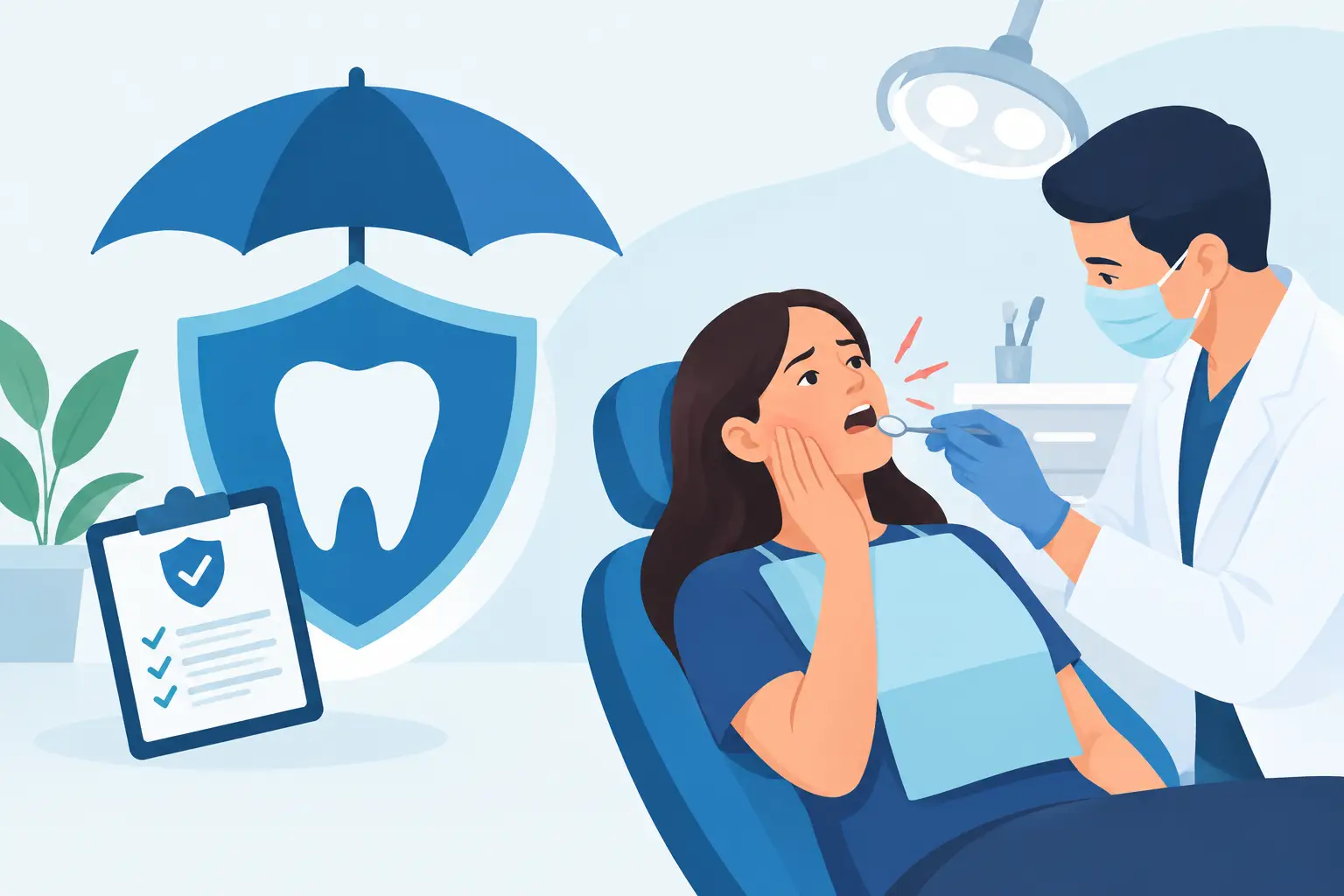
A severe toothache rarely waits for a convenient time. Whether you have a cracked tooth, facial swelling, or a lost restoration, the first question after finding care is often: does insurance cover emergency dentistry? In many cases, dental insurance helps with the evaluation and treatment needed to address an urgent problem. But coverage depends on your individual plan, the procedure required, and whether you have met your deductible or reached an annual maximum.
The most useful approach is to seek timely care, then have the dental team help clarify benefits before treatment whenever your situation allows. Waiting for certainty from an insurance company while pain, infection, or damage progresses can turn a manageable emergency into a more complex restorative concern.
When Is a Dental Problem an Emergency?
An emergency is not defined only by the level of pain. Some serious dental problems are surprisingly painless at first, particularly after trauma or when a tooth has lost its nerve. Emergency care focuses on stopping pain, controlling infection, protecting damaged teeth, and preventing a condition from worsening.
You should contact a dentist promptly if you have severe or persistent tooth pain, swelling of the gums or face, a broken or knocked-out tooth, uncontrolled bleeding, or a restoration that has failed and left a tooth exposed. Fever, difficulty swallowing, trouble breathing, or rapidly spreading facial swelling require immediate medical attention.
A same-day exam may include X-rays, diagnostic testing, and a focused assessment of the affected tooth or area. The dentist can then determine whether you need a protective restoration, root canal treatment, extraction, treatment for an abscess, or another solution tailored to the condition.
Does Insurance Cover Emergency Dentistry? What Plans Often Pay
Most dental plans provide at least some coverage for emergency exams and medically necessary treatment. However, “covered” does not always mean “fully paid.” Dental insurance is generally designed as a benefit that contributes toward care, rather than a comprehensive payment system with no patient responsibility.
Many plans classify emergency exams, necessary X-rays, and pain-relieving treatment as diagnostic or basic services. Depending on your plan, these services may be covered at a higher percentage than major restorative procedures. If an emergency reveals a deeper problem, such as significant decay beneath an old restoration, a cracked tooth, or an infection inside the tooth, the recommended treatment may fall into a different coverage category.
For example, a plan may contribute toward an emergency exam and X-ray, then cover a portion of a filling, root canal, or crown after the deductible. A tooth that cannot be predictably saved may require removal, which is often covered differently from replacement treatment. Your policy language, plan year, waiting periods, network rules, and remaining annual benefits all matter.
Medical insurance can occasionally become relevant when a dental emergency involves an accident, significant facial trauma, hospital-based care, or a medical complication. Routine dental disease and most dental procedures are usually handled through dental benefits rather than medical insurance. The distinction is not always straightforward, so it is reasonable to ask the dental office to help you understand which benefits may apply.
Why the Final Treatment Cost Can Vary
An emergency appointment is the starting point, not always the full treatment plan. The dentist must first identify why the pain or damage occurred. Treating only the symptom can provide temporary relief while allowing the underlying issue to continue.
A small chip may need smoothing or bonding. A fractured tooth may need a same-day crown to restore protection and function. An inflamed or infected tooth may require root canal treatment followed by a durable restoration. In more advanced cases, tooth replacement planning may be needed after the emergency is stabilized, particularly when preserving long-term bite function and bone health is a priority.
This is why estimates can change after diagnostic imaging and clinical evaluation. A trustworthy dental team should explain what needs immediate attention, what can safely be scheduled later, and which options are likely to provide the best long-term result. The least expensive short-term fix is not always the most conservative or cost-effective solution over time.
Questions to Ask Before Emergency Treatment
When you are in pain, insurance terminology can feel like one more obstacle. A few focused questions can make the financial side of care more understandable:
- Is the emergency exam and any needed X-rays covered under my plan?
- Have I met my deductible, and how much of my annual maximum remains?
- Is the recommended procedure considered preventive, basic, or major care?
- Does my plan require a waiting period, preauthorization, or use of a specific network?
- What is my estimated out-of-pocket cost today, and what expenses may come later?
Benefit estimates are helpful, but they are not a guarantee of payment. Insurers make the final determination after receiving the claim. Even so, a knowledgeable front office can verify available information, submit claims, and help you consider financing when larger restorative treatment is recommended.
Do Not Let Coverage Questions Delay Care
Pain can tempt people to wait until the next plan year, use a temporary repair, or hope the issue settles down. That decision can carry real consequences. A crack can spread below the gumline. An infection can become more difficult to manage. A tooth that might have been restored with a crown may eventually need more extensive treatment.
Prompt care is especially valuable for patients with complex dental histories, existing implant restorations, extensive cosmetic work, or recurring problems with failing crowns and fillings. The goal is not simply to get through the day with less pain. It is to protect the health, appearance, and function of your smile with a plan that makes clinical sense.
At Trinity Dental Arts, emergency evaluations are approached with that larger picture in mind. Dr. Xhoana Gjelaj brings advanced restorative and implant-focused experience to diagnosis and treatment planning, helping patients understand both the urgent need and the path toward a stable, confident result. When appropriate, modern diagnostic technology, same-day restorative options, and sedation dentistry can help make a stressful visit more manageable.
Emergency Care, Insurance, and Long-Term Decisions
Insurance can be an important part of paying for urgent dental treatment, but it should not be the only factor guiding your decision. A plan may cover a portion of the immediate procedure while offering limited benefits for the restoration needed to protect the tooth afterward. Annual maximums can also be used quickly when multiple teeth require care.
That does not mean you should avoid treatment. It means you deserve a clear conversation about priorities. In many cases, the first appointment is focused on relieving pain, controlling infection, and protecting the tooth. The final restoration or broader rehabilitation can be planned around your health needs, schedule, benefits, and budget.
If you are dealing with dental pain, swelling, trauma, or a broken tooth, seek an evaluation as soon as possible. Insurance questions matter, but the right time to protect your smile is before a dental emergency becomes a more complicated problem.