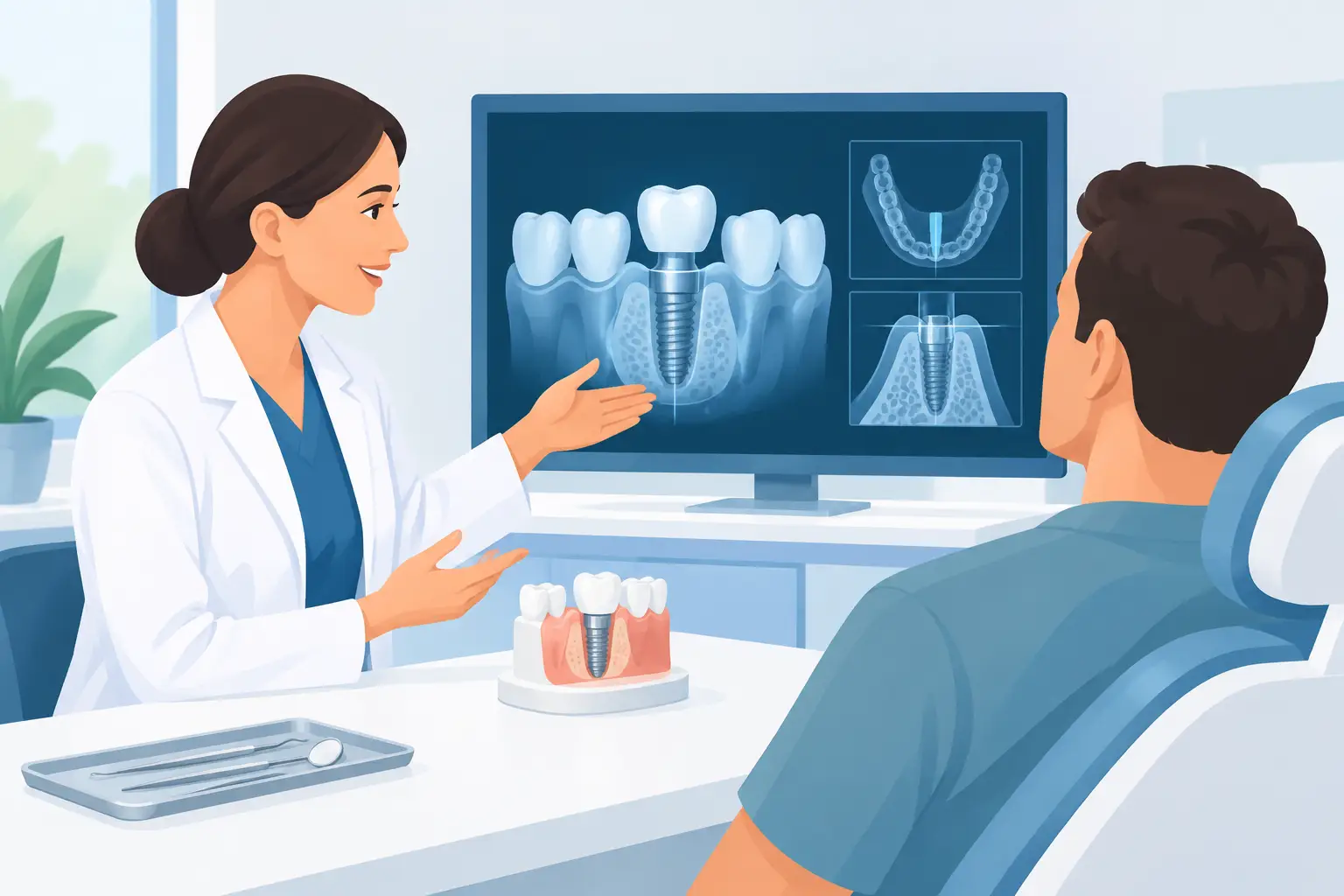
A missing tooth does more than change a smile. It can affect how you chew, speak, and feel when you meet someone new. This guided implant surgery review explains why many patients choose digitally planned implant treatment when they want a precise, long-term tooth replacement option and a clearer understanding of every step before surgery begins.
Guided surgery is not a separate type of dental implant. It is a planning and placement method that uses three-dimensional imaging, digital scans, and a custom surgical guide to help the clinician place an implant according to a carefully designed plan. For the right patient, that extra level of preparation can make treatment more predictable. It does not eliminate the need for surgical expertise, judgment, or a personalized evaluation.
What Guided Implant Surgery Actually Means
Traditional implant placement can be highly successful in experienced hands. Guided implant surgery adds a digital roadmap before the procedure. Your dentist captures detailed information about your bone, surrounding teeth, gum tissue, bite, and the future restoration. This typically includes a 3D cone beam CT scan and a digital impression or intraoral scan.
Those records are combined in treatment-planning software. Rather than starting with only the available bone, the clinician can plan from the final result backward. The desired position of the crown or fixed teeth helps determine the ideal angle, depth, and location of each implant.
Once the plan is approved, a custom guide may be fabricated. It fits over the teeth or gums and contains precisely positioned openings that direct the surgical instruments. Depending on the case and the system used, the guide may control the entry point alone or also help regulate the angle and depth of placement.
That distinction matters. A guide is a sophisticated planning tool, not an autopilot. The clinician must confirm that the guide fits accurately, interpret the anatomy, and adapt if clinical conditions differ from the digital plan.
Guided Implant Surgery Review: Key Benefits
The central advantage of guided implant surgery is prosthetically driven planning. In plain language, the implant is planned to support the tooth that will be visible and functional in your smile. This can be especially valuable in the front of the mouth, where slight changes in implant position can affect appearance, gum contours, and long-term cleanability.
Guidance can also help the surgical team work around important anatomical structures. In the upper jaw, this may include the sinus area. In the lower jaw, it may include nerves that affect sensation. A 3D scan provides information that standard two-dimensional X-rays cannot show as completely, allowing the clinician to evaluate bone volume and available space before treatment begins.
For some patients, guided placement may support a more efficient surgical appointment and a more conservative approach to the tissues. That can mean less postoperative swelling or discomfort in certain cases, but it should not be promised as a universal result. Recovery depends on the number of implants, the condition of the bone and gums, whether grafting is needed, your medical history, and how closely you follow aftercare instructions.
Digital planning is also useful when several implants support a fixed full-mouth restoration. The position of every implant must work with the bite, facial support, speech, hygiene access, and the design of the final teeth. Planning those relationships in advance helps reduce avoidable compromises later.
Where the Technology Has Limits
A strong review should include the trade-offs. Guided implant surgery requires high-quality imaging, accurate scans, careful software planning, and a well-made guide. If a scan is distorted, a guide does not seat fully, or the surgical plan is based on incomplete information, technology alone cannot correct the problem.
Guides also have physical limitations. Limited mouth opening, dense bone, difficult access in the back of the mouth, or unexpected findings during surgery can require the clinician to modify the plan. A skilled implant dentist knows when to follow the guide and when clinical judgment calls for a change.
Cost is another consideration. Digital records, planning time, software, and guide fabrication can add expense. For a straightforward single-tooth case with excellent bone and a simple restoration, a guide may not deliver the same added value it can provide for a complex esthetic or full-arch case. The question is not whether guided surgery is always better. The question is whether it improves safety, precision, and treatment predictability for your specific needs.
It is also worth separating guided surgery from immediate teeth. A digitally guided procedure may make it possible to coordinate surgery and a temporary restoration efficiently, but it does not automatically mean teeth can be placed the same day. Immediate loading depends on implant stability, bone quality, bite forces, the number of implants, and the overall treatment plan.
Who May Benefit Most From Guided Planning
Guided surgery can be particularly helpful when the available bone is narrow, uneven, or close to important anatomy. It is often considered for patients replacing front teeth, patients with multiple missing teeth, and those undergoing full-mouth implant treatment. It can also be valuable when the desired final smile requires precise implant positioning to support natural-looking teeth and stable gum contours.
Patients who have had previous tooth loss for a long time may need a more detailed evaluation because bone can change after a tooth is lost. Some will benefit from bone grafting or a sinus graft before implants can be placed. Digital planning helps identify these needs early, so there are fewer surprises on the day of surgery.
However, candidacy is never determined by an image alone. Gum health, active infection, smoking or nicotine use, diabetes control, medications, grinding habits, and home care all influence implant success. The best treatment plan looks beyond placement day and considers how the implant will function years from now.
What the Treatment Process Usually Looks Like
A thorough consultation begins with your goals. Are you replacing one tooth? Do you want to stop dealing with failing dental work? Are you looking for a fixed full-mouth solution? Your dentist should also review your medical history, take diagnostic images, examine your gums and bite, and discuss the quality and quantity of your available bone.
After records are taken, the implant and final restoration are planned digitally. In complex cases, this stage may involve a diagnostic smile design or a temporary restoration design. You should understand whether your treatment is staged, whether grafting is recommended, and what type of temporary tooth solution is appropriate during healing.
At surgery, local anesthetic is used, and sedation may be available for patients who feel anxious or are having more extensive treatment. The guide is positioned and checked before placement begins. After the implants are placed, healing time varies. Some cases receive a temporary fixed restoration soon after surgery, while others need a healing period before the final crown or fixed bridge is completed.
The final restoration is not an afterthought. Its shape, bite, material, and ability to be cleaned are central to the longevity of the entire result. This is one reason patients often prefer a practice that can coordinate surgical and restorative decisions under one plan.
Questions Worth Asking at Your Consultation
Ask how your implant position will be planned in relation to the final crown or fixed teeth. Ask whether a surgical guide is recommended in your case, what information is used to create it, and what factors could require changes during surgery. You should also ask about bone grafting, sedation options, the expected timeline, maintenance requirements, and the total scope of treatment.
A qualified provider should be comfortable explaining the reasoning behind the recommendation, not simply presenting a technology label. At Trinity Dental Arts, Dr. Xhoana Gjelaj approaches implant planning with attention to both surgical precision and the appearance and function of the completed smile.
The most reassuring plan is one that makes sense clinically and personally: a plan built around your anatomy, your health, your goals, and the result you want to live with every day.