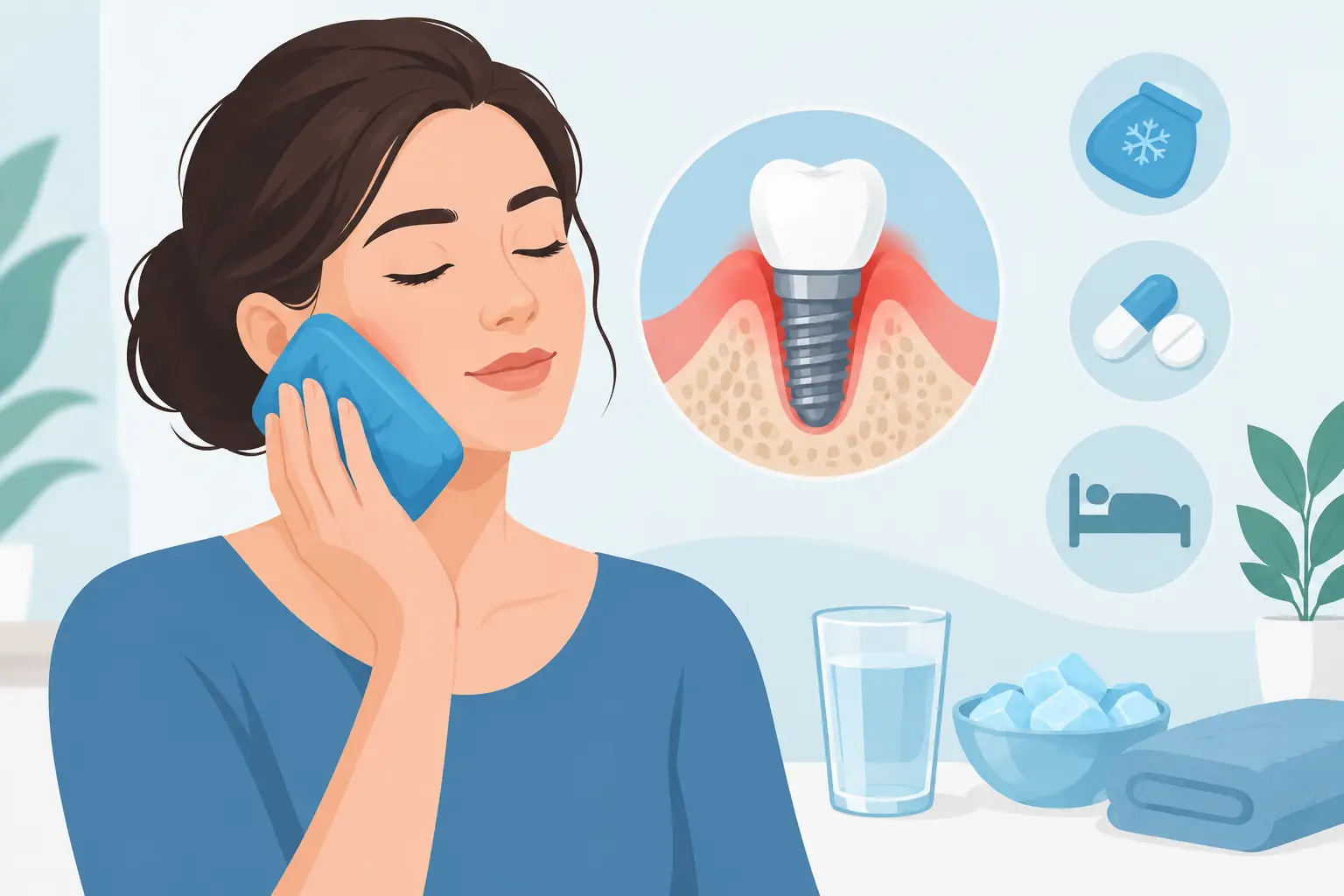
The morning after implant surgery, a fuller cheek or tight feeling around the jaw can look more alarming than it is. Implant swelling management is a normal part of recovery, but the right response depends on the timing, extent of swelling, the procedure performed, and your overall health. Knowing what is expected helps you protect your surgical site and recognize when your implant dentist needs to step in.
Dental implants involve careful work in the gum tissue and jawbone. If your treatment also included tooth removal, bone grafting, a sinus graft, or a full-arch procedure, your body has more healing to do. At Trinity Dental Arts, treatment planning and post-operative instructions are tailored to the procedure, because a one-size-fits-all recovery plan is not appropriate for advanced implant care.
What Normal Implant Swelling Looks Like
Swelling is part of the body's inflammatory healing response. It often begins within several hours of surgery, is more noticeable on the second day, and may reach its highest point around 48 to 72 hours after treatment. Mild bruising, tenderness, jaw stiffness, and temporary difficulty opening widely can occur alongside it.
For many patients, swelling begins to improve after day three and continues to settle over the following week. More involved procedures can take longer. A patient who has had one implant placed in an uncomplicated area may recover differently from someone who has received multiple implants or grafting to rebuild lost bone.
The key pattern is gradual improvement. Your face should not become progressively more swollen after the initial peak, and discomfort should become more manageable rather than intensify. Some asymmetry can be expected if treatment was concentrated on one side of the mouth.
Implant Swelling Management in the First 72 Hours
Your post-operative instructions take priority, especially when they differ from general advice. The medications, sutures, grafting materials, and surgical approach used in your care all matter. Still, several principles are commonly recommended after implant surgery.
During the first day, apply a cold pack to the outside of the face near the treatment area. Use it in short intervals, such as 15 to 20 minutes on and 15 to 20 minutes off, with a cloth barrier between the pack and your skin. Constant cold can irritate the skin and does not provide better swelling control.
Rest with your head elevated, including while sleeping the first night or two. Extra pillows or a recliner can reduce fluid buildup in the face. Avoid strenuous exercise, heavy lifting, bending repeatedly at the waist, and activities that raise your heart rate. They can increase bleeding and throbbing at the surgical site during the earliest stage of healing.
Take prescribed medication exactly as directed. If your dentist recommends an over-the-counter pain reliever, follow the dosage instructions and confirm that it is safe with your medical history and current medications. Do not add aspirin or any medication that has not been approved by your treating clinician, since some products may increase bleeding risk.
Hydration and nutrition matter, even when chewing feels inconvenient. Choose soft, nourishing foods at a comfortable temperature, and chew away from the surgical area if instructed. Very hot foods and beverages may increase bleeding or discomfort during the first day. Avoid crunchy, seeded, sticky, or spicy foods that can disturb the incision or become trapped near the implant site.
Smoking and nicotine use are especially harmful after implant surgery. Nicotine restricts blood flow and can impair healing, while suction and heat can irritate the surgical area. Smoking also raises the risk of infection and implant complications. If quitting is difficult, discuss a plan with your care team before surgery whenever possible.
Protect the Surgical Site Without Overdoing It
Patients sometimes worry that any movement or oral hygiene will disrupt an implant. On the other hand, leaving the mouth unclean can allow bacteria to accumulate. The balance is gentle, deliberate care.
Do not rinse forcefully, spit aggressively, or use a straw during the period specified by your dentist. These actions can create pressure in the mouth and interfere with early clotting and healing. If you were prescribed a medicated rinse, use it on schedule and let it move gently around the mouth rather than swishing vigorously.
Continue brushing the teeth that are away from the surgical site. Near the implant area, follow the specific cleaning method you were given. Depending on the treatment, this may mean avoiding direct brushing for a short time, using an ultra-soft brush, or cleaning only after a designated point in recovery. Do not pull on sutures or repeatedly inspect the area with your fingers or tongue.
After the first 48 to 72 hours, some patients are advised to transition from cold packs to gentle warmth on the outside of the face. Mild heat can relax tight jaw muscles and support circulation once active swelling has peaked. This is not universal advice, particularly after grafting or more complex surgery, so ask your implant dentist before making the switch.
When Swelling Needs a Call to Your Implant Dentist
A certain amount of swelling can be normal. Infection, an adverse medication reaction, or a healing complication can produce symptoms that should not wait for a routine follow-up. Contact your dental office promptly if you experience:
- Swelling that continues to worsen after the third day or returns after it had been improving
- Severe or escalating pain that is not controlled by the prescribed plan
- Fever, chills, pus, a foul taste, or persistent drainage from the surgical area
- Difficulty swallowing, breathing, or opening the mouth that is worsening
- A spreading rash, hives, facial itching, or swelling of the lips or tongue after medication
- Bleeding that does not slow with the pressure instructions provided by your dentist
Difficulty breathing or swallowing, significant facial or throat swelling, and signs of a severe allergic reaction require emergency medical attention. Do not drive yourself if you are sedated, dizzy, or have taken medication that affects alertness.
It is also reasonable to call when you are uncertain. Patients often hesitate because they do not want to overreact, yet a brief conversation can clarify whether a symptom is within the expected recovery range. For complex implant treatment, early communication is a strength, not an inconvenience.
Factors That Can Change Your Recovery Timeline
The amount of swelling after dental implant surgery is not a measure of whether treatment was successful. It is influenced by the number and location of implants, the need for grafting, the length of surgery, existing inflammation, and how your body typically heals. A lower jaw implant may feel different from an upper posterior implant near the sinus, and full-mouth restoration requires a distinctly different recovery plan than a single-tooth replacement.
Medical conditions and medications can also affect healing. Diabetes that is not well controlled, immune conditions, blood-thinning medications, and a history of gum disease may require additional precautions. Be transparent with Dr. Xhoana Gjelaj and the clinical team about your health history before surgery, and do not stop prescribed medical medications unless the clinician managing them directs you to do so.
Travel plans deserve consideration as well. Local patients across Trinity and the Tampa Bay area often appreciate scheduling follow-up care close to home, particularly after complex procedures. Staying available for your planned post-operative visit allows the team to evaluate healing, remove sutures when needed, and answer questions before small concerns become larger ones.
A Calm, Prepared Recovery Supports Better Healing
The most useful preparation happens before the procedure: fill prescriptions, prepare soft foods, arrange transportation if sedation is planned, and make room in your schedule for rest. After surgery, follow your personalized instructions closely instead of comparing your recovery to someone else's online.
Swelling should be temporary, controlled, and trending in the right direction. If it is not, your implant team is the right first call. Clear guidance and timely follow-up help keep the focus where it belongs: a comfortable recovery and a stable foundation for your new smile.