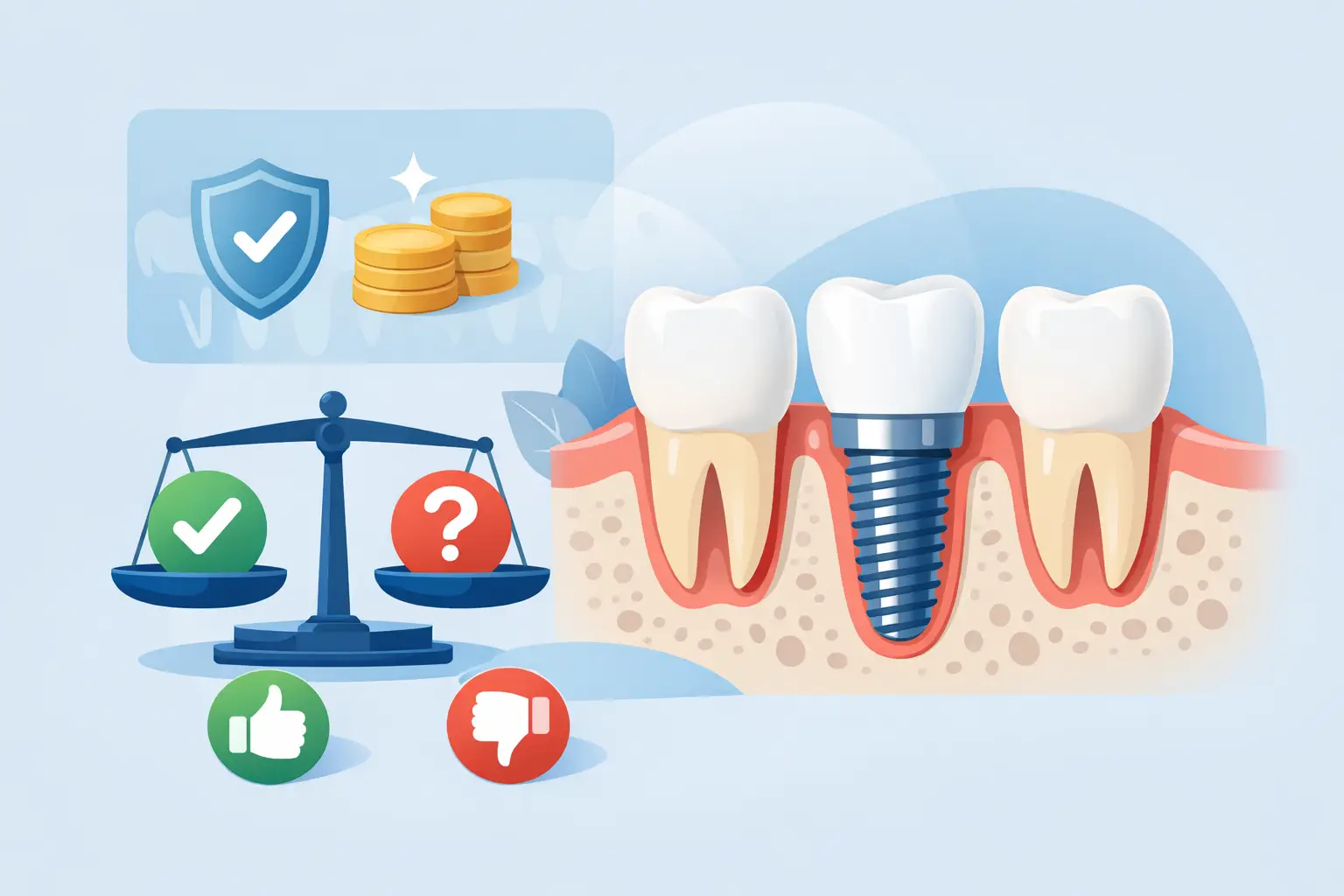
When a tooth is missing, the real question is usually not just what it costs to replace it. It is what that missing tooth will keep costing you if you do nothing. If you have been asking, are dental implants worth it, the answer often comes down to long-term function, comfort, bone health, and how much value you place on a solution that is designed to feel stable and last.
For many adults, implants are worth the investment because they solve more than a cosmetic problem. They can restore chewing strength, help preserve jawbone, support speech, and remove the daily compromises that come with a loose denture or a gap in your smile. That said, implants are not automatically the right choice for everyone. The best answer depends on your oral health, your goals, your timeline, and the quality of the treatment planning behind the procedure.
Are Dental Implants Worth It for Most Patients?
In many cases, yes. Dental implants are one of the most predictable and advanced options for replacing missing teeth because they replace the root as well as the visible tooth. That distinction matters. A bridge sits on top of the gums and relies on neighboring teeth for support. A denture rests on the gums and can shift over time. An implant is placed in the jawbone, where it integrates with the bone and creates a stable foundation for a crown, bridge, or full-arch prosthesis.
That stability is one of the main reasons patients feel implants are worth it after treatment. Eating tends to feel more natural. Smiling can feel less self-conscious. Many patients also appreciate that implants do not require healthy adjacent teeth to be reduced the way a traditional bridge often does.
Still, “worth it” is personal. If you need the lowest upfront cost and have limited bone available, another option may make more sense in the short term. If you want the closest thing to replacing a natural tooth and you are thinking in years rather than months, implants often offer the strongest value.
What You Are Really Paying For
It is easy to compare implant treatment to the price of a denture or bridge and stop there. That comparison misses what is included in implant care. You are not just paying for a replacement tooth. You are paying for diagnostics, treatment planning, surgical precision, restorative design, materials, and long-term stability.
A properly planned implant case may involve 3D imaging, evaluation of bone volume, gum health assessment, and discussion of bite forces and aesthetics. In some situations, bone grafting or sinus grafting is needed to create a strong foundation. Those steps can add to the cost, but they are often what make the final result healthier and more durable.
Provider experience also matters. Implant treatment is not a commodity. The difference between a case that simply fills space and one that is designed for function, comfort, and longevity often comes down to planning and execution. That is why patients looking at larger cases such as full-mouth restoration or All-on-4 treatment should pay very close attention to credentials, surgical experience, and restorative expertise.
The Long-Term Value of Implants
The strongest argument for implants is usually not convenience. It is biology.
When you lose a tooth, the jawbone in that area begins to resorb over time because it no longer receives stimulation from the tooth root. That bone loss can affect the shape of your jaw, the support for nearby teeth, and even the fit of future dentures. Dental implants help stimulate the bone and slow that process.
This is one reason implants can be a better long-term value than options that appear less expensive upfront. A removable denture may need repeated adjustments, relines, or replacement as the jaw changes. A bridge can work very well, but it does not preserve bone in the same way and may eventually need replacement. An implant, when placed and maintained properly, can serve patients for many years.
That does not mean implants are maintenance-free. They still require excellent home care, regular hygiene visits, and monitoring. But when patients ask whether the investment pays off over time, the answer is often yes because the benefits continue well beyond the initial procedure.
When Dental Implants May Not Feel Worth It
There are situations where implants may not be the best fit, at least not right away.
If you have uncontrolled gum disease, active infection, significant smoking habits, unmanaged diabetes, or severe bone loss, implant treatment may require additional steps before it becomes predictable. Some patients are also not ready for the healing timeline or the financial commitment involved. Others may prefer a removable option for personal or medical reasons.
This is where honest case evaluation matters. A responsible implant provider should not present implants as the answer to every problem. Instead, they should explain whether you are a good candidate now, whether preparatory treatment is needed, and what alternatives exist if implants are not the ideal choice.
For example, a single missing molar may be a straightforward implant case. A full-mouth case with failing teeth, bite collapse, and bone loss is more complex and needs a different level of planning. The treatment can still be life-changing, but it requires a realistic conversation about procedure stages, healing, investment, and outcomes.
Are Dental Implants Worth It Compared to Bridges or Dentures?
This is where trade-offs become clearer.
A dental bridge can be an excellent option in the right case, especially when adjacent teeth already need crowns. It is usually faster and often less expensive upfront than an implant. The trade-off is that it depends on neighboring teeth for support and does not replace the root.
A removable denture is often the lowest initial-cost option for replacing several or all teeth. It can restore appearance quickly, but many patients struggle with slipping, sore spots, reduced bite force, and the need for ongoing adjustments. Over time, jawbone changes can make a denture feel less stable.
An implant tends to have the highest initial cost, but it usually offers the best stability, chewing efficiency, and preservation of surrounding oral structures. For single-tooth replacement, that can mean a result that feels more independent and natural. For patients missing most or all teeth, implant-supported full-arch options can dramatically improve confidence and daily function compared to a conventional denture.
So are dental implants worth it compared to other treatments? Often yes, especially if you care most about permanence, comfort, and long-term oral health. But the better question is which treatment best matches your condition and goals.
The Role of Expertise in Implant Success
Patients often focus on the implant itself, but the implant is only part of the result. Diagnosis, surgical placement, bite design, gum aesthetics, and the final restoration all affect whether the treatment feels successful years later.
This is why experience matters so much in implant dentistry. Advanced cases are not just about placing fixtures in bone. They involve understanding anatomy, smile design, occlusion, tissue management, and how to sequence treatment when other issues are present. Dr. Xhoana Gjelaj’s implant-focused approach reflects that broader view, which is especially important for patients considering full-mouth restoration or more complex reconstruction.
A well-executed implant should look natural, function predictably, and fit comfortably within the rest of your bite. Patients generally do not describe that as “worth it” because of one appointment. They say it because the treatment improved daily life.
Questions to Ask Before You Decide
If you are seriously considering implants, the best next step is not guessing from online averages. It is getting a clear diagnosis. Ask whether you are a candidate now, whether bone grafting is needed, what the total treatment timeline looks like, and what alternatives would reasonably achieve your goals.
You should also ask about maintenance, expected longevity, and how the provider approaches complications if they arise. A good implant consultation should feel specific to your mouth, not like a generic sales presentation.
Cost should be discussed openly, but it should be discussed in context. If financing is available, that can make treatment more accessible without forcing you into a lower-value option simply because of the upfront number. The lowest-cost treatment is not always the least expensive over time.
So, Are Dental Implants Worth It?
For many patients, absolutely. If you want a tooth replacement option that is stable, functional, and designed to support long-term oral health, implants can be one of the best investments you make in your smile. They are especially valuable when you want to avoid the compromises that come with removable teeth or when protecting bone and neighboring teeth matters.
But worth is never just about price. It is about whether the treatment solves the problem in a way that lasts, feels natural, and supports your quality of life. The right implant treatment plan should make that answer clearer, not more confusing.
If you are weighing your options, focus less on the cheapest replacement and more on the outcome you want to live with every day. That is usually where the real value becomes obvious.