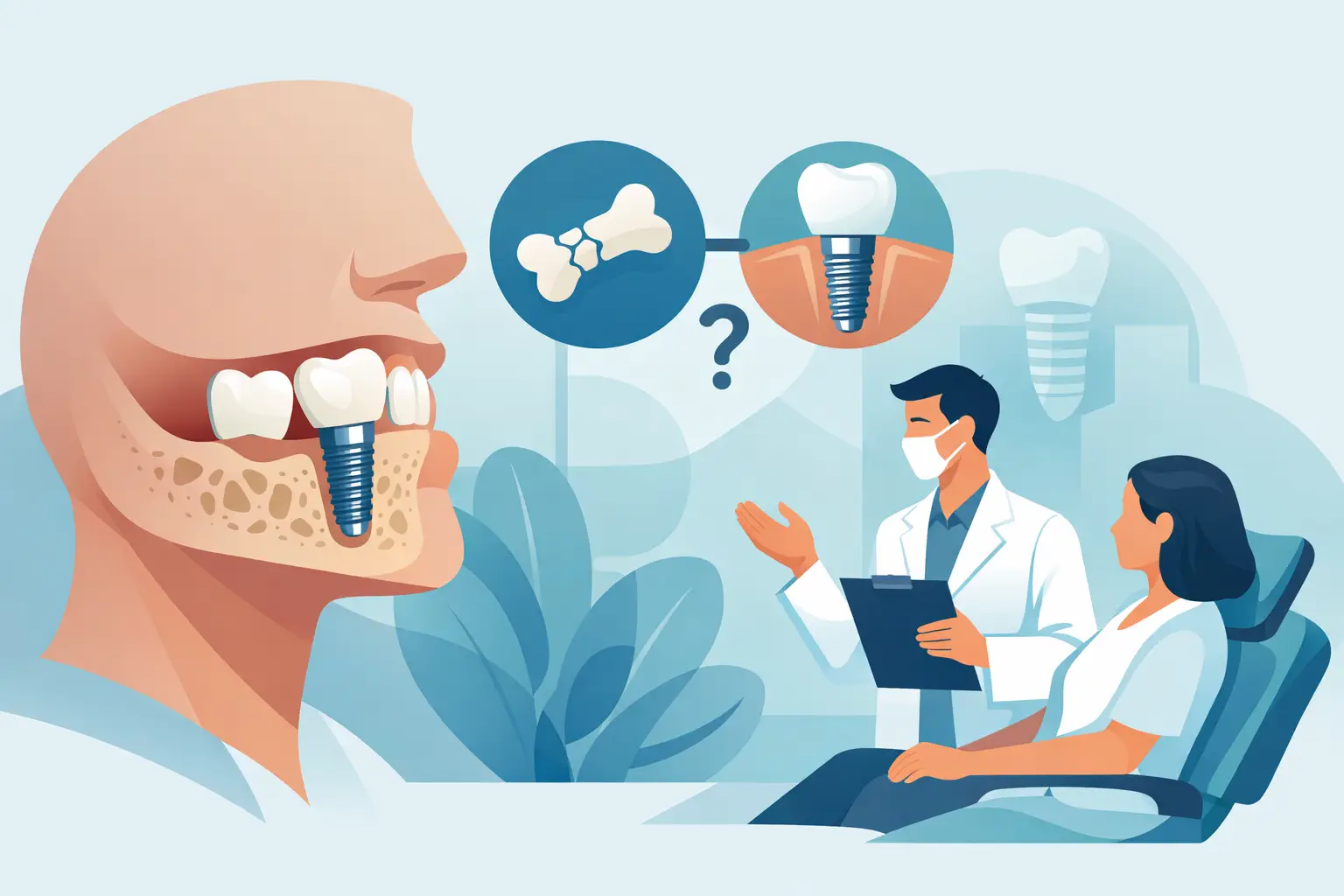
If you have been told you have bone loss, the question usually gets very personal very quickly: can you get implants with bone loss, or is that option off the table? In many cases, dental implants are still possible. The right answer depends on how much bone has been lost, where it has been lost, why it happened, and whether that bone can be rebuilt or worked around with a more advanced treatment plan.
That is where experience matters. Bone loss does not automatically mean you are not a candidate. It means your implant evaluation needs to be more precise.
Can you get implants with bone loss? Yes, but it depends
Dental implants need enough healthy bone for support. The implant is placed into the jawbone, and over time the bone bonds to the implant surface. When there is not enough bone volume or density, that bond can be harder to achieve without additional treatment.
Still, many patients with bone loss go on to receive successful implants. Some need bone grafting first. Others may qualify for sinus augmentation in the upper jaw, a modified implant approach, or full-arch solutions such as All-on-4 or All-on-X that make strategic use of the available bone.
The key is not simply whether bone loss exists. The key is whether there is enough stable bone in the right areas to support the treatment being planned.
Why bone loss happens in the first place
Bone loss in the jaw is common, especially after tooth loss. Teeth do more than help you chew. Their roots stimulate the jawbone every day. Once a tooth is missing, that stimulation stops, and the body begins to resorb bone in that area.
Periodontal disease is another major cause. Gum infection can destroy the bone that supports natural teeth, and the damage can continue quietly for years before a patient realizes how advanced it has become. Trauma, long-term dentures, infection, failed dental work, and certain medical conditions can also contribute.
This is one reason timing matters. The longer a tooth has been missing, the more likely the surrounding bone has changed.
How dentists evaluate implant options when bone is limited
A visual exam is not enough to determine candidacy. Proper planning starts with advanced imaging, usually a 3D CBCT scan, to measure bone height, width, and density. Your dentist also looks at the position of nearby structures such as the sinus cavity in the upper jaw and the nerve canal in the lower jaw.
Just as important, they evaluate the health of your gums, your bite, any infection, your medical history, and habits such as smoking or teeth grinding. Bone loss is only one part of the picture.
An experienced implant provider will also think ahead to the final restoration. The goal is not simply to place an implant somewhere in bone. The goal is to place it in a position that supports a stable, functional, natural-looking tooth or full-arch prosthesis.
When bone grafting may make implants possible
Bone grafting is one of the most common ways to prepare for implants when bone loss is present. In simple terms, grafting adds or rebuilds bone in an area that no longer has enough support.
This can be done at the time of tooth extraction to help preserve bone, or later as a separate procedure before implant placement. The graft material may come from your own bone, a donor source, or a synthetic material, depending on the clinical situation.
Not every patient needs a major graft. Sometimes the bone deficiency is small and localized. Other times, especially with long-term tooth loss or advanced periodontal disease, more extensive rebuilding is needed. Healing time varies. Some grafts mature in a few months, while larger grafts may require more time before implants can be placed safely.
That waiting period can feel frustrating, but it often improves the long-term strength and esthetics of the result.
Upper jaw bone loss and sinus grafting
The upper back jaw can be especially challenging because the sinus sits just above the molar and premolar region. When teeth have been missing for a while, bone height in that area may become too thin for a standard implant.
A sinus graft, also called a sinus lift, creates more vertical space for implant support by gently elevating the sinus membrane and placing grafting material beneath it. This is a well-established procedure and can open the door to implant treatment that would otherwise not be possible.
Alternatives to traditional implants in severe bone loss cases
Sometimes the better answer is not bigger grafting. It is a different implant strategy.
For patients missing most or all teeth, full-arch solutions such as All-on-4 or All-on-X can often work even when bone loss has occurred. These systems use a specific number and angle of implants to maximize the available bone and support a fixed set of teeth. In some cases, they reduce the need for extensive grafting.
Short implants or narrow implants may also be considered in select situations. These are not shortcuts. They are treatment tools that need to be chosen carefully based on bite forces, bone quality, and the final prosthetic design.
This is why a personalized plan matters so much. One patient may do best with grafting and individual implants. Another may be a stronger candidate for a full-arch implant approach that avoids multiple separate surgeries.
Can you get implants with bone loss from gum disease?
Yes, but active gum disease must be addressed first. If infection and inflammation are still present, placing implants too soon increases the risk of complications and failure.
Patients with a history of periodontal disease can still do very well with implants, but they need excellent maintenance and careful follow-up. The condition that damaged the bone around natural teeth can also threaten implant health if it is not controlled.
That means treatment may include periodontal therapy, extractions of unsalvageable teeth, bone grafting, and a maintenance plan before implant placement begins. It can take longer, but it is the safer path.
Who may not be a good immediate implant candidate
Bone loss does not rule implants out, but certain factors can delay treatment or require a more cautious approach. Uncontrolled diabetes, heavy smoking, untreated periodontal disease, poor oral hygiene, and some medications or medical conditions can interfere with healing.
There are also cases where the amount of bone loss is so advanced that expectations need to be adjusted. A patient may still qualify for implant treatment, but not necessarily the exact version they had in mind. That is not a failure. It is good treatment planning.
An honest consultation should include both possibilities and limits.
What treatment feels like from the patient side
Most patients are less worried about the technical details than they are about whether the process will be painful, drawn out, or unpredictable. That is understandable. Implant treatment with bone loss can involve more steps, but it should still feel organized and clearly explained.
A strong implant practice will walk you through what is happening now, what needs to happen first, and what the end result is expected to look like. Sedation options can help if dental anxiety is part of the picture. So can keeping surgical and restorative care coordinated under one roof, especially for complex cases.
For patients in Trinity, Lutz, Palm Harbor, and the greater Tampa Bay area, this is often the difference between feeling overwhelmed and feeling confident enough to move forward.
Why provider experience matters more in bone loss cases
Implants in ideal bone are one thing. Implants in compromised bone are another. Cases involving grafting, sinus elevation, full-arch planning, or advanced bone loss require a higher level of diagnostic judgment and surgical precision.
That is why many patients specifically seek out practices with deep experience in implant dentistry and full-mouth restoration. At Trinity Dental Arts, Dr. Xhoana Gjelaj focuses on advanced implant solutions and comprehensive treatment planning, which is especially valuable when a case is not straightforward.
The right provider should be able to tell you not only whether implants are possible, but which approach gives you the best long-term function, esthetics, and stability.
The next step if you have been told you have bone loss
If you have been living with missing teeth, loose dentures, or failing dental work, do not assume bone loss has ended your options. It may simply mean your treatment needs more planning than a basic implant case.
The most useful next step is a comprehensive implant consultation with 3D imaging. That gives you real information instead of guesswork. You may learn that grafting can rebuild what is missing, or that a full-arch solution can work with the bone you already have.
Either way, the goal is the same: a stable, lasting result that restores how you eat, speak, and feel about your smile. Bone loss changes the plan. It does not automatically close the door.