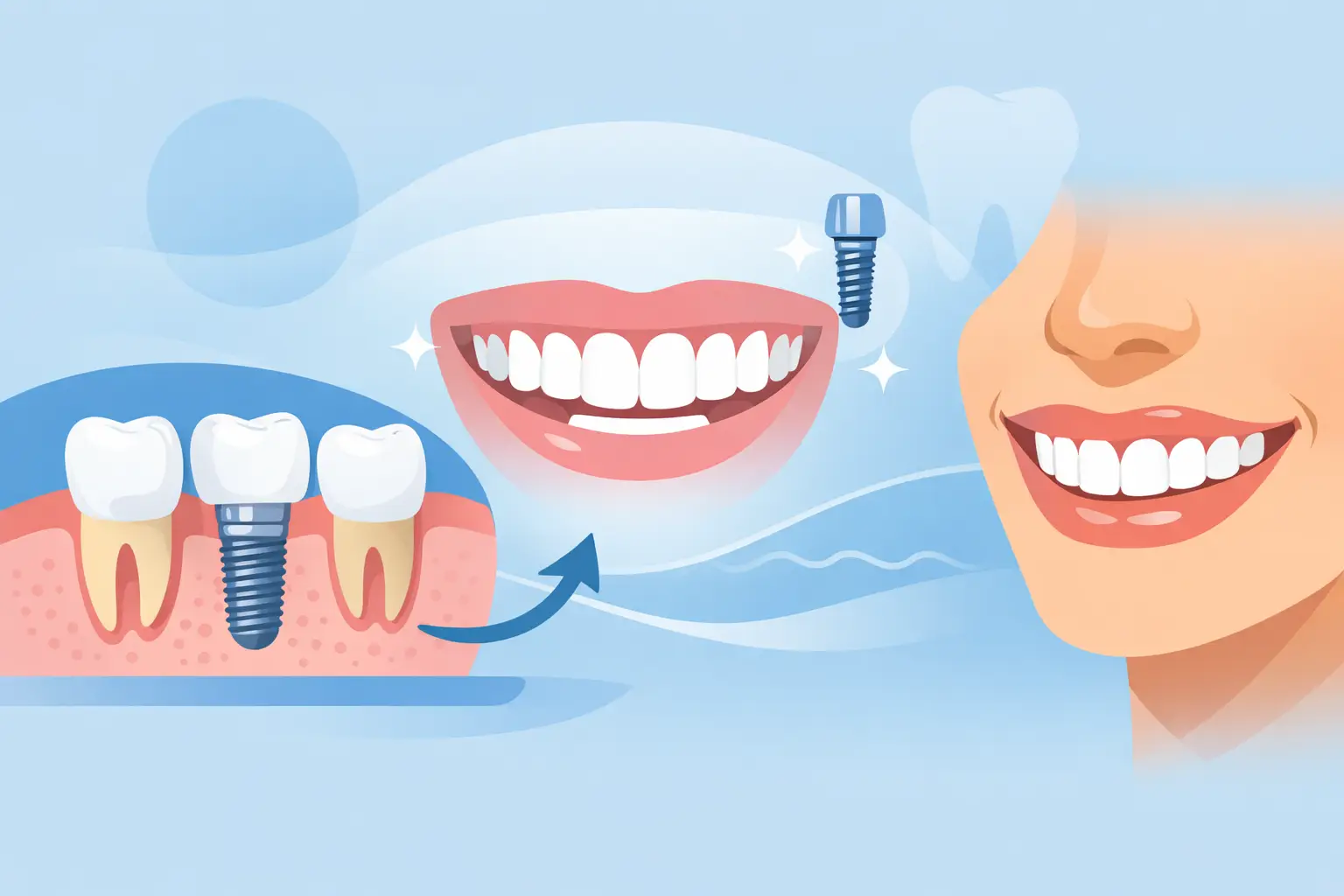
A missing tooth changes more than a photograph. It can make it harder to chew comfortably, affect speech, shift pressure onto neighboring teeth, and gradually change the way you feel about your smile. Dental implants offer a permanent, natural-looking way to replace missing teeth by restoring both the visible tooth and the foundation beneath it.
For patients considering treatment, the most valuable question is not simply, “Can I get an implant?” It is, “What will create the healthiest, most predictable result for my smile over the long term?” The answer depends on bone health, bite forces, gum condition, medical history, and the precision of the treatment plan.
What Are Dental Implants?
A dental implant is a small biocompatible post placed in the jawbone where a tooth root once was. After healing, the implant supports a custom restoration designed to look, feel, and function like a natural tooth. Because the implant is anchored in bone, it provides stability that a surface-level replacement cannot match.
The treatment is typically completed in stages. First, the implant is placed with careful attention to bone volume, gum contours, and the final position of the restoration. During the healing period, the bone integrates with the implant through a process called osseointegration. Once the foundation is stable, a custom crown or fixed full-arch restoration is attached.
This sequence matters. A beautiful result is not only about the final tooth you see. It begins with surgical planning that accounts for the health and structure underneath the gumline.
Why Implants Are Different From Replacing Only the Visible Tooth
When a tooth is lost, the jawbone in that area no longer receives the stimulation created by chewing. Over time, bone can diminish. This may affect facial support, gum contours, and the options available for future treatment.
Dental implants help transmit chewing forces into the jawbone, much like natural tooth roots. They also keep the replacement tooth independent of adjacent healthy teeth. For many patients, that combination of strength, bone support, and natural appearance makes implants a worthwhile long-term investment.
That does not mean every patient has the same path to treatment. Some people have enough healthy bone for direct implant placement. Others need bone grafting first to build a stable foundation. In the upper back jaw, a sinus graft may be recommended when the sinus space limits available bone height. These procedures are not setbacks. When properly indicated, they are part of creating a result built to last.
Single-Tooth, Multiple-Tooth, and Full-Mouth Solutions
Implant treatment can be tailored to the scale of tooth loss. A single implant can support one custom crown. Several missing teeth may be restored with strategically placed implants and a fixed bridge. Patients with widespread tooth loss or failing teeth may be candidates for a full-mouth restoration using All-on-4 or All-on-X treatment.
The right approach is based on the condition of your teeth, gums, bite, bone, and goals. A patient who wants to replace one tooth needs a different level of planning than someone rebuilding an entire smile. The common denominator is a stable foundation and a restoration designed for function as well as appearance.
The Dental Implant Process: Precision Before Placement
Successful implant care starts well before surgery. At Trinity Dental Arts, planning is centered on a detailed evaluation of your oral health, facial aesthetics, and long-term restorative needs. Dr. Xhoana Gjelaj brings extensive experience in advanced implant and cosmetic treatment, helping patients make decisions based on clear clinical information rather than pressure or guesswork.
Your evaluation may include digital imaging and three-dimensional scans to assess bone density, nerve locations, sinus anatomy, and the ideal implant position. This technology allows the treatment team to plan around the final restoration, not merely the empty space. In other words, the goal is not just to place an implant. It is to place it where it can support a comfortable, attractive, durable tooth.
If damaged or failing teeth need to be removed, implant placement may sometimes happen during the same appointment. In other cases, healing time is the better choice. Immediate placement can reduce the overall treatment timeline for qualified patients, but it is not automatically the best option. Active infection, insufficient bone, and certain bite conditions may call for a staged approach.
After placement, the implant needs time to integrate with the bone. Healing can take several months, depending on the treatment area and your individual biology. A temporary restoration may be used in many cases so that you can maintain appearance and function while your final restoration is being planned.
What Makes a Natural-Looking Result?
An implant crown should not look like a separate object in your smile. It should complement the shape, shade, translucency, and proportions of your natural teeth. It should also meet the gumline in a way that looks balanced and is easy to keep clean.
This is why implant dentistry requires both surgical and restorative expertise. The final result depends on the implant position, the quality of the bone and soft tissue, the design of the crown, and the way your bite comes together. A crown that is even slightly too high can place excess force on the implant and surrounding teeth. A poorly planned gum contour can compromise aesthetics, particularly in the front of the mouth.
For full-mouth cases, the process becomes even more comprehensive. The treatment team evaluates facial support, smile line, speech, chewing patterns, and the relationship between the upper and lower jaws. The best full-mouth results are carefully engineered, not rushed.
Are You a Candidate for Dental Implants?
Many adults are candidates for dental implants, including people who have lived with missing teeth for years. Good overall health, healthy gums, and adequate bone are helpful, but they are not the only factors. Bone grafting, periodontal treatment, and a personalized plan can make implant treatment possible for patients who initially assume they are not candidates.
Certain factors require special attention. Smoking can interfere with healing and increase complications. Uncontrolled diabetes, untreated gum disease, heavy teeth grinding, and some medications may affect the treatment plan or timeline. These concerns do not always rule out implants, but they must be addressed honestly before treatment begins.
If you grind or clench your teeth, a custom nightguard may be recommended after your restoration is complete. If gum disease is present, controlling it is essential because the gums and bone around implants need ongoing care. Implant treatment succeeds when surgery, restoration, and maintenance work together.
Recovery and Long-Term Care
Most patients experience some tenderness, swelling, or bruising after implant placement, usually managed with prescribed or over-the-counter medication as directed. Soft foods are commonly recommended at first, and careful oral hygiene supports proper healing. Sedation dentistry can also help patients who feel anxious about treatment or are undergoing more extensive procedures.
Once restored, implants should be cared for every day. Brush thoroughly, clean around the restoration as instructed, and keep regular professional hygiene visits. Implants cannot develop cavities, but the gum and bone around them can become inflamed if plaque is allowed to accumulate. Early maintenance protects the investment you have made in your health and confidence.
Dental implants are designed for long-term function, but no treatment should be viewed as maintenance-free. Your bite can change over time, and restorations may eventually need repair or replacement. Consistent care, professional monitoring, and a well-designed treatment plan give you the strongest opportunity for lasting success.
Choosing the Right Implant Provider
Implant dentistry is a blend of surgical judgment, restorative design, technology, and communication. Look for a provider who explains the condition of your bone and gums, discusses alternatives clearly, and shows how the final result will be planned. You should understand what is included in treatment, how long the process may take, and what follow-up care will be needed.
For patients in Trinity and the greater Tampa Bay area, choosing a practice that can coordinate advanced surgery, implant restoration, cosmetic planning, and sedation care in one location can make a complex process more manageable. The most reassuring treatment plan is one that is personal, precise, and built around your real needs.
A consultation is the right place to ask direct questions about your options, timeline, comfort, financing, and expected outcome. The goal is not simply to replace a missing tooth. It is to create a smile that lets you eat, speak, and live with greater confidence for years to come.