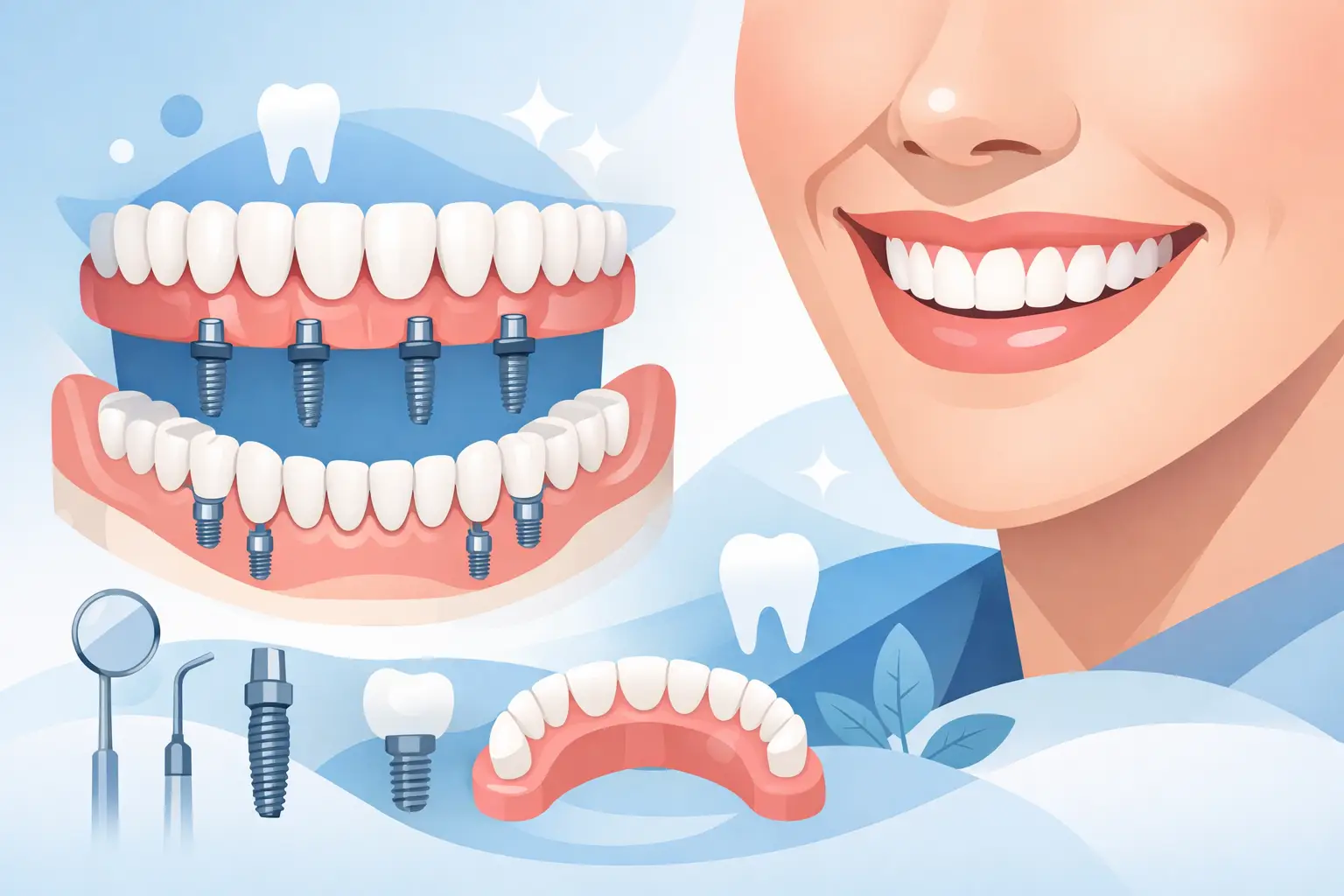
When multiple teeth are missing, damaged, or no longer predictable, the decision is about much more than filling spaces in a smile. It is about eating comfortably, speaking without self-consciousness, protecting oral health, and feeling like yourself again. This full arch implant guide explains how fixed full-arch treatment works, what the process involves, and how to make an informed decision about a significant investment in your health.
What Full-Arch Implant Treatment Replaces
A full-arch implant restoration replaces all teeth in the upper jaw, lower jaw, or both with a custom fixed bridge supported by dental implants. The implants are small biocompatible posts placed in the jawbone. After healing and integration with the bone, they provide a stable foundation for a full set of new teeth.
This treatment is often discussed under names such as All-on-4 or All-on-X. The appropriate approach depends on the quality and quantity of available bone, bite forces, anatomy, esthetic goals, and overall health. Four implants may be appropriate for some patients, while others benefit from additional implant support. The number alone does not determine the quality of the outcome. Precise planning, implant placement, restorative design, and long-term maintenance all matter.
Unlike a removable tooth replacement, a fixed implant bridge remains secured in place by implants. It is designed to look natural, support clearer speech, and allow patients to enjoy a broad range of foods with greater confidence. It also helps provide the facial support that can be affected when teeth and bone have been lost over time.
Who May Be a Candidate?
Many adults with widespread tooth loss, advanced periodontal disease, failing crowns and bridges, or severely worn and broken teeth may be candidates for full-arch implants. Candidacy is not determined by age alone. A healthy 70-year-old with a complex dental history may be an excellent candidate, while a younger patient may need health or periodontal issues addressed before surgery.
A thorough evaluation should include a clinical examination, digital imaging, review of medical history, and a conversation about your priorities. At Trinity Dental Arts, Dr. Xhoana Gjelaj uses implant-focused planning to evaluate the entire foundation of the smile, not just the visible teeth. That means assessing the gums, bone levels, bite, jaw relationships, and facial esthetics before recommending treatment.
Bone Health and Medical Considerations
Bone loss is common after teeth have been missing or infected for years, but it does not automatically rule out implant treatment. In some cases, angled implant placement or a carefully designed All-on-X approach can make effective use of available bone. In other cases, bone grafting or sinus grafting may be recommended to create a stronger foundation.
Certain health conditions and medications require additional planning. Uncontrolled diabetes, active gum infection, smoking or vaping, and medications that affect bone metabolism can influence healing. The goal is not to exclude patients unnecessarily. It is to identify risks early and create a treatment plan that supports a predictable result.
Full Arch Implant Guide: The Treatment Process
Full-arch care is highly personalized, but most cases follow a clear sequence. The process begins with diagnosis and digital treatment planning. Three-dimensional imaging allows the doctor to evaluate bone, locate important anatomical structures, and plan implant positions with precision. Records of your bite, smile line, and facial proportions help shape the new teeth before treatment begins.
If remaining teeth must be removed, this is coordinated with implant placement whenever clinically appropriate. Many patients receive a fixed provisional bridge on the same day as surgery. This immediate set of teeth is not simply cosmetic. It protects the surgical area, helps maintain appearance and function during healing, and allows the care team to evaluate speech, bite, and esthetics before the final bridge is created.
Healing Is an Active Part of Treatment
Dental implants need time to integrate with the jawbone. During this healing period, patients follow a specific diet and care routine to avoid placing excessive pressure on the implants. Even when new teeth are placed immediately, the underlying implants are still healing.
Early recovery commonly includes swelling, tenderness, and temporary dietary restrictions. Sedation dentistry may be an option for patients with dental anxiety or those completing more extensive treatment. Your instructions will be tailored to your health needs and procedure, but careful home care and follow-up visits are essential.
After healing, the final fixed bridge is designed. This stage is where precision becomes especially visible. The final restoration is refined for tooth shape, shade, lip support, speech, bite balance, and comfort. A well-designed bridge should complement the face rather than look artificial or overly uniform.
Why Planning Matters More Than a One-Size-Fits-All Offer
Full-arch treatment is sometimes marketed as a fast solution with a fixed number of implants and a fixed price. While efficiency can be valuable, treatment should never be reduced to a promotional formula. Every mouth has different bone conditions, bite forces, esthetic demands, and healing considerations.
For example, a patient who clenches or grinds may need a different restorative material or protective plan than someone with a lighter bite. A patient with significant bone loss may require grafting, a modified implant design, or a staged approach. Someone replacing teeth in the upper arch may need different planning than someone restoring the lower arch because the anatomy and esthetic demands are different.
The best treatment plan balances immediate goals with long-term stability. It should explain what is included, what may be needed before or during treatment, and how the final bridge will be maintained over time.
Understanding the Investment
The cost of full-arch implant treatment varies because the treatment itself varies. The total investment may include diagnostic imaging, extractions, bone or sinus grafting when needed, implants, sedation, surgical care, a provisional bridge, the final bridge, and follow-up visits. Material selection and the complexity of the case also affect cost.
A clear consultation should distinguish between the temporary restoration and the final restoration. Patients should also ask what happens if additional grafting, treatment for infection, or other procedures become necessary. Financing options can help make comprehensive care more manageable, but the most useful conversation is one that focuses on clinical value and long-term predictability, not a headline price alone.
Caring for Fixed New Teeth
Implant-supported teeth are not susceptible to cavities, but the gums and bone around implants still require consistent care. Daily hygiene is essential. Depending on the design of the bridge, this may include brushing, using specialized floss or threaders beneath the bridge, and a water flosser. Professional maintenance visits allow the team to monitor tissue health, bite changes, implant stability, and the condition of the restoration.
Patients who grind their teeth may also need a protective nightguard. Avoiding tobacco, maintaining regular preventive care, and reporting any looseness, discomfort, or changes in bite promptly can help protect the investment. Implant restorations are built for long-term use, but they are not maintenance-free.
Questions Worth Asking at Your Consultation
A full-arch consultation should leave you with more than a treatment quote. You should understand why a particular number and position of implants are being recommended, whether grafting is needed, what type of provisional teeth you will receive, and when the final bridge will be placed. Ask how your bite and smile will be designed, what material is planned for the final restoration, and what ongoing care is expected.
It is also reasonable to ask who will coordinate both the surgical and restorative phases. Full-arch treatment succeeds when those phases work together. Surgical precision matters, but so do esthetics, speech, comfort, and the way the new teeth function every day.
The right full-arch plan should make you feel informed rather than pressured. A detailed evaluation gives you the clarity to move forward when the time is right, with a treatment designed around your health, comfort, and the smile you want to carry into the years ahead.