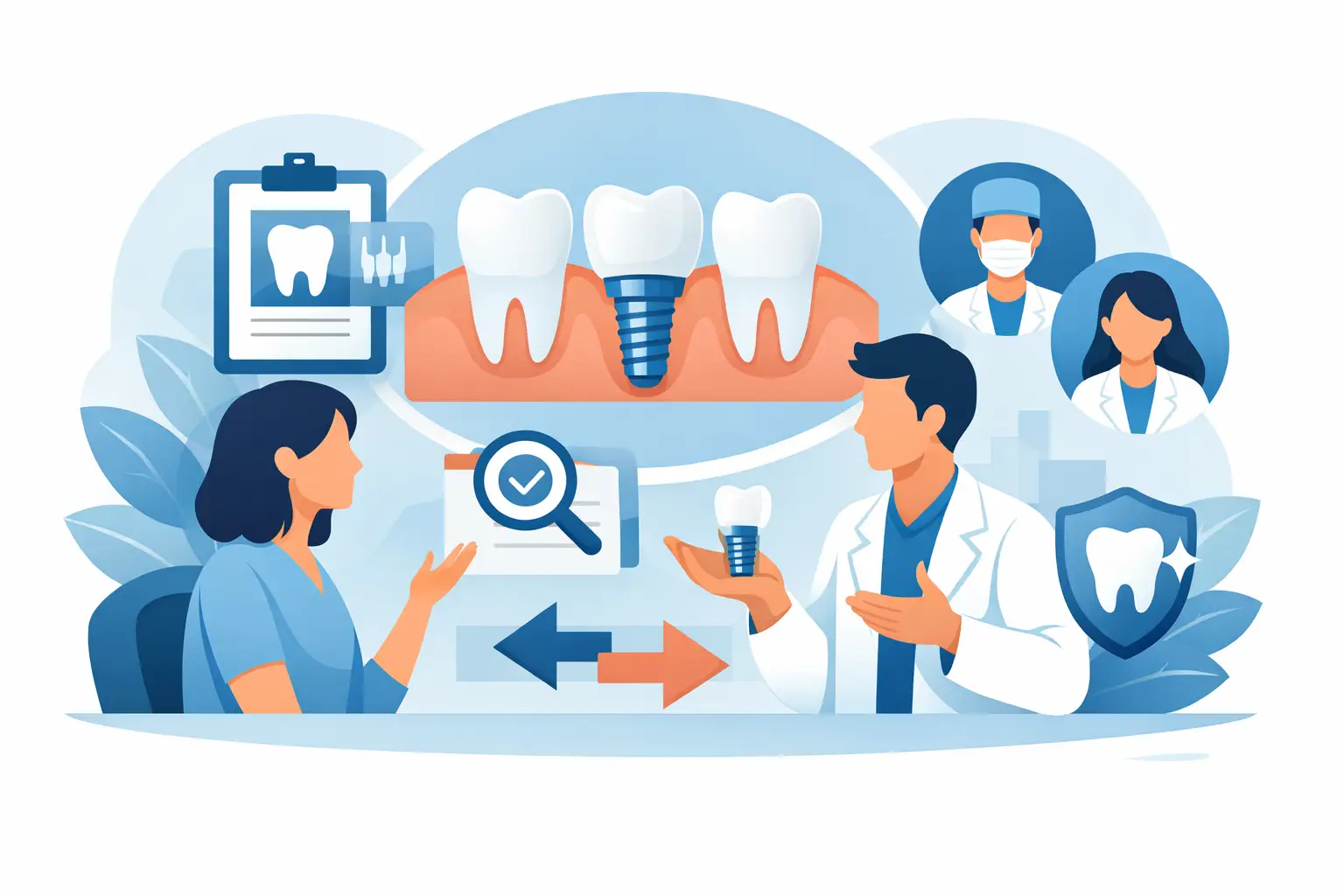
A dental implant is meant to last for years, often decades. That is why choosing the right implant dentist is not a small decision. You are not simply replacing a tooth. You are selecting the doctor who will plan the surgery, evaluate bone support, manage esthetics, and make sure your bite functions properly long after treatment is complete.
For many patients, the biggest concern is not whether implants work. It is whether they are choosing the right provider. That concern is valid. Implant dentistry blends surgery, restorative planning, imaging, gum health, and cosmetic detail. When even one part is overlooked, the final result can look unnatural, feel uncomfortable, or fail earlier than expected.
What an implant dentist actually does
An implant dentist evaluates far more than the space where a tooth is missing. Bone volume, gum condition, bite forces, neighboring teeth, sinus position, facial symmetry, and medical history all affect whether an implant will be successful. In more advanced cases, treatment may also involve bone grafting, sinus grafting, extraction planning, temporary teeth, or full-arch replacement.
That is why implant treatment should never be approached as a one-size-fits-all service. A single missing tooth has different demands than multiple missing teeth or a full-mouth restoration. The right provider understands how to build a plan around function, health, and appearance at the same time.
What to look for in an implant dentist
Experience matters, but experience alone is not enough. You want a doctor with advanced training in implant planning and placement, a clear diagnostic process, and the ability to manage both routine and complex cases. If a practice regularly handles full-mouth restoration, failing dental work, and bone loss, that usually signals a higher level of clinical depth than a practice that offers implants only occasionally.
Technology also plays a major role. Three-dimensional imaging allows the dentist to assess bone, nerves, sinus anatomy, and implant positioning with much greater precision than traditional two-dimensional films. Digital planning improves safety and helps create restorations that fit comfortably and look natural.
Just as important is the ability to explain treatment clearly. A good implant dentist should walk you through what is happening, why it matters, what alternatives exist, and what timeline to expect. Patients should never feel rushed into a major decision without understanding the process.
Why comprehensive care makes a difference
Implants are often marketed as a simple tooth replacement option, but many patients need more than implant placement alone. Some have gum disease. Others have broken teeth, bite collapse, bone loss, or older crowns and bridges that are no longer stable. In these situations, isolated treatment can create fragmented results.
A comprehensive practice can coordinate surgical and restorative care under one roof. That means diagnosis, imaging, implant placement, healing, temporary restorations, and final teeth are all planned together. It often leads to better communication, greater efficiency, and fewer surprises during treatment.
This is especially important for patients considering All-on-4, All-on-X, or fixed full-arch teeth. These treatments require detailed planning because the implants, prosthetic design, bite relationship, and esthetics all depend on each other. When the doctor sees the entire case, the outcome is typically more predictable.
Questions to ask before starting treatment
If you are comparing providers, ask how often they place and restore implants, whether they use 3D imaging, and who will handle each phase of care. It is also reasonable to ask whether they offer bone grafting, sedation options, and full-mouth solutions if your case turns out to be more involved than expected.
You should also ask about the final restoration. Implant surgery is only one part of success. The crown, bridge, or fixed arch must be designed for long-term comfort, appearance, and function. A beautiful result is not just about replacing teeth. It is about restoring confidence in the way you speak, eat, and smile.
Implant dentist care should be personalized
Not every patient is an immediate implant candidate. Smoking, uncontrolled periodontal disease, certain medical conditions, and significant bone loss may require additional steps first. That does not always rule out treatment, but it does mean planning needs to be honest and individualized.
The best implant dentist will tell you when a case is straightforward and when it is not. That level of transparency matters. It helps patients make informed decisions, understand costs and timelines, and avoid unrealistic expectations.
For adults in Trinity and the greater Tampa Bay area who want advanced implant care, personalized planning is often the difference between simply filling a gap and truly rebuilding a healthy, stable smile. At Trinity Dental Arts, that means looking at the full picture, not just the missing tooth.
When you meet with an implant provider, pay attention to more than the sales pitch. Look for clinical depth, thoughtful planning, and a treatment approach built around long-term results. The right choice should leave you feeling informed, confident, and certain that your care is being handled with precision.