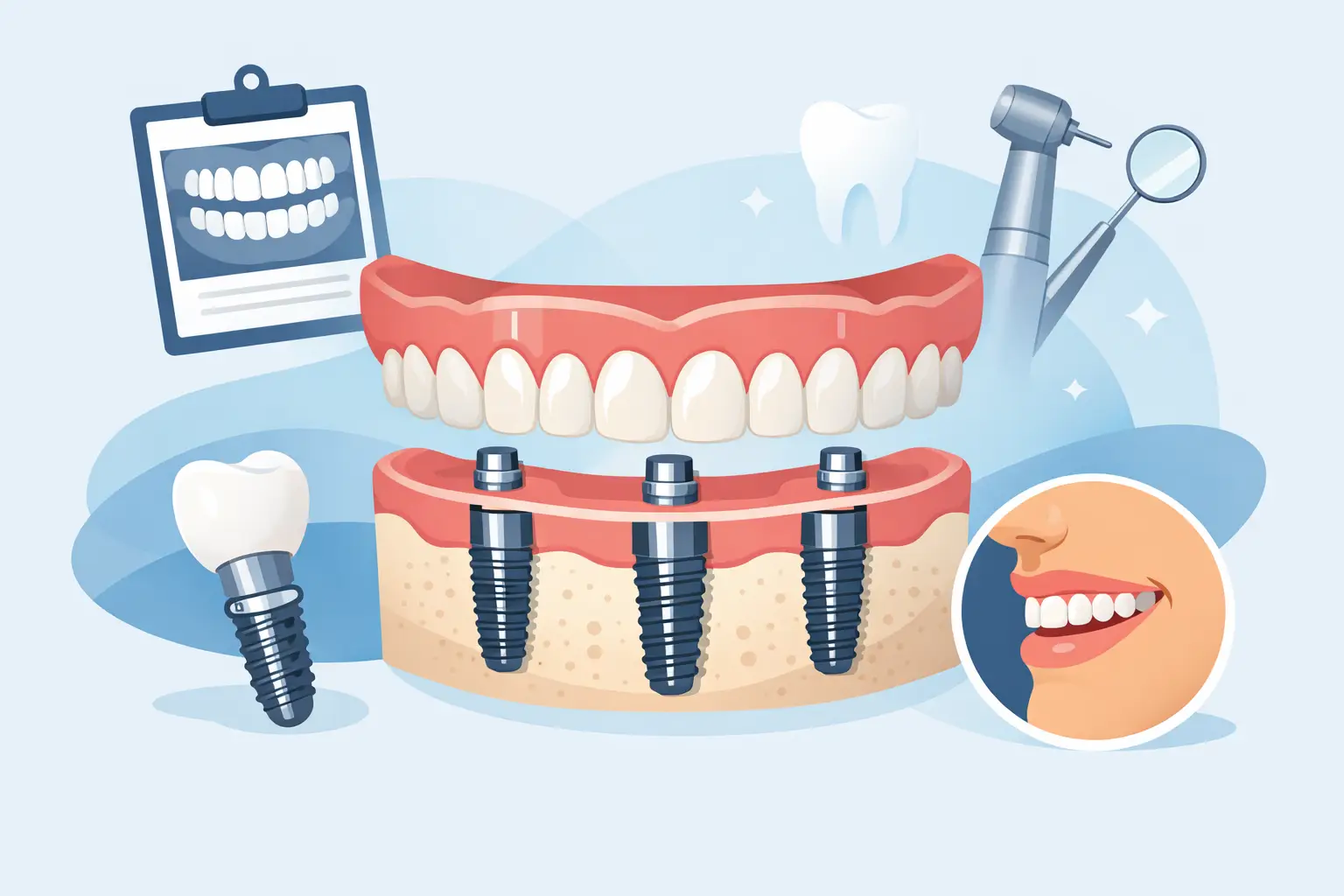
When people search for implant supported dentures Odessa, they are usually looking for something more meaningful than a replacement for missing teeth. They want to eat comfortably in public, speak without hesitation, smile in photos again, and stop planning their day around teeth that feel unreliable. For many patients, a fixed full-arch implant solution can provide that level of security.
The terminology can be confusing. Implant-supported dentures may describe several approaches, including removable options. At Trinity Dental Arts, the conversation often centers on fixed full-arch teeth supported by strategically placed dental implants. This approach is designed to replace an entire upper or lower arch with teeth that remain securely in place and are cared for much like natural teeth.
What Implant-Supported Teeth Can Change
Traditional removable appliances rest on the gums, which means they can move under chewing pressure and may require adhesives or frequent adjustments. A fixed implant-supported restoration is different. Dental implants are placed in the jawbone and serve as stable anchors for a custom full-arch bridge.
That stability can improve more than appearance. It may help patients bite and chew with greater confidence, speak more naturally, and avoid the daily inconvenience of removing teeth for cleaning. Because implants transmit chewing forces to the jawbone, they can also help preserve bone in areas where teeth have been missing. The result is intended to feel more secure, more functional, and more consistent with an active lifestyle.
Not every patient needs the same number of implants or the same type of restoration. An All-on-4 or All-on-X approach may be appropriate when replacing a complete arch, while other cases call for a different number or position of implants based on bone quality, anatomy, bite forces, and long-term goals.
Implant Supported Dentures in Odessa: Start With Diagnosis
A successful result does not begin with choosing a procedure name. It begins with understanding why the teeth were lost or are failing and whether the foundation can support fixed replacement teeth for years to come.
Dr. Xhoana Gjelaj evaluates the entire picture, not simply the visible teeth. That assessment may include digital imaging, an examination of gum health, bite analysis, jawbone volume, medical history, and a discussion of the patient's goals. Some patients arrive with loose or severely worn teeth, repeated crown failures, advanced decay, or discomfort from long-standing tooth loss. Each situation requires a tailored treatment plan.
Bone loss is a common concern, particularly when teeth have been missing for a long time. It does not automatically rule out implants. In some cases, implant placement can be planned around the available bone. In others, bone grafting or a sinus graft may create a stronger foundation. The right answer depends on the individual anatomy, not a one-size-fits-all promise.
This planning stage is also where patients should be candid about concerns such as dental anxiety, time away from work, health conditions, and budget. Sedation options can make surgical care more manageable for appropriate candidates, while phased planning or financing can help patients make a decision without sacrificing clinical priorities.
The Fixed Full-Arch Treatment Process
Treatment is carefully sequenced to protect both comfort and predictability. If unhealthy teeth must be removed, that step is planned alongside implant placement whenever clinically appropriate. Many full-arch cases allow patients to leave with a temporary fixed set of teeth on the same day as surgery, rather than facing a long period without teeth.
The temporary restoration has an important job. It supports appearance and function while the implants integrate with the bone during healing. It also gives the dental team valuable information about the patient's bite, speech, facial support, and desired tooth shape before the final bridge is created.
After healing, the final restoration is designed for strength, fit, and natural-looking esthetics. Details such as tooth proportion, color, gum display, lip support, and bite are considered carefully. A full-mouth restoration should not look like a generic set of teeth. It should complement the patient’s features and allow comfortable everyday function.
The timeline varies. Some patients are candidates for immediate placement and a temporary fixed bridge, while others benefit from preparatory treatment before implants are placed. Healing time can also differ based on bone health, surgical complexity, and whether grafting is needed. A consultation is the only responsible way to establish a realistic timeline.
Who May Be a Candidate?
Many adults with extensive tooth loss, failing teeth, or full-mouth dental problems may be candidates for fixed implant-supported teeth. Age alone is rarely the deciding factor. Overall health, healing ability, gum condition, available bone, smoking habits, and oral hygiene commitment matter more.
Patients with diabetes, osteoporosis, a history of periodontal disease, or certain medications may still qualify, but these factors must be reviewed carefully. Smoking can increase the risk of healing complications and implant failure, so reducing or stopping tobacco use is strongly recommended. Implant treatment is an investment in long-term health, and the best outcomes require an equally long-term commitment from the patient.
A fixed solution is not automatically the right fit for everyone. Surgery, healing, and regular professional maintenance are part of the process. Patients who want the shortest possible treatment without regard for diagnosis or follow-up may not be prepared for the responsibility that comes with advanced implant care.
The Daily Care That Protects Your Investment
Fixed full-arch teeth are secure, but they are not maintenance-free. Food debris and bacteria can collect beneath the bridge and around the implants if cleaning is neglected. Daily brushing, specialized flossing or water irrigation as recommended, and routine professional visits are essential.
Regular maintenance allows the dentist to monitor the implants, bite, bridge materials, and surrounding tissues. This is particularly important for patients who clench or grind their teeth, since excessive force can damage a restoration over time. A custom nightguard may be recommended to protect the final bridge.
Patients should also expect that restorative materials can need maintenance in the future. Just as natural teeth and crowns experience wear, a full-arch bridge may require adjustments, polishing, repair, or replacement of certain components over the years. Planning for that reality is part of making an informed choice.
Questions Patients Often Ask
Will fixed implant-supported teeth feel natural?
They are designed to feel stable and comfortable, but they do not feel identical to natural teeth. The goal is a secure bite, clear speech, attractive appearance, and dependable function. Most patients adapt well as they become accustomed to the new bite and contours.
Is the procedure painful?
Comfort is managed with local anesthesia and, for eligible patients, sedation options. Some soreness and swelling are expected after surgery, but the care team provides detailed instructions to support a smooth recovery. Many patients find that the relief of removing painful or failing teeth outweighs the temporary recovery period.
How long do implant-supported full arches last?
Dental implants can last many years with appropriate care, although no treatment can be guaranteed for life. The final bridge has its own maintenance needs and may require repair or replacement over time. Consistent home care, professional monitoring, and protection from grinding all influence longevity.
What does treatment cost?
Cost depends on the number of implants, whether extractions or grafting are needed, the type of temporary and final restoration, sedation, and the complexity of the case. A detailed consultation provides a personalized treatment plan and clear financial information. Choosing care based solely on the lowest quoted price can create expensive problems when diagnostics, materials, surgical expertise, or follow-up are limited.
For Odessa-area patients, the most valuable next step is not guessing which treatment package fits. It is receiving a comprehensive implant evaluation that identifies what your smile needs now and what will protect it in the years ahead. A carefully planned fixed restoration can turn ongoing dental uncertainty into a smile built for everyday life.