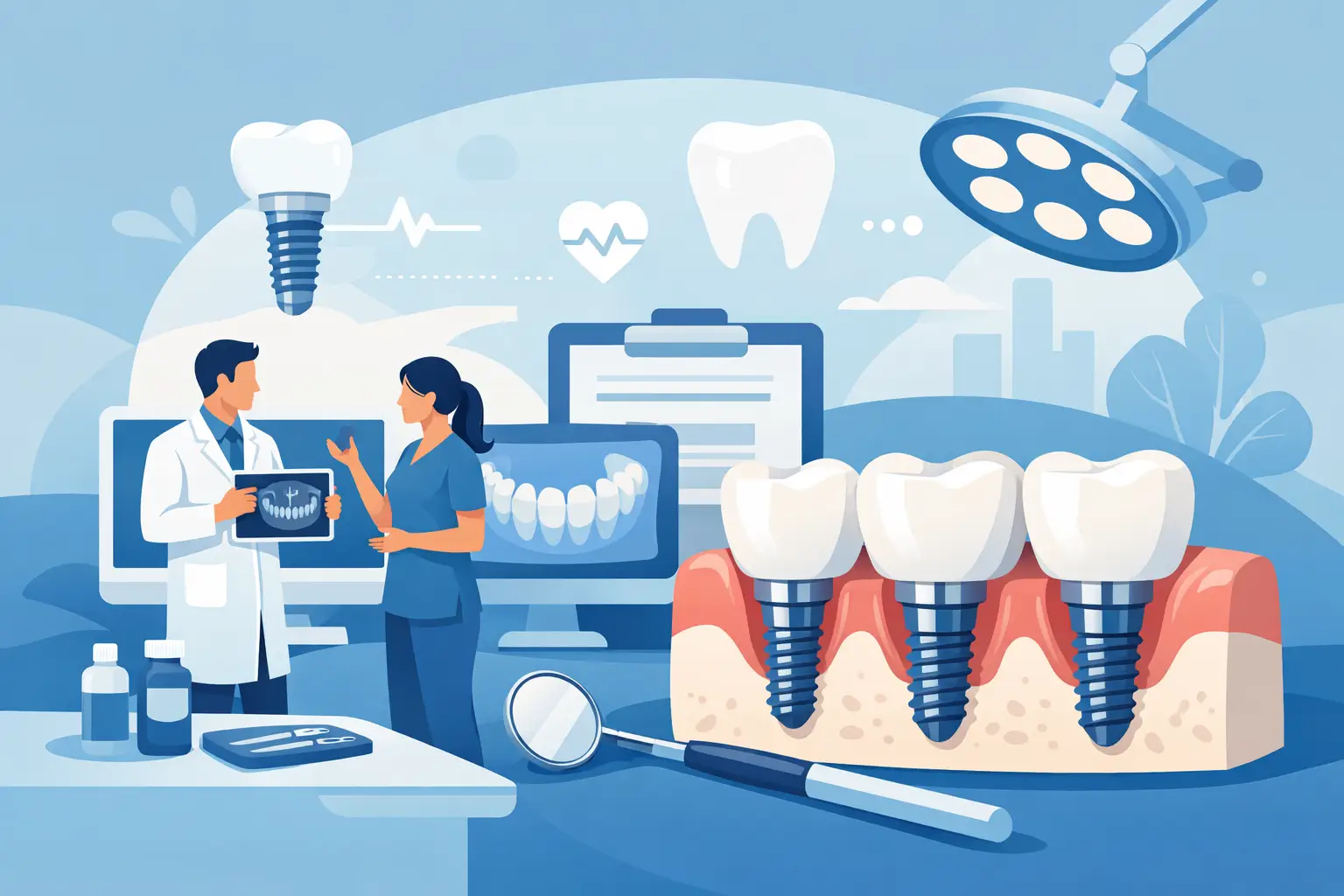
A multiple implant restoration case is not simply a matter of placing several implants and adding new teeth. It is a carefully coordinated treatment process that must account for bone quality, gum health, bite forces, facial esthetics, and the way each restoration works with the rest of the smile. When several teeth are missing or failing, every decision affects the long-term result.
For patients considering advanced tooth replacement, the goal is clear: teeth that feel secure, look natural, and support comfortable everyday function. Reaching that goal requires detailed diagnostics, surgical precision, and a restoration designed around the individual patient rather than a one-size-fits-all plan.
Why Multiple Implant Cases Need Detailed Planning
Replacing one tooth with one implant is often straightforward when the surrounding bone and gums are healthy. Replacing multiple teeth introduces more variables. The spacing between implants, position of the sinuses or nerves, condition of adjacent teeth, and direction of bite pressure all become more significant.
A well-planned treatment begins with a comprehensive examination and advanced 3D imaging. This allows the dentist to evaluate available bone, identify anatomic structures, and determine the ideal implant positions before surgery. Digital planning also helps guide the restorative phase, so the final teeth are not an afterthought. They are part of the plan from the beginning.
This approach matters because implants need more than adequate bone to succeed. They must be placed in positions that can properly support the planned crowns or bridge. An implant that integrates successfully but is poorly positioned can make hygiene, appearance, or bite function more difficult over time.
At Trinity Dental Arts, Dr. Xhoana Gjelaj approaches complex implant treatment with a focus on the surgical and restorative details that determine how a result performs years after placement, not just on the day new teeth are delivered.
What Determines the Right Multiple Implant Restoration Case Plan
No two cases are identical. Some patients have lost several neighboring teeth after decay, trauma, or periodontal disease. Others have older crowns or bridges that are failing and need a more stable long-term solution. Some need treatment in one area of the mouth, while others require a full-arch fixed restoration.
The right plan depends on several clinical factors.
Bone Volume and Foundation Health
Dental implants rely on the jawbone for stability. When teeth have been missing for a long time, bone may shrink in height or width. Gum inflammation or previous infection may also affect the site. In these situations, bone grafting may be recommended before or at the time of implant placement to establish a stronger foundation.
For upper back teeth, the maxillary sinus can limit the amount of available bone. A sinus graft may create the support needed for properly positioned implants. These additional procedures can lengthen treatment, but they may also make a more durable and predictable restoration possible.
Not every patient needs grafting. The decision depends on the 3D scan, the quality and quantity of bone, and the type of restoration being planned.
The Number and Position of Implants
More missing teeth do not automatically mean one implant is needed for every tooth. In many situations, a strategically placed number of implants can support a fixed bridge that replaces several teeth. This may reduce the number of surgical sites while still providing excellent stability.
The trade-off is that implant placement and bridge design must be especially precise. Implants cannot move like natural teeth, and excessive forces on a poorly designed bridge can create mechanical complications. The treatment team must consider how the patient chews, whether they grind their teeth, and how forces will be distributed across the restoration.
For patients missing all teeth in an arch, an All-on-4 or All-on-X approach may provide fixed new teeth supported by a planned number of implants. Whether that is appropriate depends on bone anatomy, bite, esthetic goals, and overall oral health. A complete evaluation is the only reliable way to determine the right option.
Bite, Jaw Function, and Existing Teeth
A beautiful restoration must also function correctly. If the bite is uneven, implants and natural teeth can receive damaging pressure. Patients who clench or grind may need a protective nightguard after treatment to help preserve both the restorations and implants.
The condition of remaining teeth also influences the plan. Sometimes a patient benefits from restoring one section of the mouth while preserving healthy natural teeth elsewhere. In other cases, extensive decay, infection, or structural damage may require a broader full-mouth strategy. The appropriate scope of care should be based on what is healthiest and most predictable, not on a predetermined package.
The Stages of Treatment
A multiple implant restoration case is typically completed in phases. The exact timeline varies, especially if grafting, extraction, healing, or treatment for gum disease is needed first.
The first phase is diagnosis and treatment planning. This includes reviewing health history, taking digital scans and X-rays, evaluating the bite, and discussing the patient’s goals. A patient who wants to improve chewing efficiency may need a different design than someone whose primary concern is the visible smile zone, although both function and appearance remain essential.
The surgical phase involves placing the implants in their planned positions. Sedation dentistry may be available for patients who feel anxious or who are completing more extensive treatment. After placement, the implants need time to integrate with the jawbone. Healing time differs from person to person and is influenced by bone quality, medical history, and whether grafting was performed.
In selected cases, a temporary fixed restoration can be placed during the healing period. This is not appropriate in every situation. Immediate teeth can be an excellent option when implant stability and bite conditions support it, but protecting the healing implants remains the priority.
Once integration is confirmed, the final restorative phase begins. Digital impressions, shade selection, bite records, and trial designs help ensure that the final crowns or bridge fit accurately. High-quality final restorations are designed to balance strength, natural appearance, speech, comfort, and cleanability.
Why the Final Restoration Design Matters
The visible teeth are what patients notice first, but the design underneath determines how easy the restoration is to live with. A fixed implant bridge should have contours that support natural-looking gums while allowing access for daily home care. It must also be shaped to support clear speech and avoid trapping food.
Material selection is another important decision. Different ceramics and high-strength restorative materials offer different advantages in appearance, durability, and resistance to fracture. The best choice depends on where the teeth are located, how much force the patient generates, the amount of available restorative space, and the patient’s cosmetic expectations.
There is no single material that is best for everyone. A highly esthetic front-tooth restoration may call for a different approach than a full-arch restoration designed for a patient with a strong bite. The right recommendation balances beauty with the practical demands of daily use.
Long-Term Care Protects the Investment
Implants cannot develop cavities, but the gums and bone around them still require consistent care. Plaque accumulation can lead to inflammation around implants, which may threaten their long-term stability if it is not addressed early.
Patients should brush carefully around the restoration, use the cleaning aids recommended for their specific design, and maintain regular professional hygiene visits. These appointments allow the dental team to monitor gum health, bite stability, and the condition of the restoration. Small adjustments or early intervention can prevent larger problems later.
Tobacco use, uncontrolled diabetes, untreated grinding, and inconsistent maintenance can all affect outcomes. These factors do not always prevent implant treatment, but they must be discussed honestly during planning so risks can be managed appropriately.
Choosing Care for Complex Implant Treatment
When multiple teeth need replacement, convenience should not come at the expense of planning. Patients benefit from working with a dentist who can evaluate the full picture, coordinate surgical and restorative decisions, and explain why a particular treatment path is being recommended.
The best result is not defined only by the number of implants placed. It is defined by a stable foundation, a balanced bite, healthy surrounding tissue, and restorations that let a patient speak, eat, and smile with confidence. A personalized consultation is where that result begins.