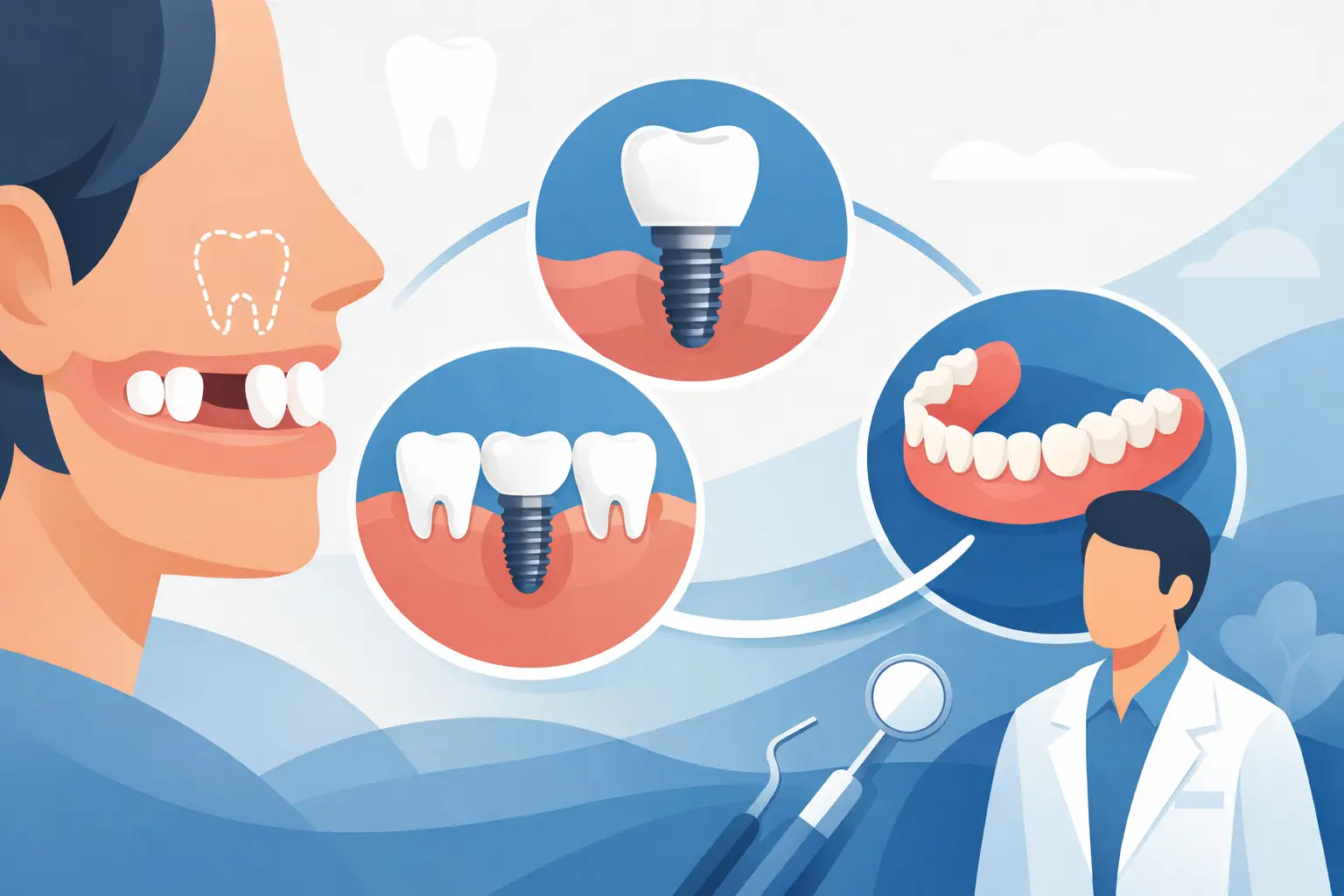
A missing tooth changes more than a photograph. It can make chewing less comfortable, alter how you speak, and place extra strain on the teeth that remain. The right replace missing teeth options should restore dependable function while protecting your bone structure, bite, and confidence for years ahead.
For many adults, the decision comes down to one question: What will give me the most stable, natural-looking result for my specific situation? The answer depends on how many teeth are missing, the health of your gums and jawbone, the condition of nearby teeth, your bite, and your long-term goals. A thorough implant and restorative evaluation is the best place to start.
Why replacing a missing tooth matters
When a tooth is lost, the jawbone in that area no longer receives the stimulation created by tooth roots during chewing. Over time, that bone can begin to shrink. Nearby teeth may gradually shift toward the open space, which can change your bite and make future restoration more complex.
A gap near the back of the mouth can also cause the remaining teeth to work harder. A missing front tooth can affect speech, smile appearance, and the way you feel in professional or social settings. Replacing a tooth promptly is not simply a cosmetic decision. It is often an investment in preserving the health and alignment of your entire smile.
Replace missing teeth options: what fits your needs?
Modern dentistry offers several fixed solutions. Each has a role, and the strongest choice is not always the same for every patient.
A single dental implant for one missing tooth
A single dental implant is often considered the closest replacement for a natural tooth. The implant is a small biocompatible post placed in the jawbone to act as an artificial root. Once it integrates with the bone, a custom crown is secured to the implant.
Because the implant stands independently, it does not require reshaping the neighboring teeth. It also delivers the jaw stimulation that helps preserve bone in the missing-tooth area. For a patient with healthy gums, sufficient bone, and a single missing tooth, this can be an excellent long-term solution.
Treatment is carefully planned with advanced imaging and digital diagnostics. The timing varies. Some patients may be candidates for implant placement soon after an extraction, while others need healing time or bone development first. The final crown is designed to match the color, shape, and bite of surrounding teeth.
An implant-supported bridge for several missing teeth
When several teeth in a row are missing, placing an implant for every tooth is not always necessary. An implant-supported bridge uses strategically placed implants to support a series of connected replacement teeth.
This approach avoids relying on natural teeth for support and helps maintain bone where implants are placed. It can be a highly stable option for patients who want fixed teeth and are missing multiple adjacent teeth. The number and position of implants depend on the length of the gap, bone quality, bite forces, and the location in the mouth.
In some cases, a conventional fixed bridge may also be considered. It is supported by teeth on either side of the space, which means those teeth must be prepared for crowns. This may make sense when neighboring teeth already need crowns or when implant placement is not clinically appropriate. However, it does not replace the missing root or provide the same bone-preserving benefit as an implant-based solution.
Full-arch dental implants for extensive tooth loss
When most or all teeth in an upper or lower arch are missing, severely damaged, or failing, a full-arch implant solution can provide a life-changing fixed replacement. All-on-4 and All-on-X treatment use a carefully planned number of implants to support a complete arch of new teeth.
The goal is to create a strong, natural-looking smile that remains secured in place. Patients can speak, eat, and smile with greater confidence than they may have experienced with unstable or compromised teeth. The process is designed around facial balance, bite function, gum appearance, and the overall look of the smile, not just filling spaces.
Full-mouth restoration is especially valuable when tooth loss is combined with worn teeth, old failing restorations, bite collapse, or advanced damage throughout the mouth. It requires detailed treatment planning and coordination between surgical and restorative phases. That level of planning is what helps produce results that feel comfortable, look refined, and function predictably.
Is there enough bone for dental implants?
Not everyone begins with the same foundation, but reduced bone volume does not automatically rule out implants. Bone grafting can rebuild or strengthen areas where bone has been lost. In the upper back jaw, a sinus graft may create the support needed for implant placement when the sinus area limits available bone height.
These procedures add time to some treatment plans, yet they can make a more stable and durable outcome possible. In other situations, the angle and position of implants may be planned to make efficient use of available bone. Advanced 3D imaging allows the dentist to assess anatomy precisely before recommending a path forward.
The best plan balances speed with stability. Immediate treatment can be appropriate for certain patients, but only when the bone, gums, bite, and overall conditions support a predictable result. Rushing an implant decision without understanding those factors can compromise the outcome.
How to compare tooth replacement choices
Cost understandably matters, but it should be considered alongside longevity, maintenance, appearance, and the health of your remaining teeth. A lower upfront price is not always the lower long-term cost if the solution requires frequent replacement, affects healthy teeth, or fails to address ongoing bone loss.
Ask how the proposed treatment will affect your bite and facial support, whether it is fixed in place, what maintenance it requires, and what happens if your needs change later. You should also understand the expected treatment timeline, including whether grafting, healing, or temporary teeth are part of the process.
For implant care, daily brushing, cleaning around the restoration, regular professional visits, and management of gum health are essential. Implants do not decay like natural teeth, but the gum tissue and bone around them must remain healthy. Patients who clench or grind may also benefit from a protective nightguard to reduce excessive force on their restoration.
The value of comprehensive implant planning
Successful tooth replacement is not just about placing an implant or making a crown. It is about diagnosing why the tooth was lost, evaluating the gum and bone foundation, designing a balanced bite, and planning a result that complements the rest of the smile.
Dr. Xhoana Gjelaj and the Trinity Dental Arts team approach complex implant care with that full-picture perspective. Advanced surgical and restorative planning in one practice can reduce fragmentation between offices and help ensure that the final teeth are designed around comfort, strength, and aesthetics from the beginning.
For patients with dental anxiety or extensive treatment needs, sedation options may also make care more manageable. A consultation is an opportunity to discuss concerns openly, review imaging, and receive a plan tailored to your health, goals, and schedule. Financing discussions can help make a high-quality treatment plan more accessible without pressuring you into a one-size-fits-all choice.
A missing tooth does not have to dictate how you eat, speak, or feel about your smile. The most helpful next step is a focused evaluation that shows you what is possible and gives you the confidence to choose a solution built for the future.