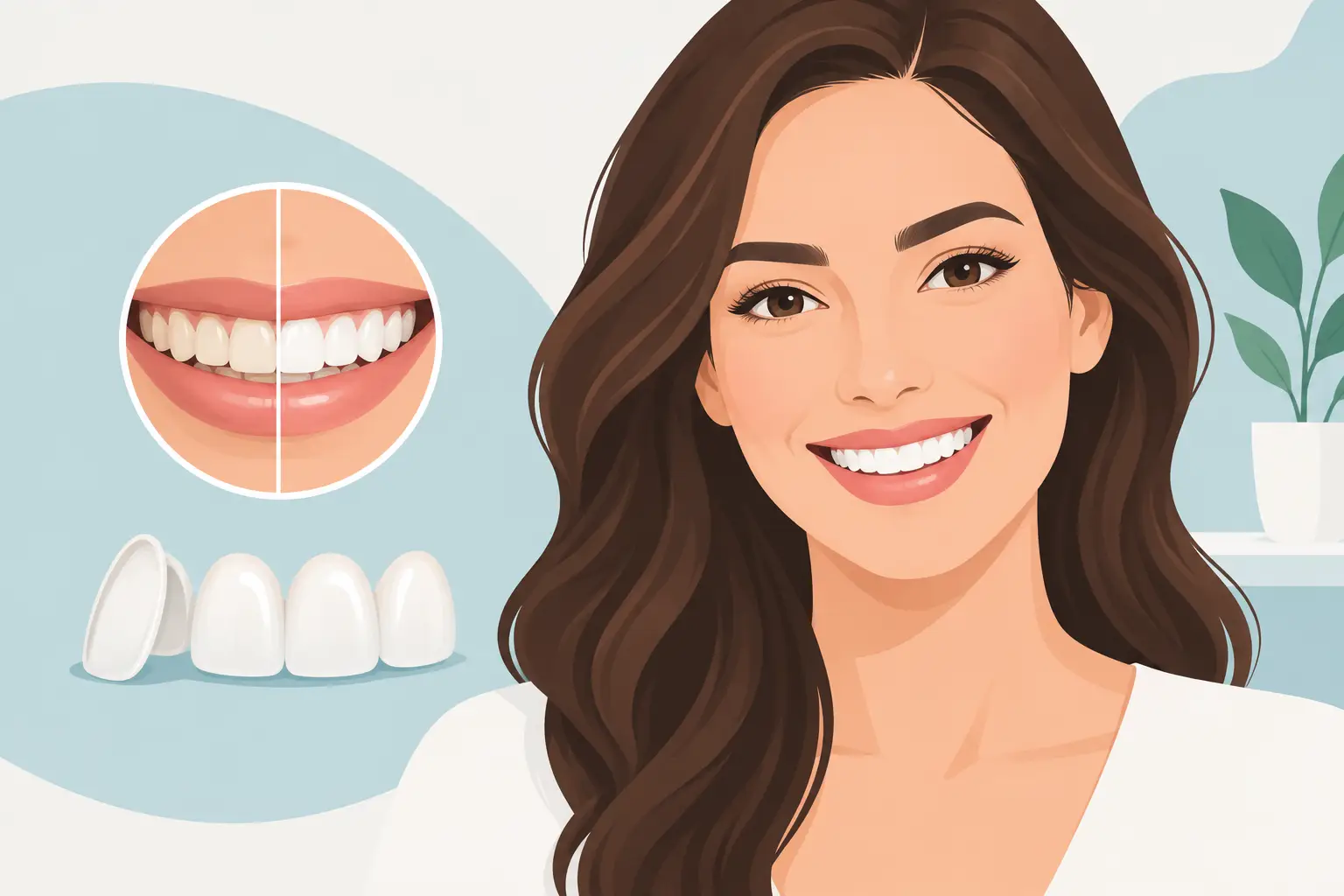
A single tooth that looks shorter, darker, chipped, or slightly out of place can distract from an otherwise healthy smile. Dental veneers are designed for these highly visible details. Rather than changing every tooth, they allow a cosmetic dentist to selectively refine the teeth that show when you speak, laugh, and smile.
For patients considering cosmetic dentistry, the goal should not be a generic “perfect” smile. The best result is one that fits your facial features, natural tooth proportions, bite, and personal preferences. Thoughtful planning is what turns veneers from a cosmetic purchase into a confident, natural-looking long-term improvement.
What dental veneers can change
Dental veneers are thin, custom-crafted shells that bond to the front surface of a tooth. They are most often made from high-quality porcelain because porcelain reflects light in a way that closely resembles natural enamel and resists staining better than composite resin.
Veneers can improve several concerns at once, including discoloration that does not respond well to whitening, worn or uneven edges, small chips, gaps, mildly rotated teeth, and teeth that appear too narrow or short. They can also create better symmetry across the smile, particularly when old bonding or mismatched restorations have made individual teeth look noticeably different.
A veneer does not strengthen a seriously damaged tooth in the same way a crown can. It also cannot treat active decay, gum disease, or a bite that is placing excessive force on the front teeth. A complete evaluation matters because a beautiful cosmetic result needs a stable oral-health foundation.
Are veneers the right option for your smile?
The strongest candidates for veneers usually have healthy gums, sufficient natural enamel, and cosmetic concerns concentrated in the front teeth. They should also be comfortable with the fact that traditional porcelain veneer treatment generally involves removing a small amount of enamel to create room for the restoration. This is a permanent change to the tooth.
That does not mean every patient needs extensive preparation. The amount of tooth modification depends on the position, color, shape, and size of the existing tooth, as well as the final design. A tooth that is set back may need very little reshaping, while a tooth that projects forward may need more careful reduction to avoid a bulky appearance.
Veneers may not be the first recommendation if teeth are significantly crowded, if the bite is unstable, or if there is extensive decay or structural damage. In those situations, Invisalign treatment, whitening, bonding, or a crown may be a more conservative or predictable path. It depends on what is causing the concern, not simply what the tooth looks like in a photo.
Patients who clench or grind their teeth can still be candidates, but they need an honest discussion about risk and protection. A custom nightguard may be recommended to reduce pressure on the veneers and the natural teeth supporting them.
The design phase is where results are decided
The difference between acceptable veneers and exceptional veneers often begins before any tooth preparation. A cosmetic evaluation should consider your smile line, lip movement, facial proportions, gum contours, bite, and the amount of tooth display at rest and while smiling.
Color selection deserves the same level of attention. Extremely bright veneers can look striking in some cases, but a shade that is too opaque or too white for the surrounding teeth may look artificial. If you are whitening natural teeth, it is generally best to complete whitening before final veneer shade selection. Porcelain does not respond to whitening products after it is placed.
At Trinity Dental Arts, Dr. Xhoana Gjelaj approaches cosmetic treatment through the larger lens of function and long-term restorative health. That perspective is especially valuable when a patient has old dental work, worn teeth, uneven bite forces, or multiple concerns that need to work together visually and structurally.
For more extensive smile changes, a preview or temporary design can help confirm the planned tooth length, contour, and overall character before final porcelain is made. This step gives patients a practical way to evaluate the smile rather than relying only on imagination.
What the veneer process typically involves
Treatment usually begins with a consultation and comprehensive examination. Digital imaging, photographs, impressions or scans, and a bite assessment may be used to plan the case. The dentist will identify which teeth should be treated and whether any health or structural needs should be addressed first.
At the preparation appointment, the teeth are gently reshaped as needed. An impression or digital scan is then used to create the final veneers. Temporary veneers may be placed while the custom porcelain restorations are being made, particularly when several teeth are involved.
At the placement visit, each veneer is checked for fit, color, shape, and bite before bonding. Once the dentist and patient are satisfied with the appearance, the veneers are permanently bonded in place. Minor adjustments may be made so the teeth feel comfortable when speaking and biting.
The process is precise, but it should not feel rushed. A few extra moments spent checking proportions, edge position, and bite contact can make a meaningful difference in comfort and appearance over time.
How long do veneers last?
Well-made porcelain veneers can last many years, often a decade or longer, with consistent care and appropriate bite protection. Their lifespan is influenced by oral hygiene, the condition of the natural teeth, dietary habits, clenching, accidental trauma, and the quality of the original planning and bonding.
Porcelain is highly stain resistant, but the natural teeth beside veneers can still darken over time. Regular cleanings and good home care help keep the transition between treated and untreated teeth looking consistent. Use a nonabrasive toothpaste, brush twice daily, and clean between teeth every day to protect the gumline and the edges where veneers meet natural tooth structure.
Avoid using your teeth as tools to open packages, bite nails, or crack hard objects. Foods such as ice, hard candy, and unpopped popcorn kernels can damage natural teeth as well as restorations. If a veneer chips, feels loose, or causes a bite change, schedule an evaluation promptly instead of waiting for the problem to worsen.
The trade-offs worth considering
Veneers are a high-value cosmetic treatment, but they are not maintenance-free or reversible once enamel has been removed. They may eventually need replacement, and replacement planning should preserve as much healthy tooth structure as possible. Cost also varies based on the number of teeth treated, the complexity of the design, the materials selected, and whether other dental treatment is needed first.
There is also a difference between improving a few teeth and rebuilding a smile affected by significant wear, failing restorations, or bite problems. Patients with complex needs may benefit from a broader restorative plan rather than placing veneers on isolated teeth without addressing the underlying cause. Comprehensive care can prevent a cosmetic improvement from becoming a short-term fix.
Can veneers look natural?
Yes, when they are designed around the individual rather than copied from a standard template. Natural-looking veneers have subtle variation in translucency, texture, and contour. They should complement the lips and face without making every tooth look identical.
Do veneers hurt?
Local anesthesia can be used during preparation, so patients are typically comfortable throughout the procedure. Some temporary sensitivity to cold or pressure may occur afterward, especially if multiple teeth were prepared, but it usually resolves as the teeth adapt.
Can I get veneers on just one tooth?
Yes. A single veneer can correct a chipped, discolored, or uneven front tooth. Matching one veneer to neighboring natural teeth requires careful shade selection and artistry, which is why personalized planning is essential.
The right cosmetic treatment should make you feel more like yourself, not less. Start with a detailed conversation about what you see in your smile, what you want to change, and what your teeth need to stay healthy behind the result.