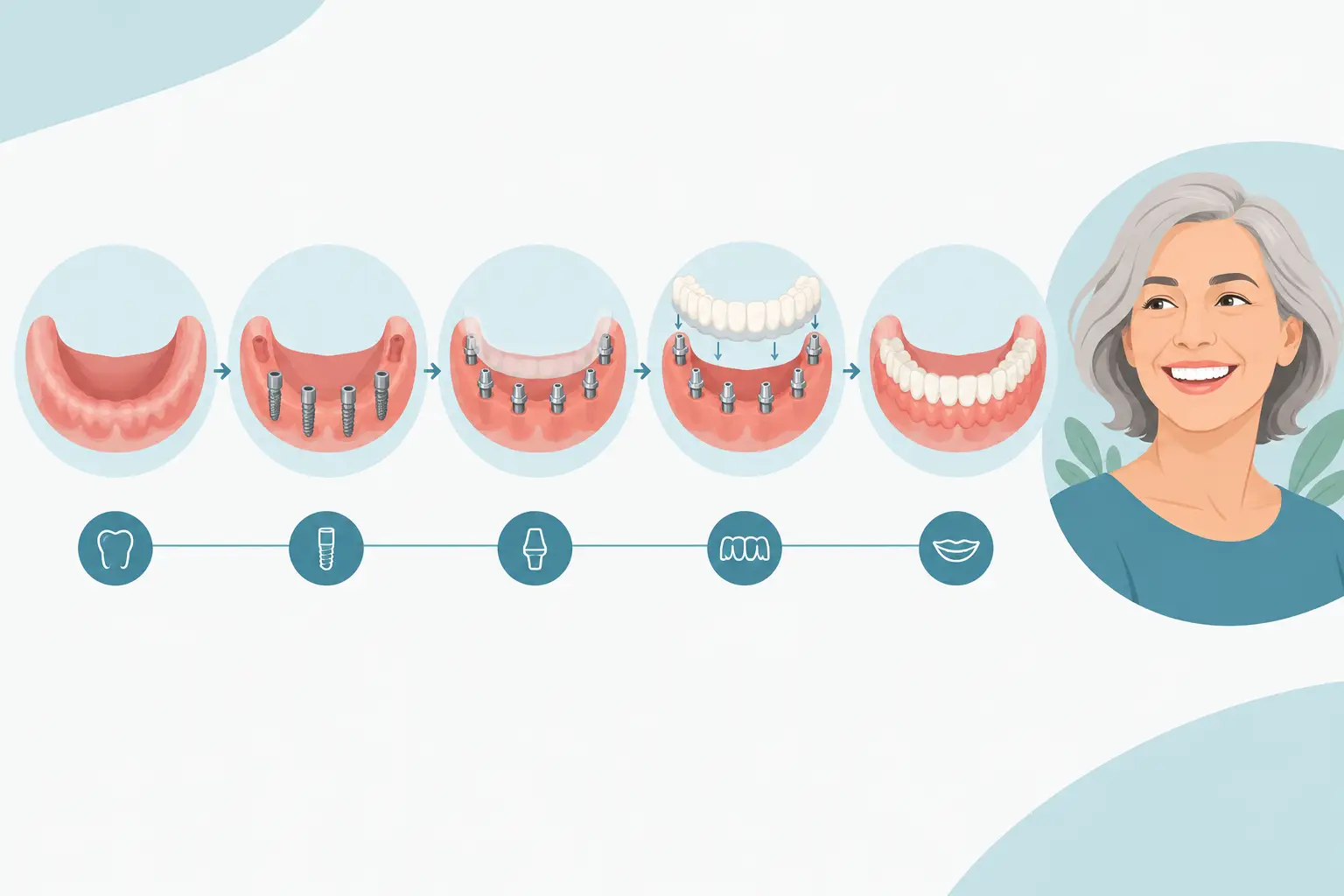
A full arch restoration example is often easier to understand than a list of clinical terms. Consider a patient who has spent years managing broken teeth, recurring infections, loose crowns, and pain when chewing. They may still have several natural teeth remaining, but those teeth are no longer providing a stable, healthy foundation for the smile they want.
For this type of patient, the goal is not simply to replace what is missing. It is to create a fixed, implant-supported smile that restores chewing ability, facial support, comfort, and confidence through a carefully planned process. The treatment is significant, but it should never feel rushed or one-size-fits-all.
A Full Arch Restoration Example: The Starting Point
Imagine a Tampa Bay area patient in their late 50s who has extensive decay and gum disease in the upper arch. Several teeth have fractured below the gumline. Older bridgework is failing, and the remaining teeth have shifted over time. The patient avoids smiling in photos and chooses soft foods because biting into an apple or a sandwich has become uncomfortable.
At the first visit, the focus is on diagnosis rather than making promises. Dr. Xhoana Gjelaj evaluates the teeth, gums, bite, jawbone, facial proportions, and overall oral health. Digital imaging and 3D scans help reveal details that are not visible during a standard visual exam, including bone volume, infection, and the location of critical anatomical structures.
This assessment answers several essential questions: Which teeth can be predictably maintained? Is there active periodontal disease that needs to be controlled? Is there enough bone to place implants in stable positions? How should the new teeth support the lips and work with the lower arch?
In this example, the upper teeth have a poor long-term prognosis. Saving each tooth individually would require repeated treatment with an uncertain outcome. A full arch implant solution may offer a more durable path, but only after the patient understands the clinical requirements, timeline, investment, and responsibilities that come with it.
Planning the New Smile Before Treatment Begins
Full arch restoration is as much a planning process as it is a surgical and restorative procedure. The final teeth must be designed before implants are placed, because implant position needs to support the intended bite, smile line, tooth shape, and speech.
The planning phase may include digital smile design, photographs, bite records, intraoral scans, and a review of the patient’s goals. Some patients want a brighter, more youthful look. Others are primarily concerned with being able to eat comfortably again. Both priorities matter, but the final design must also respect facial features and function.
In this case, the patient wants teeth that look natural rather than overly white or oversized. The proposed design accounts for the amount of tooth that shows when smiling, the position of the lips at rest, and the space needed to create a strong restoration. The lower teeth are also evaluated, because a new upper arch must bite properly against the opposing teeth.
Not every patient needs the same number of implants, and not every patient is a candidate for immediate fixed teeth. Bone quality, medical history, bite forces, infection, and oral hygiene all influence the recommendation. When bone is insufficient in key areas, grafting or a different implant strategy may be appropriate. A precise plan is safer and more predictable than forcing a standard approach onto every case.
The Surgical Visit and Provisional Fixed Teeth
For this full arch restoration example, the remaining upper teeth are removed, unhealthy tissue is addressed, and implants are placed in locations selected during the digital planning process. If implant stability is strong enough, a provisional fixed bridge can be attached on the same day or shortly afterward.
The provisional bridge is not merely a cosmetic placeholder. It allows the patient to leave with fixed teeth while the implants integrate with the bone. It also gives the clinical team an opportunity to assess speech, bite, tooth display, and comfort before the final bridge is fabricated.
Sedation options can make treatment more manageable for patients who feel anxious about surgery or who prefer a more relaxed experience. Before the procedure, patients receive clear instructions about medications, transportation, diet, and recovery expectations. A trusted adult will typically need to drive a sedated patient home.
The first weeks require patience. Swelling and tenderness are expected, and a soft-food diet protects the healing implants and provisional restoration. The patient should not test the new teeth by chewing hard foods too early, even if they feel good. Healing is biological, not just cosmetic.
What Healing Looks Like in a Realistic Case
During follow-up visits, the team monitors healing, checks the provisional bridge, and confirms that the implants remain stable. Any pressure spots, bite imbalances, or speech concerns can be adjusted. This is one advantage of using a provisional phase: the final restoration is not made until the new smile has been tested in real life.
In this example, the patient initially notices a slight difference in pronunciation with certain sounds. A small adjustment to the provisional teeth improves speech within a short period. The patient also learns how to clean beneath the bridge using specialized tools recommended by the clinical team.
Osseointegration, the process in which bone bonds with the implant surface, generally takes months. The exact timeline varies. A patient with good bone quality and excellent healing may move forward sooner than someone who required grafting, had significant infection, or needs more time for tissue maturation.
This stage can feel slow, especially for someone eager to receive the final teeth. Yet it is where long-term success is protected. Rushing into a final restoration before the implants and tissues are ready can compromise fit, comfort, and predictability.
Delivering the Final Full Arch Restoration
Once healing is confirmed, final records are taken to create the definitive bridge. The final material is selected based on the patient’s bite, esthetic goals, available restorative space, and functional needs. There is no single material that is right for every patient. Strength matters, but so do natural appearance, repairability, opposing tooth wear, and the ability to create a comfortable bite.
At the delivery appointment, the final bridge is evaluated for fit, color, contour, bite, and speech. The patient sees the result in a mirror before the process is complete, but clinical appearance alone is not enough. The bridge must feel stable, support normal function, and allow the patient to speak comfortably.
For the patient in this example, the transformation is substantial. They can smile without covering their mouth, return to a broader range of foods as directed, and stop planning daily life around painful or fragile teeth. Just as meaningful, they have a clear maintenance plan rather than a cycle of emergency repairs.
Long-Term Care Protects the Investment
Fixed implant-supported teeth are designed for durability, but they still require daily care and professional monitoring. Plaque can accumulate around implants, and inflammation around implants can threaten the surrounding bone if it is ignored. Regular hygiene visits, home cleaning, and periodic examinations are part of protecting the result.
Patients should use the cleaning tools and technique recommended for their specific bridge. Depending on the design, this may include a water flosser, specialized brushes, and threaders to clean beneath the restoration. Nighttime grinding may require a protective appliance, particularly for patients who place heavy forces on their teeth.
A full arch restoration is not a shortcut around oral health. It is a comprehensive treatment built on diagnosis, surgical precision, thoughtful design, and consistent maintenance. At Trinity Dental Arts, the most successful outcomes begin with an honest conversation about what is possible for your smile, your health, and your long-term goals.
If failing teeth are limiting what you eat, how you speak, or how confidently you smile, a personalized implant consultation can turn uncertainty into a clear, clinically grounded plan.