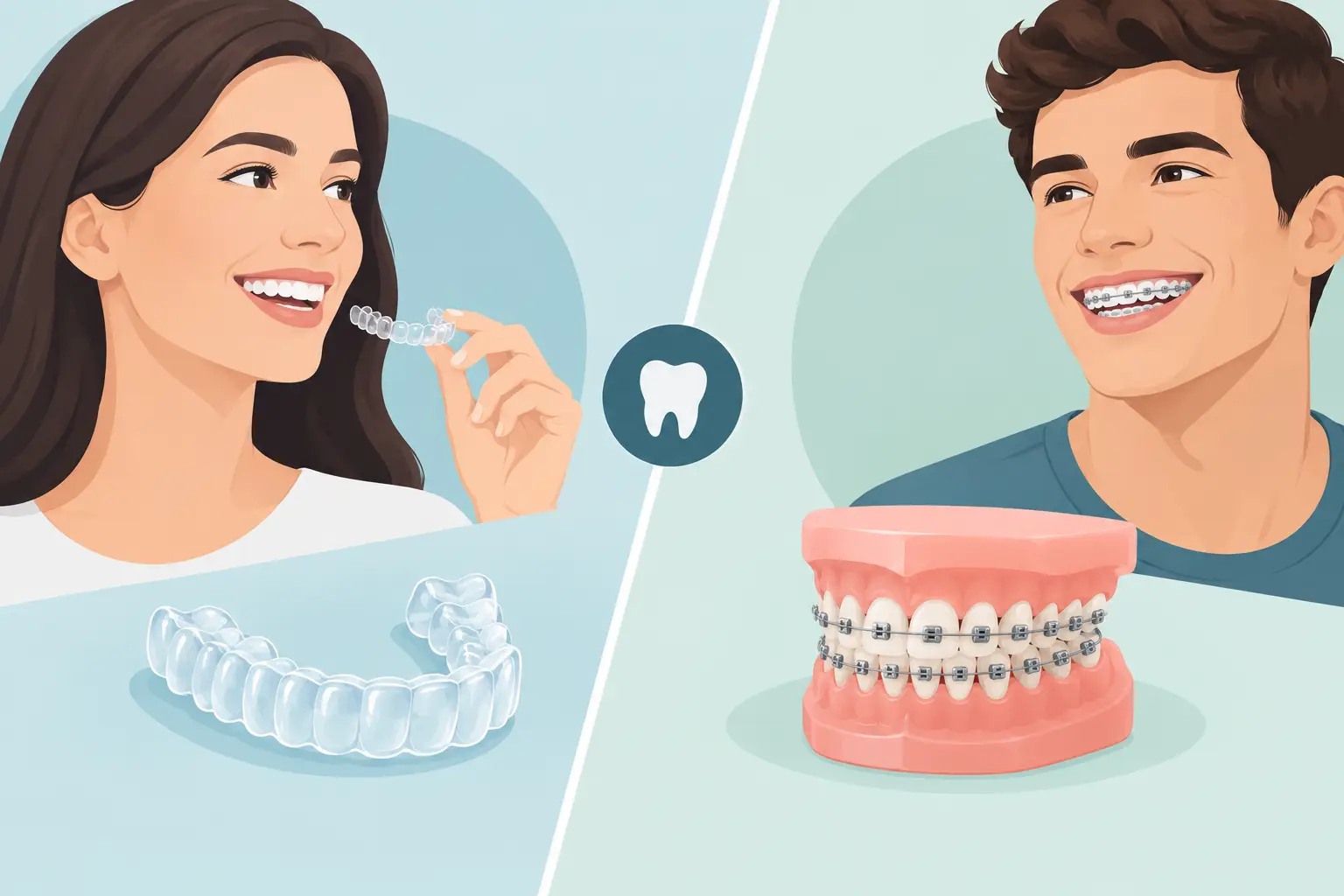
A photograph, a presentation, a wedding, or simply the desire to smile without covering your teeth can make orthodontic treatment feel more immediate. Invisalign versus braces treatment is not a simple choice between clear aligners and metal brackets. The right option depends on the movements your teeth require, your daily habits, your bite, and the level of precision needed to create a stable, healthy result.
For adults considering cosmetic dentistry, the most successful decision starts with a comprehensive evaluation rather than a one-size-fits-all recommendation. Straight teeth should also fit together properly, support comfortable function, and be positioned with long-term oral health in mind.
Invisalign Versus Braces Treatment: The Core Difference
Invisalign treatment uses a series of custom-made clear aligners that gradually guide teeth into planned positions. Each aligner is typically worn for most of the day, then changed according to your dentist's instructions. Small tooth-colored attachments may be placed on certain teeth to help the aligners create specific movements.
Braces use brackets bonded to the teeth and connected by wires. Your dentist adjusts the system at scheduled visits to create controlled force over time. Because braces remain in place around the clock, they continue working without depending on a patient remembering to put them back in after meals or cleaning.
Both options can produce exceptional results. The important distinction is how the force is delivered and how much patient participation is required. Clear aligners offer discretion and removability. Braces offer constant, highly controlled mechanics that can be particularly useful when treatment is more complex.
When Invisalign May Be the Better Fit
Invisalign is often appealing to adults who want a more subtle orthodontic experience. The aligners are clear, smooth, and removable, allowing patients to take them out for meals, brushing, flossing, and important occasions. For professionals, frequent travelers, and patients who value flexibility in their appearance, that can be a meaningful advantage.
Removing aligners to eat also means there are fewer food restrictions. With braces, sticky, hard, or very crunchy foods can damage brackets or wires. Clear aligners make it easier to maintain normal eating habits, provided they are removed before anything other than water.
Oral hygiene can also be more straightforward with aligners. You can brush and floss normally once the trays are out. This does not mean Invisalign is maintenance-free. Aligners must be cleaned, stored safely, and placed back in promptly. Drinking coffee, tea, or colored beverages while wearing them can stain the plastic, and snacking throughout the day can reduce wear time.
Most patients need to wear aligners about 20 to 22 hours daily. Missing that target repeatedly may slow progress, affect fit, and extend treatment. Invisalign works best for patients who are organized, motivated, and comfortable following a detailed routine.
What Invisalign can treat
Clear aligners can address many common concerns, including mild to moderate crowding, spacing, relapse after previous orthodontic treatment, certain bite discrepancies, and cosmetic alignment concerns. With thoughtful planning, attachments, and appropriate monitoring, Invisalign can also manage many cases that once would have been treated only with braces.
Still, the phrase "can treat" is different from "is the best tool." A treatment plan should account for root position, jaw relationship, gum health, existing crowns or veneers, and the amount of tooth movement needed. A polished final smile requires more than making the front teeth look straight.
When Braces May Deliver More Predictable Control
Braces remain an excellent treatment option, particularly for patients with significant crowding, challenging rotations, larger gaps, teeth that need substantial vertical movement, or complex bite correction. Because brackets and wires are fixed to the teeth, they give the dentist direct and continuous control over many types of movement.
That fixed design also removes the daily compliance variable. If you know you may misplace aligners, struggle to wear them consistently, or have a schedule that makes routines difficult, braces can be the more reliable path. They are working all the time, including during meals and sleep.
Modern braces are smaller and more refined than many adults remember. They are still more noticeable than clear aligners, and they require careful brushing around brackets and wires. However, for a complex case, their visibility may be a worthwhile trade-off for precision and predictability.
Comfort and adjustment periods
Neither option is completely discomfort-free. Invisalign aligners can create a feeling of pressure when starting a new tray, usually for a short period. The edges can occasionally irritate the tongue or gums, though this is often manageable with simple adjustments.
Braces can cause tenderness after adjustments, and brackets or wires may rub the cheeks and lips during the first days of treatment. Orthodontic wax and minor in-office adjustments can help. Comfort is highly individual, so it should not be the only factor driving the decision.
Treatment Time Is About More Than the Appliance
Patients often ask which treatment is faster. The honest answer is that timing depends on the diagnosis and the patient. Mild cosmetic Invisalign cases may be completed in months, while more comprehensive alignment and bite correction can take much longer. Braces follow a similar pattern: limited movement may progress quickly, while complex correction requires patience.
With Invisalign, wear time has a direct effect on progress. If aligners are not worn as prescribed, your teeth may not track with the digital plan. Additional aligners, known as refinements, may be needed to achieve the intended result. Refinements are common and are not necessarily a sign that treatment failed. They are often part of achieving a more exact finish.
With braces, missed adjustment appointments or broken brackets can delay care. In either approach, regular visits allow the dentist to monitor tooth movement, gum response, bite changes, and the overall quality of the result.
Cost, Value, and the Importance of a Personalized Plan
The cost of Invisalign versus braces treatment can overlap considerably. Fees are influenced more by the complexity and length of treatment than by the name of the appliance alone. A limited alignment case generally costs less than a comprehensive plan involving substantial bite correction, regardless of whether aligners or braces are used.
When comparing estimates, ask what the fee includes. A complete plan may account for records, imaging, the appliances, routine monitoring, refinements when appropriate, and retainers after treatment. Retainers matter because teeth naturally have a tendency to shift. Protecting your investment requires a retention plan tailored to your new alignment.
It is also wise to consider the quality of diagnosis. Orthodontic treatment changes the position of teeth, but those teeth exist within a larger restorative and cosmetic picture. Adults with worn teeth, gum recession, old dental work, missing teeth, or plans for veneers and crowns need sequencing that protects the final result. Moving teeth without considering future restoration can create avoidable compromises.
Why Your Bite and Dental Health Matter First
A straight smile can still be vulnerable if the bite is unbalanced or gum health is not stable. Before beginning orthodontic care, your dentist should evaluate the health of the teeth and gums, screen for decay or infection, review the jaw relationship, and identify issues that could affect movement.
For example, crowded lower teeth may be only the visible part of a deeper bite issue. A gap may be related to tooth size, gum changes, or the position of surrounding teeth. In adults, orthodontic planning can also be coordinated with restorative care so that new crowns, veneers, or implant-supported teeth are placed at the right stage of treatment.
At Trinity Dental Arts, Dr. Xhoana Gjelaj approaches smile planning with the same precision used in advanced restorative and cosmetic dentistry. That comprehensive perspective helps patients understand whether clear aligners, braces, or a coordinated treatment plan best serves both appearance and function.
How to Choose With Confidence
The most useful question is not, "Which option is better?" It is, "Which option gives me the most reliable result for my specific teeth, bite, goals, and lifestyle?" Clear aligners may be ideal when appearance, removability, and daily hygiene are priorities and you can commit to consistent wear. Braces may be preferable when movements are more complex or continuous control is the priority.
Bring your real priorities to the consultation: an upcoming milestone, concerns about visibility, past orthodontic relapse, difficulty cleaning around dental work, or uncertainty about cost and timing. A clear conversation and a thorough exam can turn a broad online comparison into a treatment decision you feel comfortable following through on.