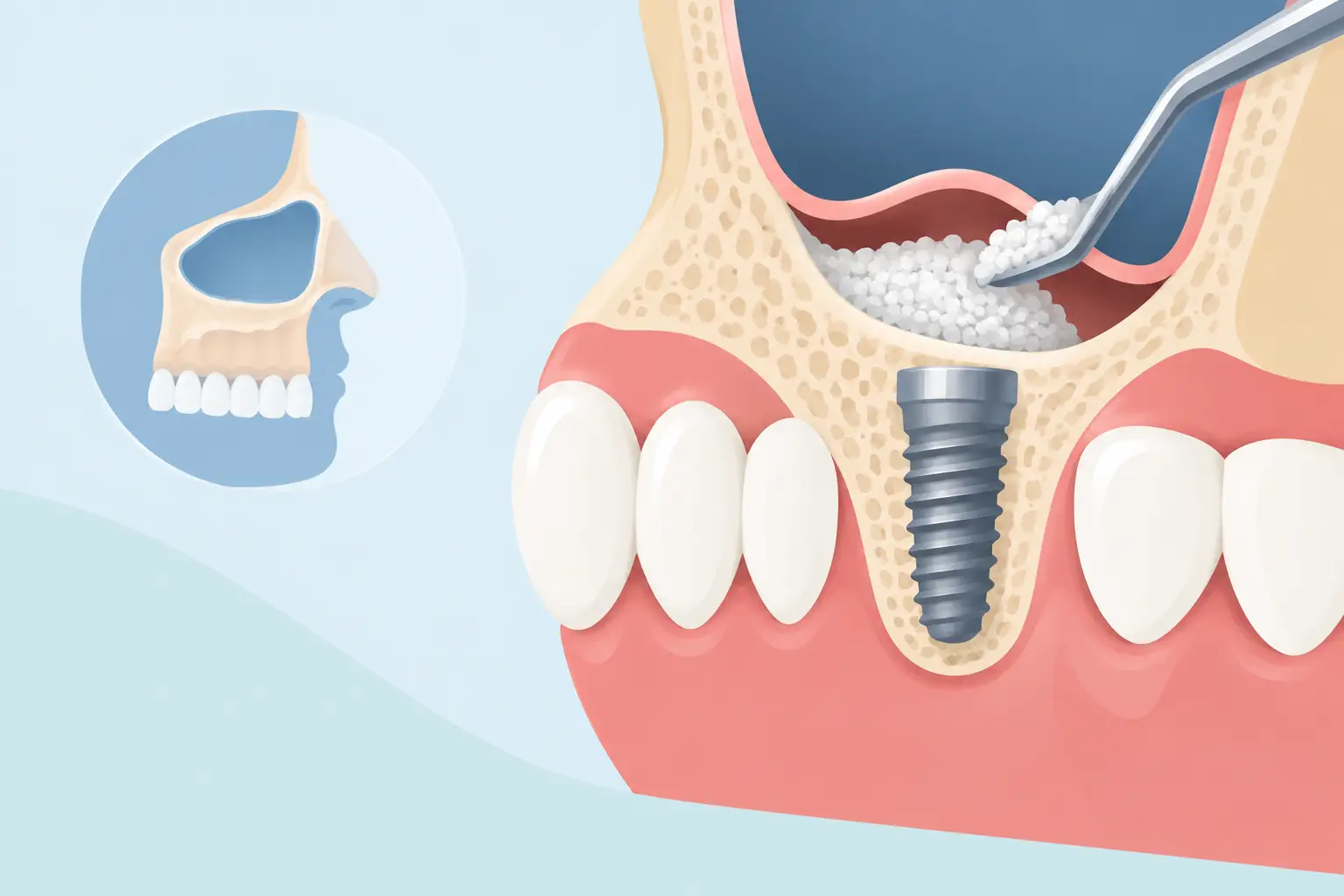
A missing upper back tooth can create a problem that is not visible in the mirror: there may no longer be enough bone beneath the sinus to support a dental implant securely. Sinus grafting is a precise procedure designed to rebuild that foundation, making implant treatment possible for patients who were once told they did not have enough bone.
For many people, the phrase can sound intimidating. In reality, a sinus graft is a well-established part of advanced implant dentistry when careful planning, modern imaging, and experienced surgical technique are involved. The goal is straightforward: create the stable bone support an implant needs for long-term function.
Why the Upper Jaw May Need More Bone
The maxillary sinuses are air-filled spaces located above the upper back teeth. When a molar or premolar is lost, the bone in that area can gradually shrink. At the same time, the sinus may naturally expand downward over time. Those two changes can leave too little vertical bone between the mouth and the sinus for a conventional dental implant.
An implant must be supported by healthy bone. Placing one where bone volume is inadequate can compromise stability, positioning, and the long-term result. A sinus graft adds bone beneath the sinus membrane, increasing the available height and creating a stronger site for implant placement.
Not every patient with a missing upper tooth needs this procedure. Some have enough remaining bone to place an implant directly. Others may be candidates for a shorter implant or a different restorative approach. A three-dimensional CBCT scan is the most reliable way to evaluate the bone, the sinus anatomy, and the safest path forward.
How Sinus Grafting Works
A sinus graft does not involve placing material inside the sinus cavity itself. Instead, the surgeon gently lifts the thin membrane lining the floor of the sinus and places bone grafting material in the space created beneath it. As healing occurs, the body incorporates the graft and develops new bone that can support an implant.
The procedure is typically performed through one of two approaches. The right option depends mainly on how much natural bone remains.
Lateral Window Sinus Graft
When bone height is very limited, a lateral window approach may be recommended. A small opening is created in the side of the upper jaw, allowing the clinician to carefully access and elevate the sinus membrane. Bone graft material is placed beneath the membrane, and the site is protected while it heals.
This approach gives the surgeon excellent visibility and control in more complex cases. It often requires a longer healing period before implant placement, although the timing is determined by the amount and quality of bone needed for your individual treatment plan.
Crestal Sinus Lift
When a patient has a more favorable amount of existing bone, a crestal approach may be appropriate. The sinus is accessed through the implant site itself, and the membrane is lifted a smaller distance. In selected cases, the dental implant can be placed during the same appointment.
Same-day implant placement is not automatically better. It is appropriate only when the remaining bone can provide sufficient initial implant stability. A staged approach may be the more predictable choice when greater grafting is needed.
What Material Is Used for a Sinus Graft?
Bone grafting materials may come from processed human donor bone, animal-derived sources, synthetic materials, or a combination selected for the clinical situation. These materials act as a scaffold that supports the body's natural bone-forming process. Over time, your own bone grows into and around the grafted area.
The best material is not a one-size-fits-all decision. The amount of bone needed, the condition of the surrounding tissues, your medical history, and whether the implant will be placed at the same time all influence the recommendation. A thoughtful implant evaluation should explain what is being used and why.
What to Expect Before and During Treatment
Planning is where successful implant treatment begins. Before sinus grafting, your dental team reviews your medical history, medications, periodontal health, bite, and CBCT imaging. Existing sinus conditions, smoking or nicotine use, uncontrolled diabetes, and certain medications can affect healing and may need to be addressed before surgery.
The procedure is performed with local anesthesia, and sedation options can help patients who feel anxious about surgical care. You should expect to feel pressure rather than pain during treatment. The surgical appointment length varies based on the approach and whether other procedures are being completed at the same visit.
At Trinity Dental Arts, Dr. Xhoana Gjelaj applies advanced implant planning to evaluate each patient's anatomy before recommending sinus grafting. That level of planning matters because implant success depends on more than filling a space. It requires placing the implant in a position that supports a functional bite, healthy tissues, and a natural-looking final restoration.
Healing After a Sinus Graft
Most patients experience mild to moderate swelling, tenderness, and occasional bruising during the first several days. Prescribed or recommended medications, cold compresses, and a soft-food diet can make recovery more comfortable. Your team will provide instructions tailored to the extent of your procedure.
Because the graft is located near the sinus, protecting the site during early healing is especially important. Patients are commonly asked to avoid forceful nose blowing, holding back a sneeze, drinking through straws, smoking, and strenuous exercise for a specified period. These actions can increase pressure in the sinus and disturb the healing area.
Contact your dental office promptly if you develop persistent or worsening pain, heavy bleeding, fever, unusual drainage, or a sensation that air or liquid is moving between your mouth and nose. These concerns are uncommon, but early communication allows the team to assess the situation and guide you appropriately.
Healing time varies. In many cases, the graft needs several months to mature before an implant is placed. If an implant was placed at the same time, it still needs time to integrate with the bone before the final crown is attached. Rushing this stage can undermine the stability the graft was intended to create.
Benefits, Trade-Offs, and Risks
The primary benefit of sinus grafting is expanded eligibility for dental implants in the upper back jaw. It can help restore areas that lack adequate bone, support proper implant positioning, and reduce the need to compromise the restorative plan because of anatomy.
There are trade-offs. Sinus grafting adds a surgical step, treatment time, and cost. As with any oral surgery, there are risks, including swelling, infection, graft failure, bleeding, or a tear in the sinus membrane. A membrane tear can often be managed during the procedure, but it may require the grafting plan to be modified or delayed.
Success depends on careful case selection and patient participation. Following aftercare instructions, maintaining excellent oral hygiene, attending follow-up visits, and avoiding tobacco or nicotine products are meaningful parts of protecting your investment in implant treatment.
Questions Worth Asking at Your Consultation
A quality consultation should leave you clear on whether a sinus graft is truly necessary and what alternatives may be available. Ask how much native bone is present, whether implant placement can occur at the same time, how long healing is expected to take, and what factors could change the timeline.
It is also reasonable to ask how the implant will be planned in relation to your bite and final crown. The graft is only one stage of a larger restorative process. The strongest results come from planning the surgical and restorative phases together from the beginning.
A sinus graft may add time before your final implant restoration, but it can provide the stable foundation that makes a confident, lasting result possible. The right next step is a detailed implant evaluation that turns a complex-looking situation into a clear, personalized plan.